Beyond the exhibition floor: How robots, AI and networks are moving into the real world
TONGXIANG, CHINA – Media OutReach Newswire – 6 November 2026 – A robot makes coffee. Others dance, patrol exhibition halls or trade mock blows in choreographed demonstrations. Scenes like these were on full display at this year's World Internet Conference Wuzhen Summit, which concluded on Nov 5 in the canal town of Wuzhen in eastern China. American content creator Evan Kail poses for a photo with…
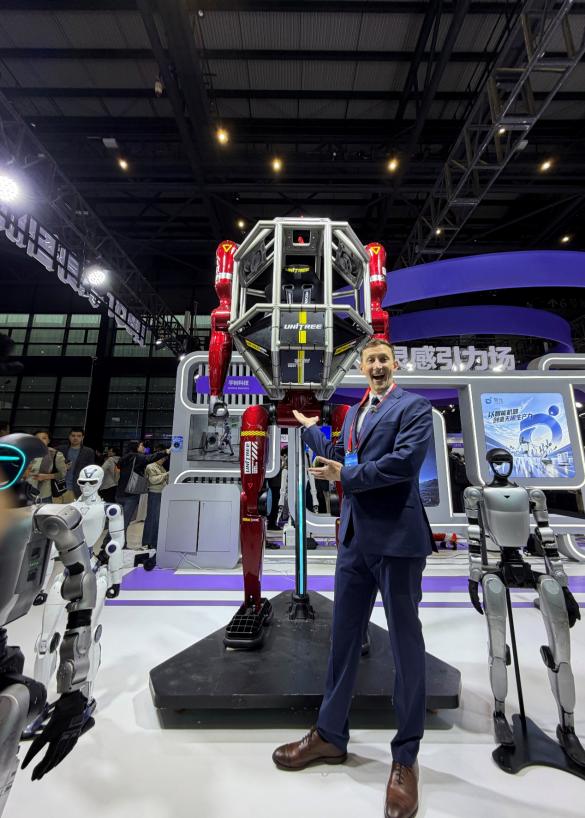
TONGXIANG, CHINA – A robot brewed coffee at the World Internet Conference Wuzhen Summit, which concluded on November 5 in the canal town of Wuzhen in eastern China. Other robots danced, patrolled exhibition halls and engaged in choreographed battles. The exhibition floor showcased robots of various purposes, from emergency response to industrial applications.
Companies such as Unitree Robotics, AgiBot and UBTECH displayed their latest creations. The robots' demonstrations, however, were not the sole focus of the summit. Many of the machines were being developed for real-world tasks, such as disaster response and search-and-rescue operations. Evan Kail, an American content creator visiting the expo, marveled at the rapid progress in robotics.
He noted that Unitree robots, once famous for their dancing performances, now showcased more practical applications. The shift from eye-catching spectacles to practical deployment was evident throughout the event. For robots to operate effectively in challenging environments, they require robust networks capable of transmitting vast amounts of data, responding in real-time and supporting AI decisions close to their location.
At China Mobile's booth, a display highlighted the deployment of traffic-management robots in Hangzhou, China, during a recent holiday travel period. These robots, part of the Hangzhou Police Smart Mobility program, can communicate with pedestrians and vehicles, warn them of traffic violations and answer questions. The deployment demonstrates the critical role of connectivity in intelligent machines.
Future versions of these robots are expected to carry more cameras and operate independently within defined areas, requiring low latency, high uplink speeds and precise positioning. These demands are shaping the development of 6G, a next-generation mobile technology that promises enhanced connectivity, sensing and AI capabilities.
Industry plans for 6G include integrating communications with sensing, edge computing and satellite connectivity to provide radar-like eyes and more detailed situational awareness. China Mobile has already launched a direct-to-handset service using Tiantong and BeiDou satellite systems. Meanwhile, robots are moving beyond entertainment into industries where their contribution may be less visible but potentially more significant.
China Mobile and Sinopharm have developed an AI-enabled cold-chain logistics platform that has reduced delivery costs by 65% and cut delivery times by 70%. The company has also built the world's largest 5G private network for port operations, enabling real-time coordination among numerous systems in a vast industrial site. Additionally, AI and connected systems are being applied to public safety and emergency management, such as flood-control planning and drone inspections.
The robots at Wuzhen served as a visible embodiment of these technological advancements, while the underlying networks, computing systems and satellite links played a critical role in enabling AI to move beyond trade-show demonstrations and into practical applications.
Rewritten by urgent.news; may contain errors — check the original.
Source: thearabianpost.com