Ancient Thieves Missed This Gold Bear in a Burial Mound That May Hold 7 People
Learn how a tiny gold bear survived ancient looting in a burial mound that may hold the remains of four adults and three children.
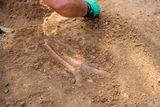
In a burial mound in Almaty, Kazakhstan, thieves who broke into the site dug deep but apparently missed a small gold bear, which had been buried for over 2,200 years. According to the Almaty Museum Association, the bear was likely sewn onto a ceremonial headdress and was discovered 13 feet below the point of excavation. Local news outlet Kazinform reported that the bear was unique and no similar artifact had been unearthed in Kazakhstan before.
The burial mound, which measures approximately 82 feet in diameter and stands 8 feet high, is situated within an active cemetery. Archaeologists conducted an emergency excavation due to the risk of destruction from urban development. Among the items found scattered around the site was likely evidence of the looters' activity. Researchers speculate that the bear was a headdress ornament for Saka ceremonies, as evidenced by small holes indicative of being sewn onto cloth.
The Saka culture was known for decorating animals in their art, with previous finds including a gold ibex and a leopard figurine. This discovery of a gold bear may provide insights into connections between cultures from the Black Sea region to the Altai Mountains. Preliminary estimates suggest that the burial also contained four adults and three children, which is uncommon in Kazakhstan where such mounds typically hold one or two individuals.
The findings have been sent for study and preservation, with the best objects intended for a permanent display at the Almaty Museum.
Written by urgent.news from Discover Magazine's reporting — not their text. Machine-written — may contain errors; check the original before relying on it.