5 more nature curiosities that reveal a world of surprises
From rainforest-dwelling penguins to moths masquerading as rain, recent discoveries reveal some extraordinary secrets of the natural world.
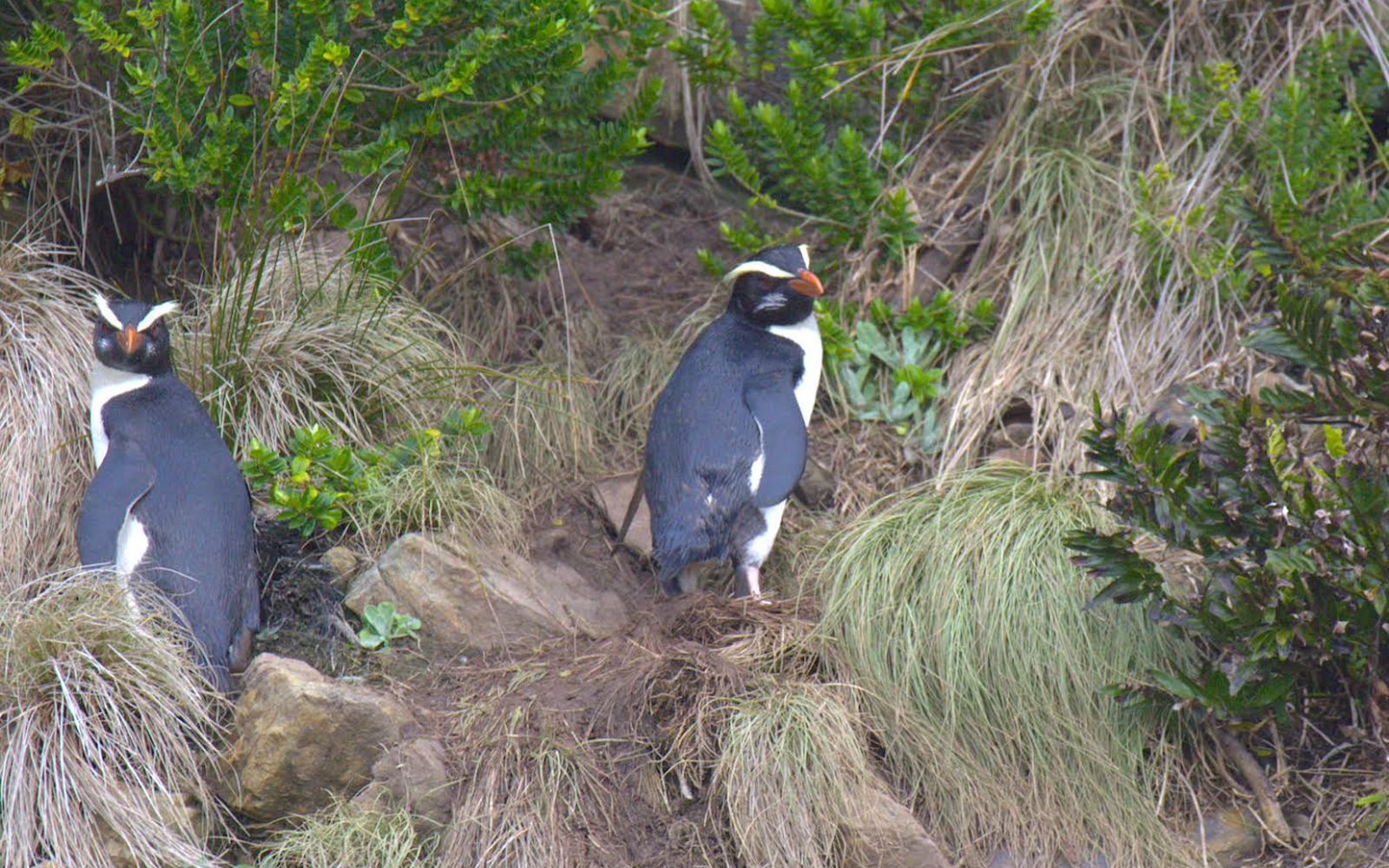
1. Hidden within New Zealand's coastal rainforests resides the elusive Fiordland crested penguin, or tawaki, whose secretive nesting habits have long made them challenging to study. Recent research has revealed the population to be roughly three times larger than previously estimated, thanks to mapping efforts over a period of 12 years.
2. In southeastern Australia, weather radars have been detecting rainfall signals from millions of migrating bogong moths. These moths undertake remarkable seasonal journeys towards the Australian Alps, where they find shelter in cool caves and rocky crevices during summer. Radar signals previously thought to indicate rainfall could actually be the result of these insects reflecting radar signals much like water droplets.
3. Beneath the waves off Mozambique's coast, ancient terrestrial forests have transformed into thriving marine habitats beneath the shallow waters of the Bazaruto Archipelago. These submerged peat reefs, formed from coastal peatlands submerged by rising seas, provide shelter and feeding opportunities for fish and invertebrates, supporting a level of biodiversity comparable to nearby coral reefs.
4. In a park in Buenos Aires, Argentina, researchers have discovered that a bird is learning to sing elements of a tune that had disappeared from the area decades earlier. The rufous-collared sparrow, whose local vocal traditions had been documented during the 1960s, has begun imitating parts of a computer-generated version of a lost vocal tradition.
5. Australian researchers have found that certain scavengers, such as dingoes, eagles, and red foxes, have distinct preferences when it comes to the parts of animal carcasses they consume. Eagles, for example, initially favored the head and abdomen, while dingoes frequently targeted the tail, and foxes often left the leftovers to other scavengers. These preferences might be linked to nutritional requirements, particularly the availability of fat-rich tissues.
Written by urgent.news from Free Malaysia Today's reporting — not their text. Machine-written — may contain errors; check the original before relying on it.
Also reported by 1 other outlet
- 5 more nature curiosities that reveal a world of surprises freemalaysiatoday.com