Why the next US House speaker won’t follow Nancy Pelosi’s Taiwan playbook
The Democrat expected to become US House speaker has met Taiwan’s former leader and backed legislation supporting the island yet is unlikely to follow Nancy Pelosi’s example in pursuing high-profile engagement with Taipei, analysts said. Hakeem Jeffries, the House’s top-ranking Democrat, announced his bid for the speakership on Wednesday after Democrats won a majority of seats in the US midterm…
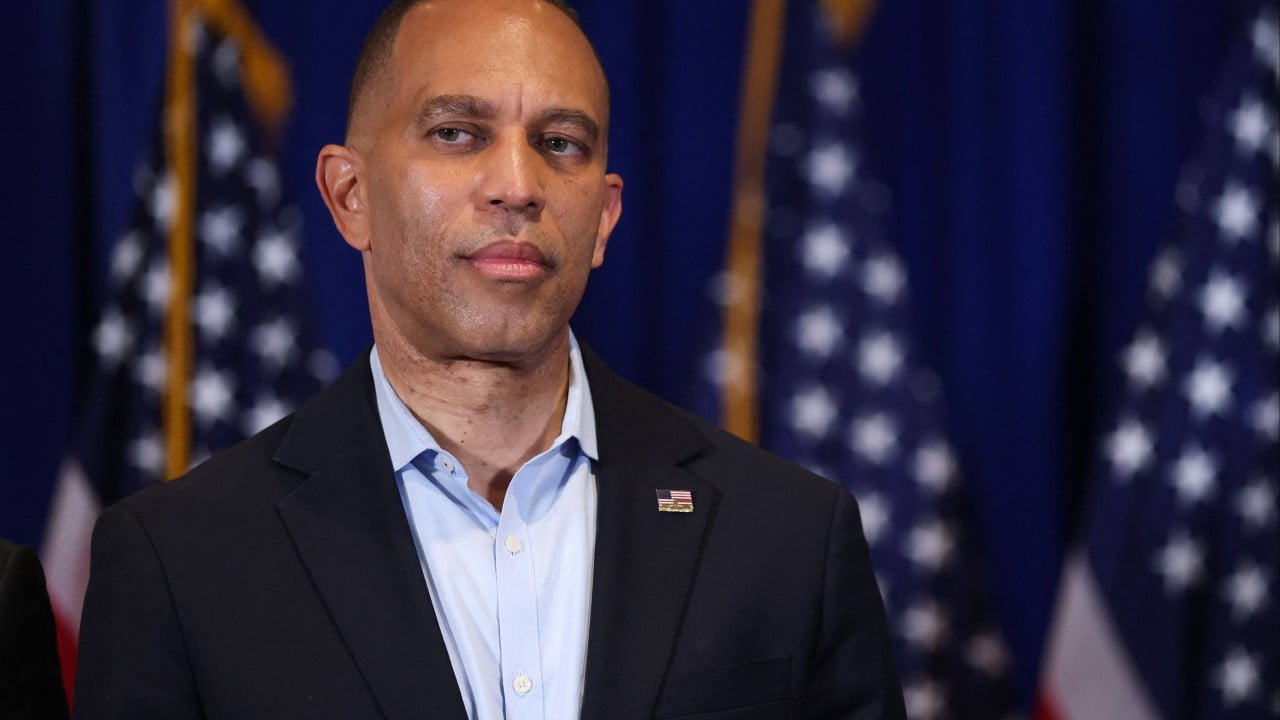
Hakeem Jeffries, the Democratic Party's top-ranking member of the US House, announced his candidacy for the position of Speaker of the House after Democrats secured a majority of seats in the recent midterm elections. Should he win the official Speaker position in January, Jeffries is anticipated to steer the legislative agenda for the upcoming Congress.
In March 2023, Jeffries met with then-Taiwanese leader Tsai Ing-wen during her visit to the United States, stating that their conversation was "very productive." This visit came shortly after he voted in favor of the Protect Taiwan Act, which passed the House in February. The act aims to limit Beijing's involvement in certain international financial institutions in response to potential threats to Taiwan.
However, analysts suggest that Jeffries is unlikely to emulate Nancy Pelosi, the previous Democratic Speaker, who visited Taiwan in August 2022, leading to large-scale People's Liberation Army (PLA) military exercises around the island and exacerbating US-China tensions. Prof. Xin Qiang, director of Fudan University's Centre for American Studies, asserts that Pelosi's high-profile visit to Taiwan was an exception and not a precedent for future House speakers to follow.
He explains that while support for Taiwan is a bipartisan consensus in Congress, individual factors, such as the speaker's stance, can influence how that support is expressed. A more cautious and restrained speaker could positively impact congressional backing for Taiwan, while an extreme and impulsive speaker might harm US-China relations, as Pelosi did.
A senior US congressional insider indicates that Jeffries' legislative record and public statements suggest he is a moderate politician who is not inclined to engage in provocative actions towards Taiwan. Associate Prof. Ja Ian Chong from the National University of Singapore adds that Pelosi's visit was influenced by political conditions, personal preference, and Beijing's attempts to sway the Joe Biden administration.
However, Chong believes it is unlikely that Jeffries will visit Taiwan in the near future. Nevertheless, Chong expects broad policy continuity from Congress, particularly in defense support for Taiwan, which remains a durable bipartisan consensus issue. Drew Thompson, a senior fellow at Nanyang Technological University's S. Rajaratnam School of International Studies, agrees, stating that a Democratic-controlled Congress would be more supportive of Taiwan and more critical of the previous administration's stance on the issue.
He anticipates that Congress will encourage the administration to notify it of the intent to sell US$14 billion in defense items to Taiwan, which have already been processed.
Written by urgent.news from Reuters Business via SCMP's reporting — not their text. Machine-written — may contain errors; check the original before relying on it.