What the US midterms mean for ties with China
A sweeping victory for Democrats in US midterm elections this week, giving them control of Congress, presents both an opportunity and challenge for top rival China, analysts say.
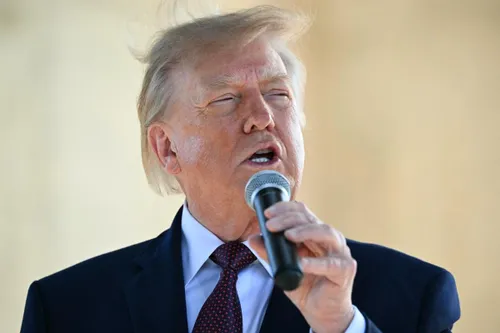
A decisive win for Democrats in the US midterm elections, granting them control of both chambers of Congress, presents both an opportunity and a challenge for China, experts suggest. This outcome could potentially limit President Donald Trump's aggressive tariff policies on Chinese goods during the final two years of his presidency. That could pose a setback for Trump, who has heavily relied on tariffs throughout the ongoing US-China trade war, with the current agreement set to expire in January.
Wu Xinbo, dean at the Institute of International Studies at Fudan University in Shanghai, notes that Democrats might be more restrained in their approach to tariffs, considering the popularity of these policies among US businesses, unions, blue-collar workers, and small businesses, which have traditionally been a key Democratic voting base.
However, Democrats will also need to balance their actions with the potential impact on American consumers and businesses, as well as the risk of escalating tensions and conflict with China. This delicate balancing act could influence the trajectory of the US-China relationship during the latter part of Trump's term.
The Taiwan issue could prove to be a significant factor in shaping the relationship between the United States and China. As the US-backed democratic island claimed by Beijing, Taiwan has long been a source of tension between the two nations. Neil Shearing, group chief economist at Capital Economics, suggests that the issue of Taiwan could be a game changer in this context.
Under a Democrat-controlled Congress, Washington might be less willing to sell arms to Taiwan, particularly if the US appears distracted or if Trump is willing to negotiate concessions with China.
If this scenario unfolds, China could leverage the remaining two years of Trump's presidency to exert greater pressure on Taiwan, potentially escalating the situation. On the other hand, renewed US support for Taiwan from Congress could incentivize Beijing to adopt a more cautious approach towards the island, thus promoting stability in the US-China relationship.
Despite Trump's weakened political position following the midterms, China is unlikely to abandon its strategy of engaging with him through high-profile, leader-to-leader interactions, analysts say. While neither Beijing nor Washington appears eager to see a fundamental improvement in bilateral relations, China may seek to exploit any perceived weaknesses in Trump's administration to exert more pressure on him.
Still, China would be cautious not to provoke Trump into taking irresponsible actions that could further strain the relationship.
Written by urgent.news from Free Malaysia Today's reporting — not their text. Machine-written — may contain errors; check the original before relying on it.
This story
This is one outlet's version. Read the fullest account.
- What the US midterms mean for ties with China freemalaysiatoday.com