'We’re looking at how a bear sees the world': From forest trails to 'Sims for Bears,' researchers are learning how grizzlies navigate a fragmented wilderness
Scientists in the U.S. and Canada are decoding grizzly bears' behavior to learn how they navigate a human-dominated world. What they find could build a safer future for both species.
In a study spanning 53 challenging days between fall 2020 and spring 2021, a young grizzly bear nicknamed Lingenpolter attempted to cross Interstate 90 in western Montana 46 times. High-resolution GPS tracking revealed that the 360-pound bear navigated parallel to four lanes of traffic, repeatedly bouncing off the highway as he sought a crossing.
Lingenpolter ultimately succeeded in crossing the highway, most likely by slipping under a river bridge. However, his daring journey underscores the significant barrier that busy highways can pose for wildlife.
Researchers are studying how grizzly bears, also known as brown bears (Ursus arctos), perceive and navigate their fragmented environments. A map detailing Lingenpolter's attempts to cross the highway has been created (Image credit: USFWS). Beyond bears, maintaining connected pathways for various species such as wolverines, mountain goats, elk, and bighorn sheep is crucial due to the fragmented nature of their habitats.
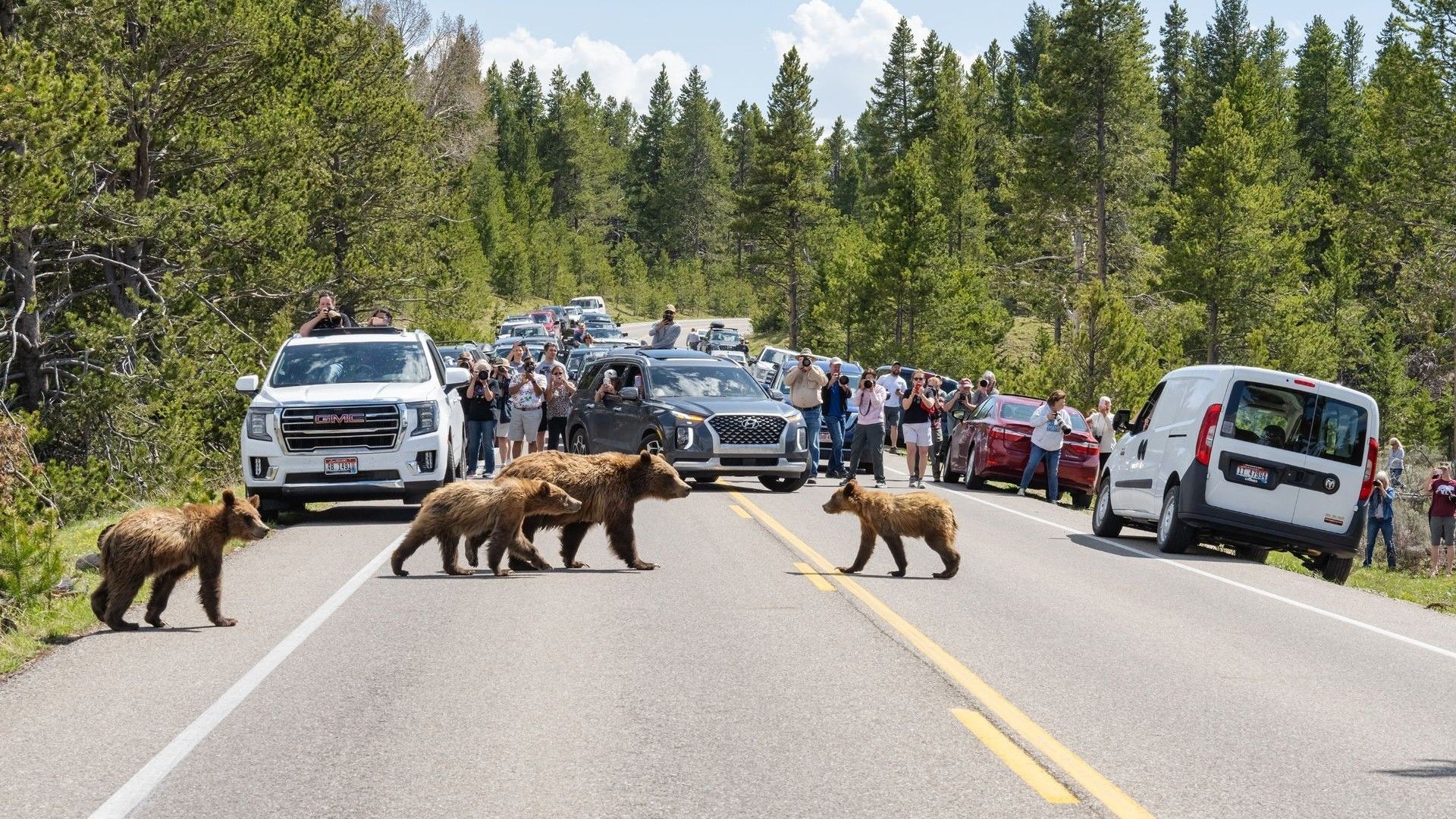
The vast 2,100-mile-long stretch of mountainous terrain between Yellowstone in Wyoming and the Yukon in northern Canada represents the most intact, connected, wild mountain region globally. It spans five U.S. states, two Canadian provinces, and over 75 Indigenous territories. However, this region faces challenges as highways, rail lines, and human development fragment the valleys, making it difficult for grizzly bears to maintain connected pathways.
Researchers, including wildlife biologists Cecily Costello and Michael Proctor, are employing GPS collars and movement modeling to gain a detailed understanding of grizzly bears' movement patterns, decision-making processes, and the factors that hinder their ability to navigate these fragmented landscapes. The data collected aims to shed light on the complex interplay between bear behavior, environmental factors, and the broader ecological implications of habitat fragmentation.
Written by urgent.news from Live Science's reporting — not their text. Machine-written — may contain errors; check the original before relying on it.