Wall Street's fear gauge posts its biggest jump since Liberation Day as AI stocks sell off
The Philadelphia semiconductor index was down 9.2% as investors weighed what a Democratic Congress means for data center spending
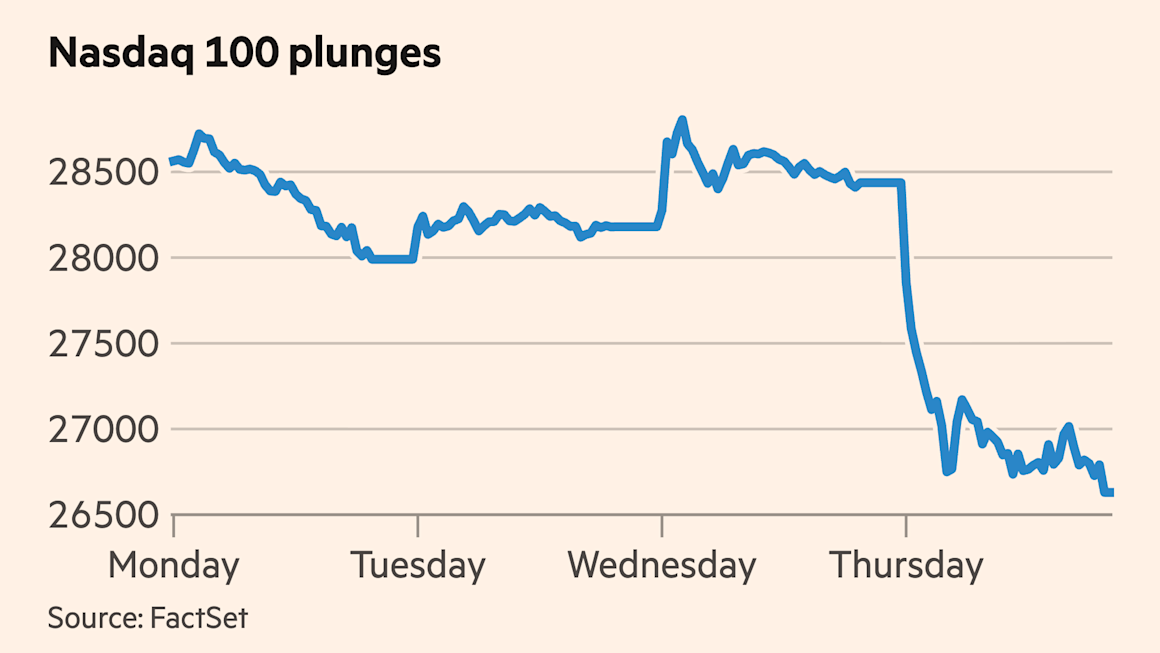
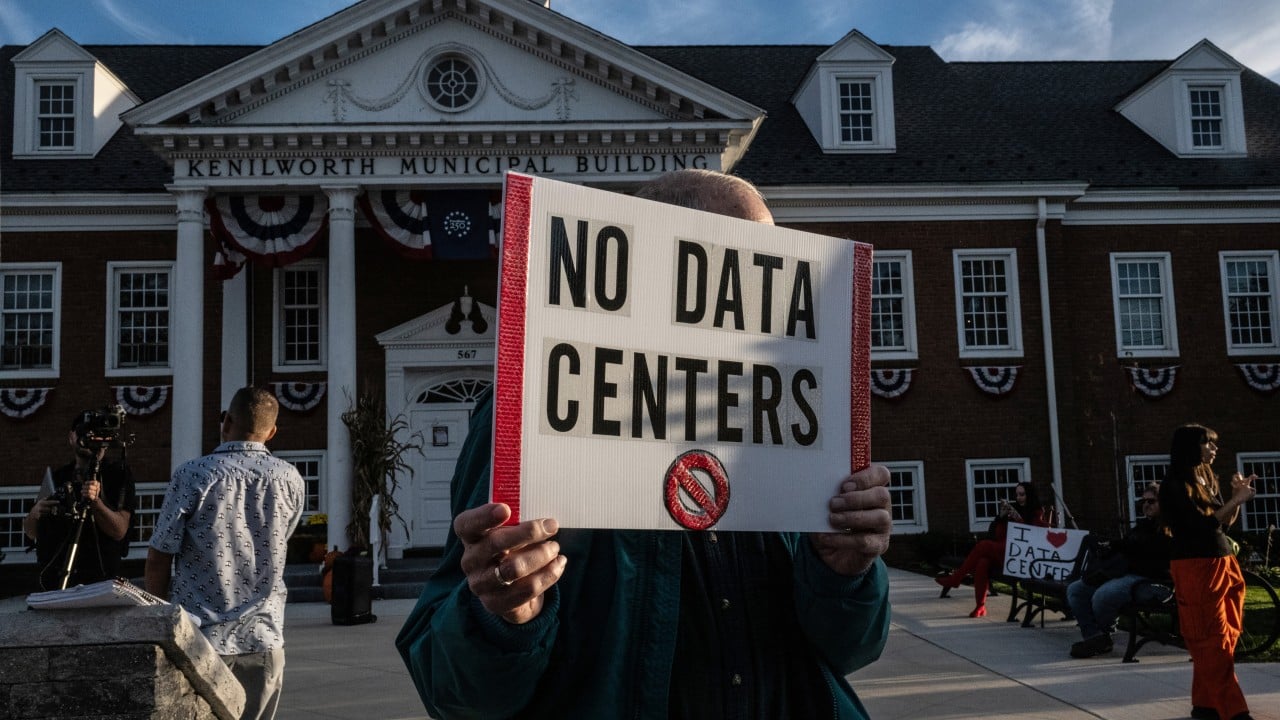
The Nasdaq Composite showed signs of a market correction on Thursday, as chipmakers and other AI-related stocks experienced significant declines. This drop followed the Democrats' victory in the midterm elections, which raised concerns about potential regulation of the AI industry, including data center development. The Nasdaq and S&P 500 were on track to record their largest one-day drop since April 2025's Liberation Day selloff.
Nvidia stock decreased by 6.4%, while the broader Philadelphia SE Semiconductor index dropped nearly 11%. The decline in AI-related stocks came despite a recent surge in market enthusiasm, driven by the belief that AI infrastructure development would continue unabated. Experts suggested that while it was unlikely a slowdown would halt AI growth entirely, it would create concerns given the industry's dependance on rapid infrastructure expansion.
The sharp declines pushed the Nasdaq Composite close to a 10% drop from its October 6 record high. Major tech companies such as Meta Platforms, Amazon, and Alphabet also saw losses, as did data center operators and neocloud providers. Notably, Tesla and SpaceX suffered more than a 10% drop each. The Dow Jones Industrial Average fell by 1,146.83 points, the S&P 500 dropped by 246.37 points, and the Nasdaq Composite plunged 1,273.18 points in the morning trading session.
Seven out of 11 major S&P 500 sectors experienced negative performance, with tech and consumer discretionary sectors leading the downturn. Energy stocks, however, gained the most. The day marked the biggest percentage gain for the Dow Jones in three months, fueled by a decrease in political uncertainty. Lower oil prices added to the positive sentiment.
Central banks worldwide noted that inflation remained elevated, despite surging crude oil prices due to the Middle East conflict. Federal Reserve officials hinted at potential future rate hikes. Analysts pointed out that a divided government in Washington could result in fewer sharp legislative changes, potentially slowing down fiscal spending due to the deteriorating US fiscal situation.
A sharp decline in oil prices also contributed to the overall optimism in the market. Trading volume was heavy, with seven times more declining issues than advancing ones on the NYSE, and nearly four times as many on the Nasdaq. The S&P 500 had more 52-week highs (74) than new lows (6), while the Nasdaq Composite recorded 140 new highs and 430 new lows.
Written by urgent.news from The Indian Express's reporting — not their text. Machine-written — may contain errors; check the original before relying on it.
This story
This is one outlet's version. Read the fullest account.
- Wall Street's rising stars say these skills matter more than ever in the AI era businessinsider.com
- A brutal sell-off for AI stocks sends Wall Street reeling, and the S&P 500 tumbles 4.4% channelnewsasia.com
- AI stock sell-off sends Wall Street reeling and erases midterm rally gains globalnews.ca
- AI-linked stocks drive Wall Street gains as Apple shares slip qatar-tribune.com
- CrowdStrike to acquire cybersecurity startups Fiddler AI, Dreadnode for reported $495M siliconangle.com
- Wall Street slumps as AI stocks tumble, Nasdaq nears correction indianexpress.com
- AI chip stocks drag Wall Street toward worst day since Trump's tariff announcements in 2025 koreatimes.co.kr
- CrowdStrike agrees to buy Fiddler AI, which helps monitor AI agents, for ~$400M, and Dreadnode, an automated security AI testing tool, for ~$95M, mostly in cash (James Rundle/Wall Street Journal) wsj.com