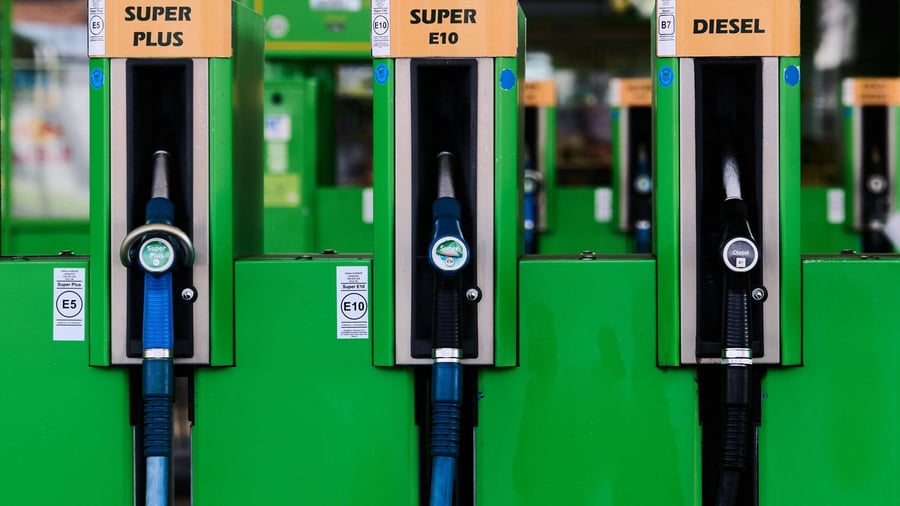
USA: Trumps Diesel-Deal mit Russland verpufft – Tanker weichen aus
Der US-Präsident erlaubt den Import von russischem Diesel, um die Preise zu drücken. Doch mindestens drei von vier erwarteten Tankern drehen ab, weil potenzielle Käufer Probleme fürchten.
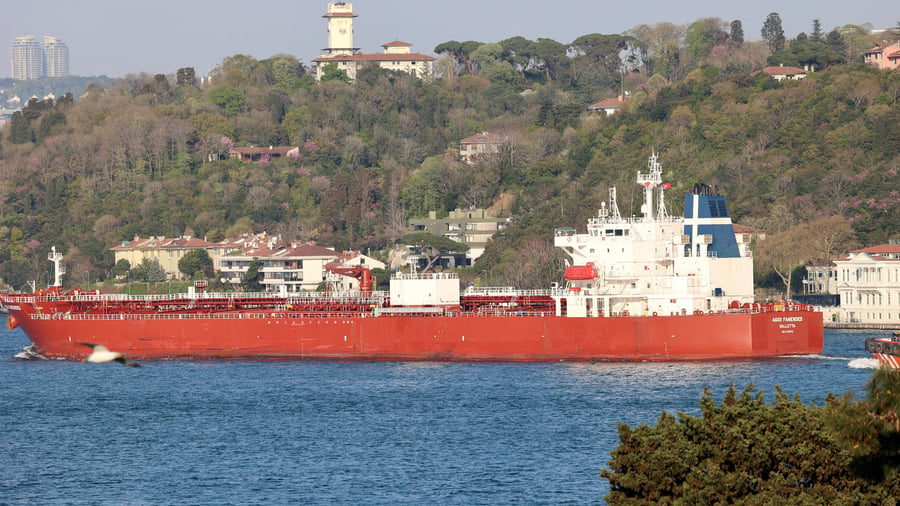
Several tankers carrying hundreds of thousands of liters of Russian diesel, originally bound for the United States, appear to have changed their plans. At least three of the four known vessels are no longer on route to the US Atlantic coast, according to positioning data from ship tracking platforms. This threatens to render the diesel deal of U.S. President Donald Trump with Moscow ineffective.
In late October, several ships set out from the Russian Baltic coast heading towards the Atlantic. At least four ships were identified by observers and tracked by multiple monitoring services. Three of the four ships are on sanctions lists: "Talisman" (Russian flag): sanctioned by the US, EU, UK, Canada, and Switzerland; "Beast" (Seychelles): sanctioned by the EU, UK, Australia, Canada, and Switzerland; "Leruo" (Sierra Leone): sanctioned by the EU, UK, Canada, and Switzerland; "Agioi Fanendes" (Malta): not sanctioned.
Only the "Agioi Fanendes" appears to still be on route to the US, but the tanker is broadcasting "For Orders" via its transponder instead of a specific port of call, which may indicate it is waiting for a new buyer for its diesel on board. The crews are manually entering this information, so it is not necessarily reliable. The "Talisman," a vessel of the Russian state-owned Sovcomflot, had already changed course westward several days ago and is currently in the Mediterranean north of Tunisia.
The remaining ships have turned south: the "Beast" also reports "For Orders," while the "Leruo" reports "Brazil For Orders." These routes suggest that instead of heading to the US, the tankers are now heading towards South America. Democrats have sent threatening letters to companies Even if a ship with Russian diesel reached the US, there is no guarantee of what would happen next.
While Trump announced at the beginning of October that Russian President Vladimir Putin had promised him several million barrels of diesel by the end of the year, it is mainly Democratic officials who are trying to prevent actual stoppages at US ports. For example, Governor of New Jersey, Mikie Sherrill, wrote a letter to terminal and port operators in the New York area warning them of heavy fines for allowing Russian diesel to be unloaded.
The exact legal situation is unclear, but this seems to be enough of a reason for US companies to avoid dealing with the Russian shipments. "Some firms don't want to have anything to do with the cargo because of reputational risks," the "Financial Times" quotes Claire McCleskey, a partner at a US compliance consulting firm. A presidential decree suspends US sanctions on Russian diesel until April 2027.
Apart from hoping for lower prices in the US, the step was also seen as a symbolic gesture to Moscow, signaling Washington's readiness for negotiations around the war in Ukraine. Kiew responded harshly. Oil, gas, and fuel exports are considered an important source of funding for Russia's war effort in Ukraine. Putin, for his part, expressed confidence that the deal would have a positive effect on the global economy.
However, market experts do not expect the agreement to significantly influence the world market – for the volumes are too small. The combined cargo of the four ships would only cover a fraction of the daily US diesel demand. An oil export ban? Observers also say that there is no diesel shortage in the US. Since the country also exports diesel, prices in the country are determined by global developments.
Conflicts in Ukraine and the Gulf have reduced refining capacities, and the crude oil price remains high. Trump could not push through export restrictions, partly due to pressure from energy companies that are profiting billions from the high prices. By issuing a threat of an export stop, he did force the release of state diesel reserves by the G7 states.
However, the impact on prices remains minimal. Diesel remains almost double the price it was a year ago at 6.25 dollars per gallon. The high prices have also contributed to the clear defeat of the Republicans in the Midterm elections. Surveys show that many US citizens blame the Russo-Ukrainian war and Trump personally for the comparatively high inflation and changing their voting behavior accordingly.
Regardless of whether Russian diesel reaches the US or not, the diesel shortage is expected to persist according to the International Energy Agency (IEA). While the IEA expects a recovery in global refining production towards the end of 2026, it will not be enough to eliminate the deficit created this year.
Written by urgent.news from Handelsblatt's reporting — not their text. Machine-written — may contain errors; check the original before relying on it.