UK found to be ‘dangerously’ reliant on China for critical minerals needed for defence and AI
Delivering net zero also at risk, say MPs as they call for centralised policy and funding for mines and diversification The UK is “dangerously” dependent on China for critical raw materials needed for the military, renewable energy infrastructure and AI, a parliamentary investigation has found. MPs on the business select committee called for an urgent centralised policy and the creation of a…
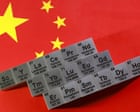
A parliamentary investigation has revealed that the United Kingdom is dangerously reliant on China for critical minerals required for defence, AI, and renewable energy infrastructure. The Business Select Committee's chair, Liam Byrne, emphasized that these minerals are essential for the country's new economy, as rearming Britain, building AI, and achieving net-zero emissions cannot be achieved without securing these resources.
The committee criticized the government's policy on China, stating that the UK remains exposed to China's chokehold on critical minerals. China's dominance in processing minerals, particularly seven categories including refined lithium and rare earths, leaves the UK vulnerable to sudden supply disruptions, as witnessed in 2025. Demand for lithium alone is projected to increase 45-fold by 2030, while the demand for rare earths required for military jets and other applications is expected to grow 16-fold.
The committee called for a centralized policy, a critical minerals finance facility, and diversification through grants, equity, and debt to accelerate the program. They suggested that the UK should collaborate with G7 partners, Europe, and Indo-Pacific countries to aggregate demand and introduce new suppliers. The committee suggested establishing domestic mining, refining, and recycling opportunities, encouraging businesses to reduce procurement from China, unlocking investment, and assessing planning and permitting processes.
Despite these recommendations, the committee found the government lacking in transparency and unable to satisfy their criteria. The government, however, denied the lack of a critical minerals strategy, stating that it is investing £400 million in domestic production, recycling, and international partnerships.
Written by urgent.news from The Guardian's reporting — not their text. Machine-written — may contain errors; check the original before relying on it.