This Ancient 'Hell Chicken' Might Be the First Known Fruit-Loving Dinosaur, Revealing a Whole New Cretaceous Lifestyle
Infernogallus jamesi had beak and mouth adaptations that hint it could mash soft foods, like today's frugivorous birds. The dinosaur probably munched on fruits resembling modern-day cherries and peaches, and may have helped spread seeds via its poop
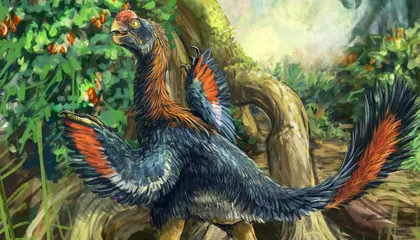
In a groundbreaking discovery, researchers have identified what may be the first known dinosaur to primarily consume fruit, suggesting a previously unknown Cretaceous lifestyle. The fossilized remains of Infernogallus jamesi, a small species roughly the size of a turkey, were found in the Hell Creek Formation, a renowned fossil site stretching across Montana, North Dakota, and Wyoming.
Dating back around 67 million years, I. jamesi is one of the smallest known caenagnathids, a group of feathered, beaked, two-legged dinosaurs.
What sets I. jamesi apart is its specialized chewing abilities, a rare adaptation among dinosaurs. By digitally reconstructing the skull from CT scans, scientists identified three key features: mouth muscles for back-and-forth chewing, a unique jaw joint allowing forward movement, and ridges and grooves in the beak for processing soft materials like fruits. This combination of features is reminiscent of modern frugivorous birds, such as the vulturine parrot.
"The anatomy of Infernogallus is bizarre among dinosaurs, and we quickly realized that we were dealing with something special," stated Thomas Dudgeon, an evolutionary ecologist at the Royal Ontario Museum. The discovery not only illuminates Cretaceous ecology but also highlights the diversification of dinosaurs beyond the widely known carnivores like T. rex and herbivores like sauropods. "It has been proposed before that some groups of dinosaurs ate fruits, but there was never evidence to back it up," Dudgeon explained.
The timing of I. jamesi's fruit-based diet aligns perfectly with the proliferation of drupes, fruits with soft flesh surrounding a hard seed or pit. These fruits likely made up a significant portion of the hell chicken's diet, which in turn could have played a crucial role in spreading these abundant and diverse fruits through its droppings. While it remains to be seen if caenagnathids indeed acted as seed dispersers, their presence in the Cretaceous suggests a far more diverse dinosaur community than previously assumed.
Written by urgent.news from Smithsonian's reporting — not their text. Machine-written — may contain errors; check the original before relying on it.