Sewage bacteria generate electricity while destroying antibiotics
Call it a sewage trifecta: a new microbial fuel cell makes power, breaks down hard-to-remove antibiotics, and produces the household chemical hydrogen peroxide.
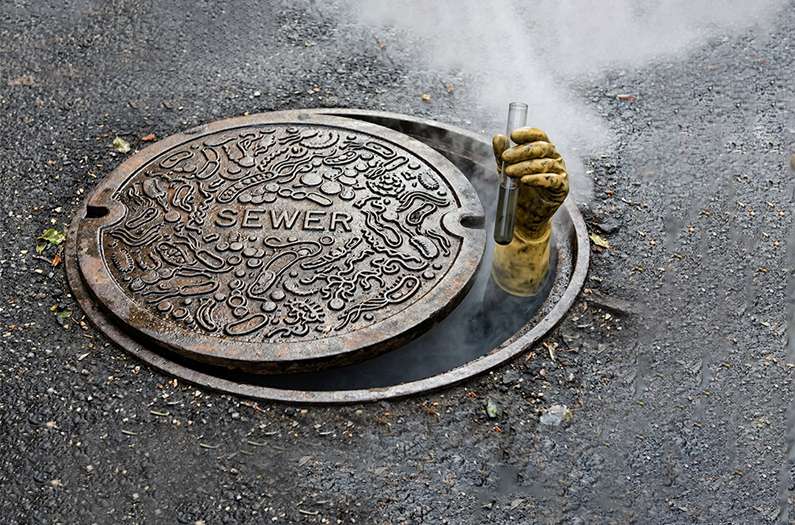
Researchers have developed a novel device that can simultaneously destroy antibiotics and generate electricity from sewage. Sewage contains organic matter that can be a source of energy, but it also harbors harmful chemicals and leftover medicines that conventional treatment methods struggle to eliminate efficiently. The innovative technology utilizes bacteria present in wastewater to achieve three goals: generate electricity, break down a hard-to-degrade antibiotic, and produce a valuable industrial chemical.
The study, published in the Journal of Power Sources, employs microbial fuel cells—battery-like devices equipped with two electrodes. Bacteria grow on one electrode and consume organic matter, converting chemical energy into electrons that flow through an external circuit to produce electricity. These electrons then encounter oxygen at the other electrode, resulting in the formation of water.
However, the researchers discovered that if all the electrons do not combine with oxygen and hydrogen at the second electrode, hydrogen peroxide forms instead. Hydrogen peroxide, a common household chemical, is utilized for disinfection and bleaching purposes, and is widely employed in chemical manufacturing. The problem with hydrogen peroxide is that its current production involves an energy- and chemical-intensive process in large plants.
To address this issue, the researchers devised a new electrode by embedding iron and nickel oxides on a flexible carbon fiber cloth. In a high-temperature environment of 800°C, in the presence of acetylene, carbon nanofibers grew out of the cloth. The metal particles from the oxides adhered to the tips of the carbon nanofibers, creating an electrode with conductive fibers and catalytic tips. Bacteria adhered to this rough conductive surface and formed a thick film.
The team incorporated the same electrodes into both sides of the microbial fuel cell. When sewage contaminated with the antibiotic chloramphenicol was passed through the cell, it successfully removed 99.99% of the drug while generating hydrogen peroxide within two days. The researchers plan to further test the system by running it for longer periods, examining the effects on other drugs, evaluating the toxicity of breakdown products, and connecting multiple cells in series to increase power output.
While the system is not yet fully capable of paying for its own cleanup, the researchers highlight that within just two days, their device transformed sewage into cleaner water, a useful chemical (hydrogen peroxide), and a small amount of electricity.
Written by urgent.news from Anthropocene Magazine's reporting — not their text. Machine-written — may contain errors; check the original before relying on it.