Scale is not fate: How the UAE and Qatar created the world's healthiest telecom sectors
A healthy telecoms sector is vital for a thriving digital economy and technological development. Conventional wisdom has long dictated that infrastructure businesses such as telecoms are largely about scale. The argument is simple: a large population generates more revenue and spreads the substantial cost of network roll-outs across a bigger subscriber base, making telecoms operations more…
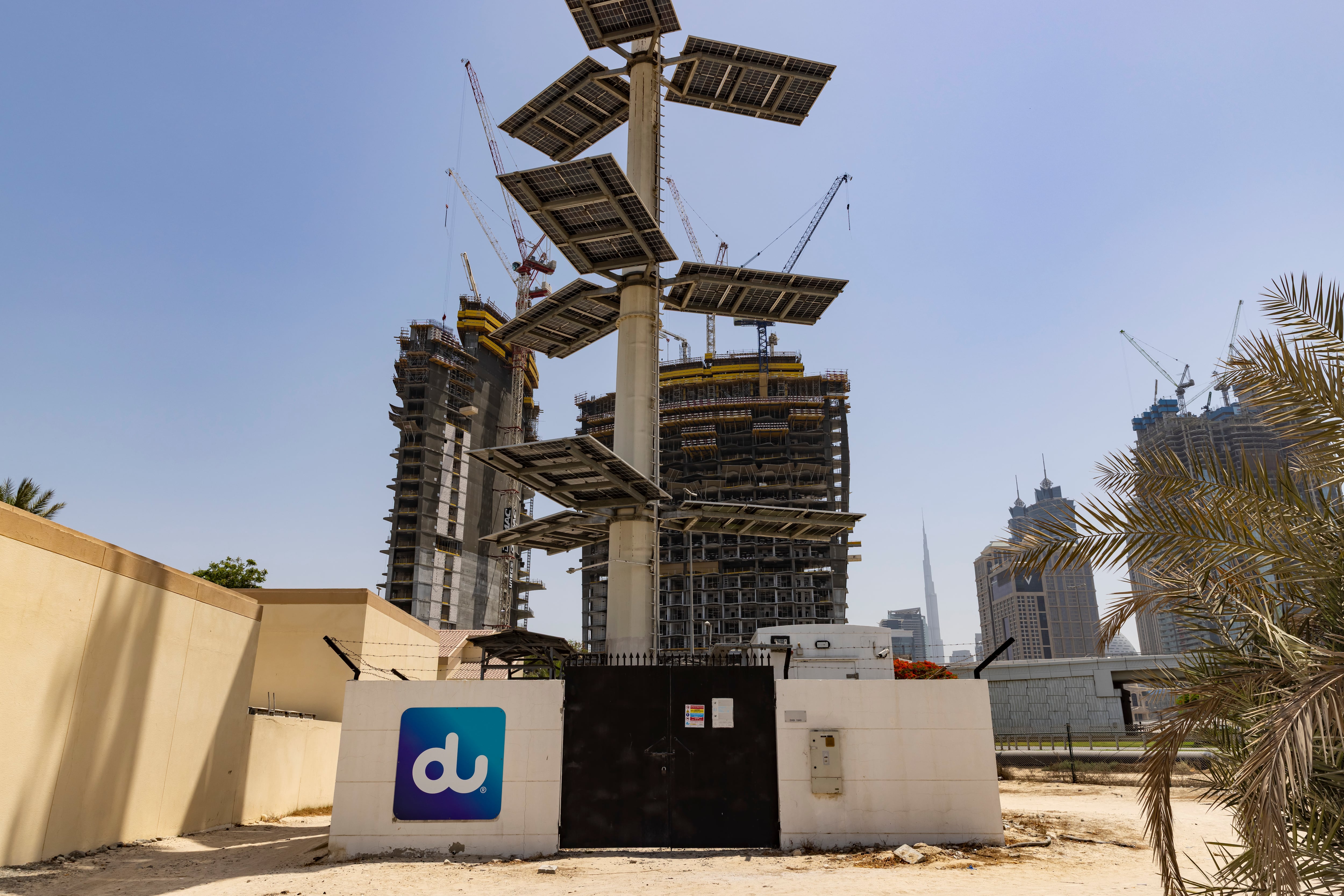
A healthy telecoms sector is essential for a thriving digital economy and technological development. Traditional wisdom has traditionally emphasized the importance of scale in these businesses, reasoning that larger populations generate more revenue and spread the costs of network roll-outs across more subscribers, leading to financial sustainability and sustained investment.
However, a new Kearney research study challenges this notion. By evaluating 34 major global markets across technology deployment, commercial health, and customer sentiment, the research reveals that the UAE and Qatar are the world's two healthiest telecoms markets, surpassing larger and historically more technologically advanced countries such as the US and South Korea.
Remarkably, there is no correlation between market size and sector health, nor is there a clear connection between GDP per capita and sector health. While Malaysia, with a lower GDP per capita ranking, ranks sixth in the index due to its well-structured market, coordinated technology roll-out, and an active national policy framework. Similarly, despite its high GDP per capita, the US lags behind in customer satisfaction and financial returns, despite its widespread fiber and 5G coverage.
What sets the UAE and Qatar apart? Their technology deployment is a significant factor, with both countries ranking among the top five in the index. In Ookla's July 2026 Speedtest Global Index, the UAE leads with 663.5 Mbps median mobile download speeds, while Qatar follows with 548.4 Mbps. Germany, the highest-ranked non-Gulf country, has a median speed of just 274.4 Mbps. Additionally, both nations boast almost universal fixed broadband infrastructure and occupy the top two global positions for customer satisfaction.
The research suggests that market structure is crucial to understanding these countries' success. Both the UAE and Qatar operate as two-player markets, and the study shows that markets with two or three mobile operators consistently outperform more fragmented markets regarding financial and technology deployment metrics. In markets with more operators, capital may be inefficiently divided, with competitors spending heavily on overlapping infrastructure to ensure basic coverage, reducing returns on invested capital and diverting funds from network quality improvement.
In two-player markets, the presence of two well-capitalized national operators can coexist with extensive infrastructure investment and high connectivity levels. Regulatory certainty and policy coherence have also played significant roles in the success of the UAE and Qatar telecoms markets. Both nations coordinated closely between operators, regulators, and broader development goals, enabling early investments in telecoms infrastructure.
They recognized the importance of telecoms infrastructure early on, allocating spectrum and coordinating national strategies to pioneer commercial 5G deployments. For instance, in the UAE, regulatory preparations for 5G began as early as 2015, enabling regional operators to lead global roll-outs, including Ooredoo Qatar's commercial 5G network activation in May 2018 and the UAE's early fixed-wireless 5G launches.
This long-term regulatory planning accelerated technological development, while Qatar opened over 4,860km of government-owned telecoms ducts to operators, reducing deployment costs. In the UAE, operators retain tower ownership, encouraging physical tower site sharing without selling assets. These factors have created a virtuous circle: operators' ability to invest in network quality boosts customer satisfaction, which, in turn, encourages greater adoption of bundled services, generating financial returns to fund further technological advancements.
Written by urgent.news from The National UAE's reporting — not their text. Machine-written — may contain errors; check the original before relying on it.
This story
This is one outlet's version. Read the fullest account.