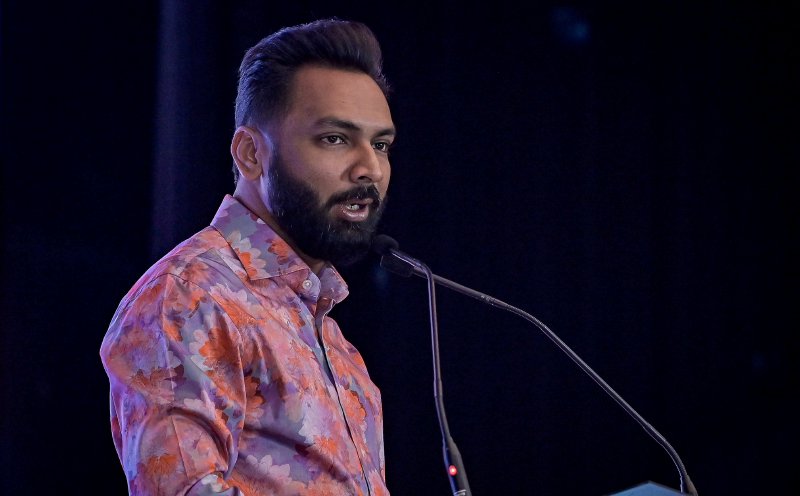
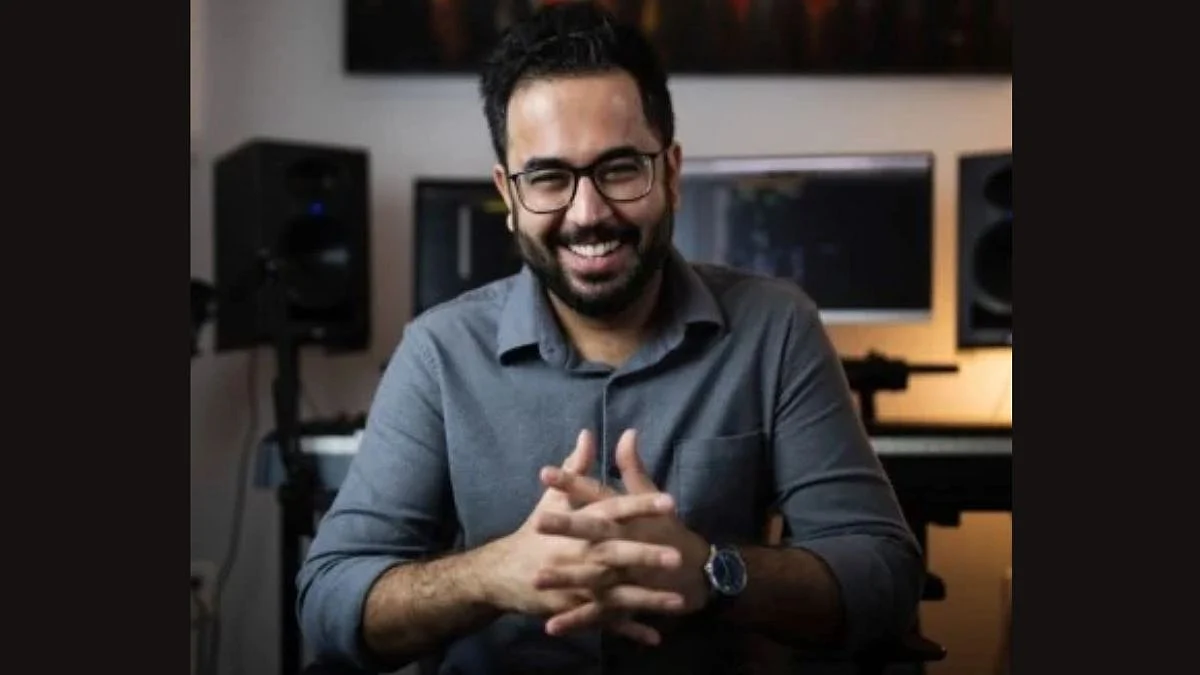
Salil Bhayani: The Weight Of The Score
A Portrait of a Mumbai-born Musical Visionary Who Turned Everyday Digital Media Into High Art. For more than a century and a half, the Victoria and Albert Museum in London has served as a sanctuary for the tangible. Its sprawling galleries are devoted to the physical weight of human history—Hellenistic marble, intricately woven tapestries, and Renaissance ceramics. So, in the autumn of 2018, when…
The Victoria and Albert Museum in London has long been a repository for physical human history, but in 2018, it broadened its scope to include digital media with the major exhibition Videogames: Design/Play/Disrupt. This was no casual showcase of arcade games, but a serious examination of the medium on par with the museum's traditional collections.
Studio Oleomingus, an Indian arts studio based in the small town of Chala, Gujarat, was commissioned by the museum to create a new, experimental work for the exhibit. Founded by Dhruv Jani and Sushant Chakraborty, the studio was known for its interactive fictions that provided absurdist, post-colonial critiques of Indian history.
Their piece, In the Pause Between the Ringing, was a visual puzzle that was primarily remembered for its atmosphere, not its visuals. The room was filled with mournful drones and fragile acoustic dissonance, creating a breathing historical archive. Salil Bhayani, the studio's essential musical voice, was the one who built this auditory space.
Bhayani, a graduate of Berklee College of Music, brought a profound classical foundation to his work, anchoring it with immense symphonic scale. His compositions have elevated everyday digital formats, from web animations to interactive games, by applying the symphonic complexity and psychological nuance of a concert hall to the digital screen.
This shift in storytelling has fundamentally altered how these formats are experienced, with Bhayani's scores ensuring that our digital era will be remembered not with a synthesized loop, but with a symphony.
Written by urgent.news from Free Press Journal's reporting — not their text. Machine-written — may contain errors; check the original before relying on it.