Russian Attacks Can No Longer Be Called “Hybrid Threats” — Lithuanian President
Lithuanian President Gitanas Nausėda criticized the use of the term "hybrid threats" to describe Russia's actions against European countries. In his view, this formulation has become a convenient way to avoid directly acknowledging the nature of Russian aggression. Some of the recent attacks are, in fact, kinetic, the Lithuanian leader emphasized. UATV English reports this, citing Lithuanian…
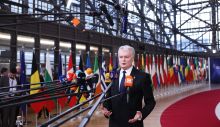
Lithuanian President Gitanas Nausėda has dismissed the term "hybrid threats" to describe Russia's actions against European nations, arguing that it fails to accurately portray the true nature of Russian aggression. The Lithuanian leader made his remarks on November 3 at the Berlin Security Conference, a joint event organized by Germany and Lithuania.
Nausėda urged European partners to reassess the language used to characterize Russian sabotage and hostile operations, suggesting that the concept of hybrid threats has become a convenient euphemism that prevents a clear definition of the actual threat. He noted that some recent attacks are kinetic in nature, involving the use of physical force and weapons.
Nausėda also stressed the importance of strong transatlantic ties for collective security, while emphasizing that Europe must assume greater responsibility for its own defense to bolster NATO. The President highlighted defense cooperation between Lithuania and Germany, including the deployment of the 45th Armored Brigade in Lithuania and the development of joint defense-industry projects, such as a plant for manufacturing artillery munitions and a collaboration on Leopard tank maintenance.
Nausėda also outlined Lithuania's priorities for its upcoming presidency of the Council of the European Union, focusing on enhancing Europe's defense capabilities, internal security, EU enlargement, and long-term support for Ukraine.
Written by urgent.news from UATV English's reporting — not their text. Machine-written — may contain errors; check the original before relying on it.