Physicists sank a telescope 1.5 miles under the sea to put Einstein's relativity to the test
A half-built neutrino telescope on the floor of the Mediterranean Sea searched for cracks in one of physics' most basic invariances. It came up empty, but its limits rival those of detectors many times its size.
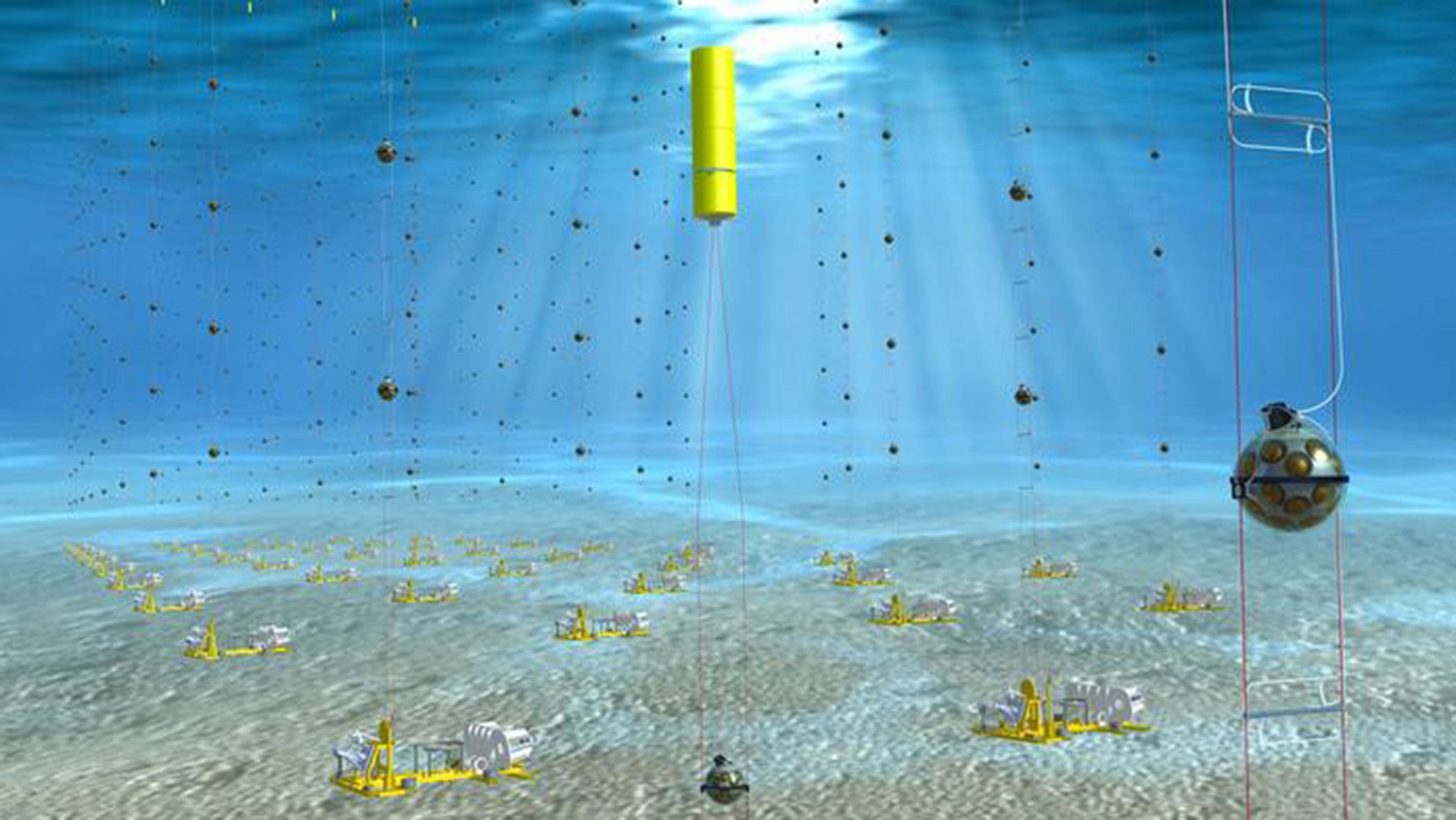
A mile-deep particle detector off the French coast has put Einstein's relativity to the test, finding no cracks in the theory. The ORCA telescope, located 1.5 miles beneath the Mediterranean Sea, detects elusive particles called neutrinos. The detector's data has set limits that compete with those of larger, longer-running experiments, indicating that a fundamental assumption of space-time, Lorentz invariance, remains intact.
Neutrinos, nearly massless and barely interacting particles, travel through Earth and provide a unique probe for testing theories of quantum gravity. The ORCA detector, part of the KM3NeT collaboration, set the first direct limits on a type of violation that would treat muon and tau neutrinos differently. With additional detection units planned, the team hopes to continue probing the boundaries of our understanding of the universe.
Written by urgent.news from Live Science's reporting — not their text. Machine-written — may contain errors; check the original before relying on it.