Nikkei, Yen, Hang Seng: Anleger schichten um – Auch in Asien brechen KI-Werte ein
Investoren fürchten, dass der Wahlsieg der Demokraten den Ausbau von KI-Rechenzentren bremsen könnte. In Japan verlagern sie ihre Positionen daraufhin in andere Branchen.
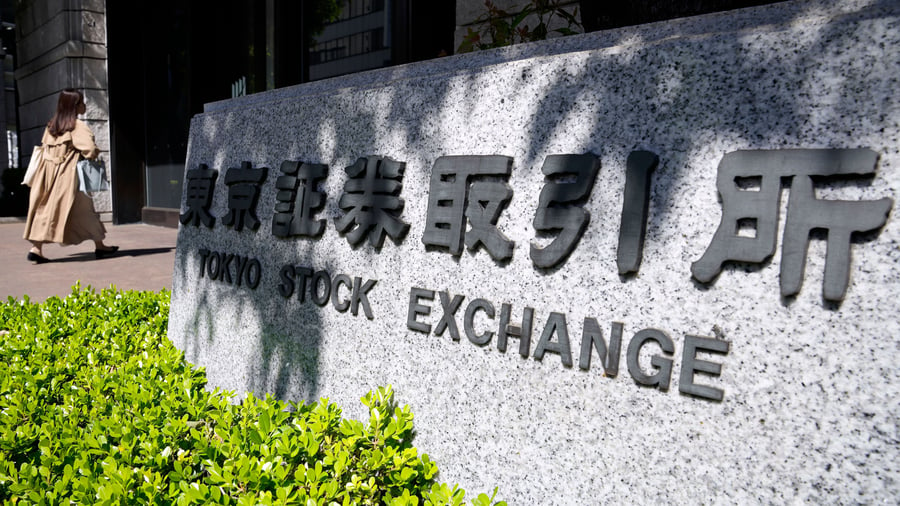
Thursday saw falling oil prices bolstering the stock market sentiment in Asia. However, the major indices in the region did not move in unison. Here, AI stocks faced pressure. The tech-heavy Nikkei Index slipped 0.8 percent to 61,687 points. The broader Topix index rose 1.5 percent to 3,955 counts. Shanghai's Shanghai Stock Exchange stayed nearly unchanged at 3,690 counts.
The CSI-300 index of China's 300 largest mainland companies climbed 0.4 percent to 4,116 points. The South Korean benchmark Kospi index fell five percent to 5,380 points.
Advantest and Tokyo Electron, chip equipment firms, led the Nikkei down by 10.3 percent and 8.6 percent respectively. "Capital that was previously flowing into AI and semiconductors is now being rechannelled into other sectors," said Wataru Akiyama, an equity strategist at Nomura Securities. "There is a growing view that Democratic Party victories could delay data center projects, potentially undermining the current pace of profit growth."
Japanese investors shifted positions into other industries. Of the 33 sector groups on the Tokyo Stock Exchange, 25 groups gained. The real estate sector topped the list with a 6.5 percent increase, followed by retail with a 5.4 percent rise. Uniqlo retailer Fast Retailing shares jumped 7.9 percent. Toyota advanced 5.3 percent ahead of its afternoon earnings report. Sony and Nintendo, which release their results after the market close, rose 6.6 percent and 4.6 percent respectively.
Written by urgent.news from Handelsblatt's reporting — not their text. Machine-written — may contain errors; check the original before relying on it.
This story
This is one outlet's version. Read the fullest account.