Klima: Rekord-Störung des Polarwirbels: Droht Deutschland jetzt ein Eiswinter?
Der Polarwirbel über dem Nordpol gerät so früh unter Druck wie nie. Experten ordnen ein, was das für unseren Winter heißt, wie El Niño mitmischt und ob der Klimawandel eine Rolle spielt.
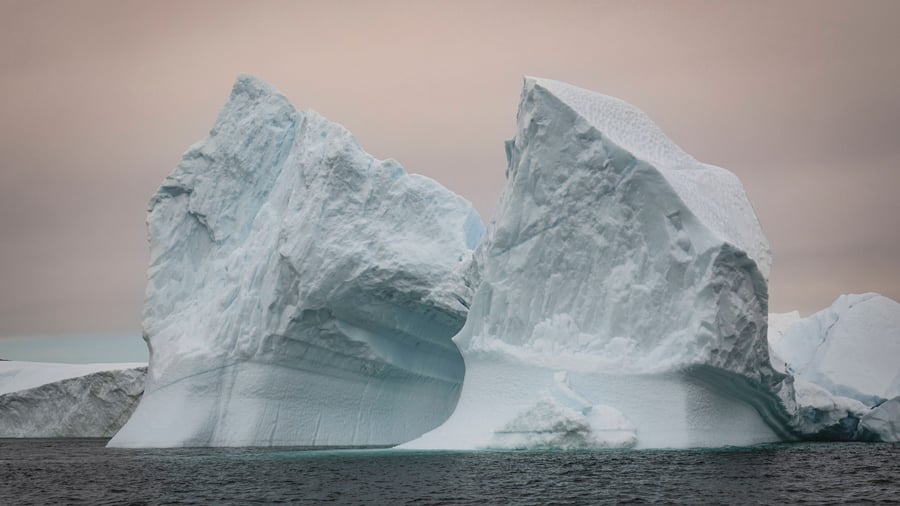
A record disruption of the Polar vortex has been detected over the North Pole, potentially signaling an early onset of an ice winter in Germany. The Polar vortex, a massive low-pressure system in the stratosphere around 30 kilometers above the North Pole, forms during the autumn and winter and maintains extremely cold air over the Arctic.
Its impact on European weather is indirect, but changes in its flow can affect the troposphere, the lowest layer of the atmosphere where our weather occurs, with a delay of around ten to twenty days.
Meteorologists are closely watching the situation, predicting that the disruption will likely have a significant impact on weather patterns in the Northern Hemisphere from late November to December. No winter chill is forecasted for Germany in the coming ten days, but from late November to December, meteorologists anticipate a window of potential winter chills caused by Polar vortex disruptions.
However, the extent of these effects remains uncertain. Statistical evidence suggests that around two-thirds of major stratospheric warmings lead to a negative North Atlantic Oscillation, which in turn weakens the mild westerly winds and increases the likelihood of cold air outbreaks and winter weather in Europe. This, however, does not guarantee cold weather in Germany.
The situation is further complicated by the complex interplay of various factors, including the position of high and low-pressure systems over the Atlantic and Europe. Since weather is a chaotic system, precise weather predictions can only be made a few days to weeks in advance, and the stratosphere only provides tendencies.
Such Polar vortex disruptions are not uncommon; however, this early disruption is the second in two years. While many meteorologists attribute the recurring disruptions to climate change, the exact impact of global warming on the Polar vortex remains unclear. Observational studies have shown an increase in the frequency of disruptions in recent decades, but most climate models do not find a significant connection.
Some experts speculate that the current El Niño event in the South Pacific Ocean may be contributing to the Polar vortex's weakening. However, the relationship between the Polar vortex and El Niño is still uncertain, as there have been no comparable events in the observational record.
Swiss atmospheric scientist Daniela Domeisen from the University of Lausanne (UNIL) confirmed that a stratospheric warming is expected, though she emphasized that it is likely to be weak. Domeisen also suggested that the current El Niño could potentially mitigate the impact of a disrupted Polar vortex on winter weather in the Northern Hemisphere. However, further research is needed to establish a clear connection between the two phenomena.
Written by urgent.news from Handelsblatt's reporting — not their text. Machine-written — may contain errors; check the original before relying on it.