How to Survive (Not Thrive) as a Salaryman
Fifteen rules for remaining employed, reasonably sane, and difficult to blame until the train takes you home — a salaryman survival guide.
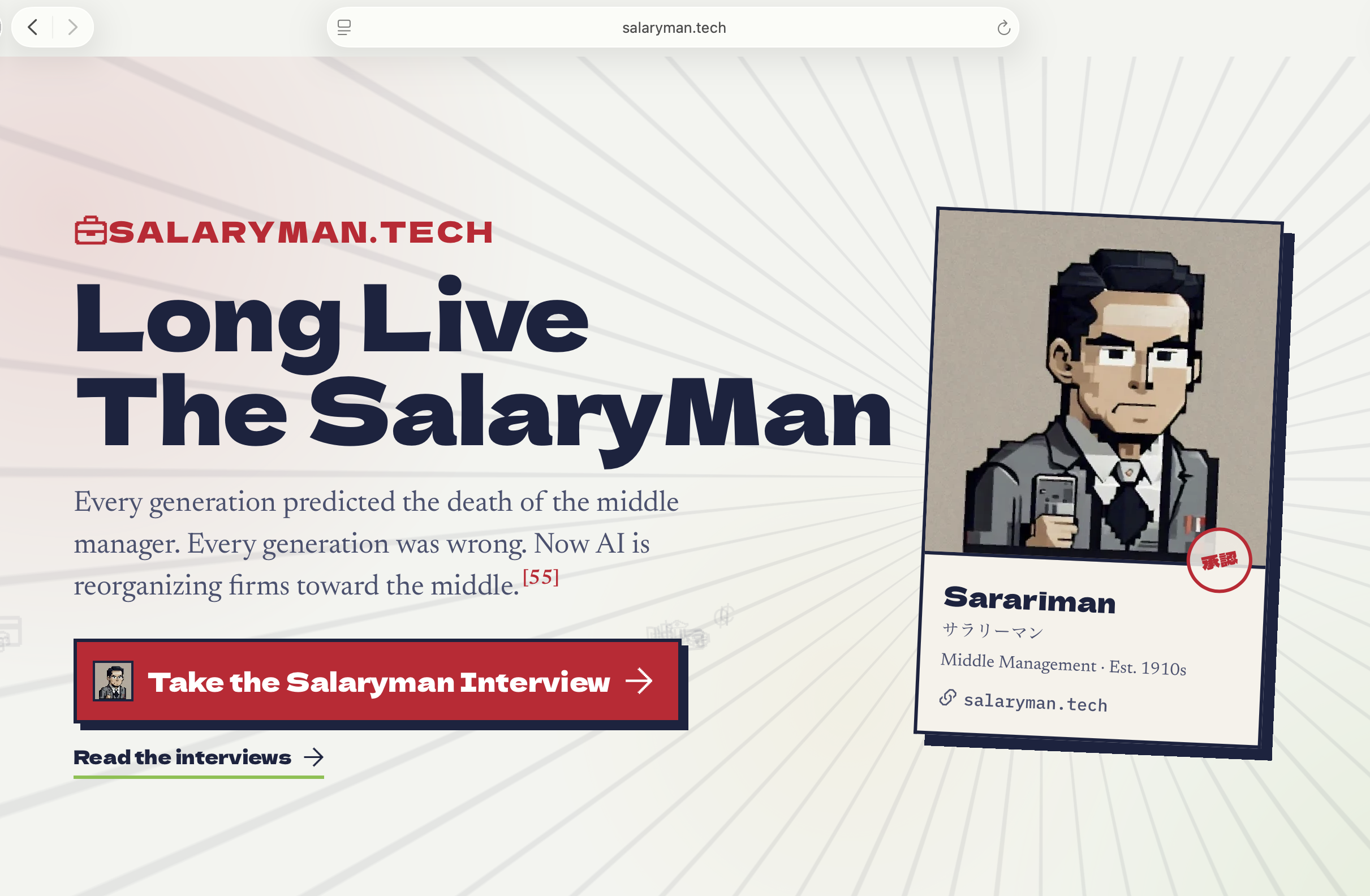
Staying employed, feeling mentally balanced, and being hard to criticize until the train takes you home is the primary goal. The goal is not about being promoted, finding meaning, or becoming crucial. The aim is to keep your job, stay mentally well, and make it hard to blame you when the train arrives.
Rule 1 suggests arriving a few minutes before your scheduled time. Showing up too early sets false expectations. Showing up late makes it clear you missed something. Aim for the sweet spot where everyone believes you were already there when you arrived.
Rule 2 states that you don't have to work late. The focus isn't on working extra hours but on understanding who notices when you leave. If your boss starts putting on his coat, it's a sign that you've reminded yourself you also own a coat.
Rule 3 advises carrying something with you. This could be a folder, laptop, notebook, several pieces of paper, or even a person. Walking quickly while carrying something important appears to many as having somewhere essential to be.
Rule 4 emphasizes mastering the serious nod. This nod is a quick and efficient way of communicating in the workplace. It's used when someone explains a problem you don't control, announces a project that will soon disappear, or asks if you understand something. Saying "hai" while nodding can help clarify your understanding. Avoid giving too much information.
Rule 5 teaches the difference between responsibility and blame. Responsibility can lead to promotion. Blame can result in losing your job. When receiving important instructions, make a polite written record of what was decided. This helps avoid confusion about what was discussed later.
Rule 6 states that being unproductive can be risky. Being uniquely productive can also be risky because you might be needed and not allowed to leave. The ideal employee is useful enough that their absence creates inconvenience, but not so useful that they are indispensable.
Rule 7 warns against finishing tasks too quickly. If a task takes everyone three hours but you finish in 45 minutes, it doesn't give you two hours and fifteen minutes of free time. It creates another task for you. This illustrates a key law of salaried employment.
Rule 8 compares meetings to weather. You can't control the weather by getting angry at clouds. Attend the meeting, take notes, contribute a useful idea if possible, and determine if anything has been assigned to you. Once you've done this, you can continue with your day.
Rule 9 explains the importance of understanding the after-work drinking session (nomikai). While it is seen as a time for relaxation, it is not always just for fun. You don't have to drink the most. However, you should eat, participate, pour drinks when it's your turn, laugh, learn, and understand that the organizational chart can be more honest after the second beer.
Rule 10 emphasizes the importance of the commute. The train is not just a means of transportation. It's a protective barrier between 'Corporation You' and 'Actual You'. Use this time to relax with music, manga, games, books, or simply stare into nothingness. Avoid turning every commute into additional unpaid work.
Rule 11 advocates taking your vacation. A company capable of surviving various challenges can probably withstand your absence until Tuesday. Use the days you've earned.
Rule 12 suggests having something outside of work. This could be a family, hobbies, interests, or anything else that allows you to answer "Who are you?" without mentioning your employer.
Rule 13 clarifies that promotions are not mandatory, but survival is cumulative. You don't have to excel every year. Some years, you might gain new skills, make money, work with an excellent boss, or avoid restructuring. A 30-year career can have a significant amount of successful non-catastrophic years.
Rule 14 advises against confusing corporate urgency with actual emergencies. A presentation can be revised tomorrow. A spreadsheet is not literally bleeding. The client can wait until morning. If everything always feels urgent, you might not be experiencing urgency at all. Instead, you might be dealing with management.
Lastly, Rule 15 suggests knowing when survival means leaving. The old salaryman agreement was that if you gave them your loyalty, they would give you security. However, modern companies may not always provide this. If a company stops paying adequately, harms your health, disrupts your family life, or offers neither security nor opportunities, staying loyal isn't stoicism.
It's just a bad deal. The Salaryman Survival Creed emphasizes showing up, being useful, not becoming indispensable, knowing who makes decisions, keeping receipts, taking vacation, catching the train, going home, and maintaining a life outside work. The Creed encourages repeating these steps until retirement or finding a better offer.
Written by urgent.news from HackerNoon's reporting — not their text. Machine-written — may contain errors; check the original before relying on it.