Google Cloud storage moves to the front of the AI stack as enterprises hit the GPU utilization ceiling
For the past two years, enterprise AI investment has been dominated by one conversation: compute. Organizations raced to secure GPU allocations, negotiated infrastructure deals and stood up machine learning platforms at speed. What many discovered only after the fact is that the bottleneck they thought they were solving was not the only one in the […] The post Google Cloud storage moves to the…
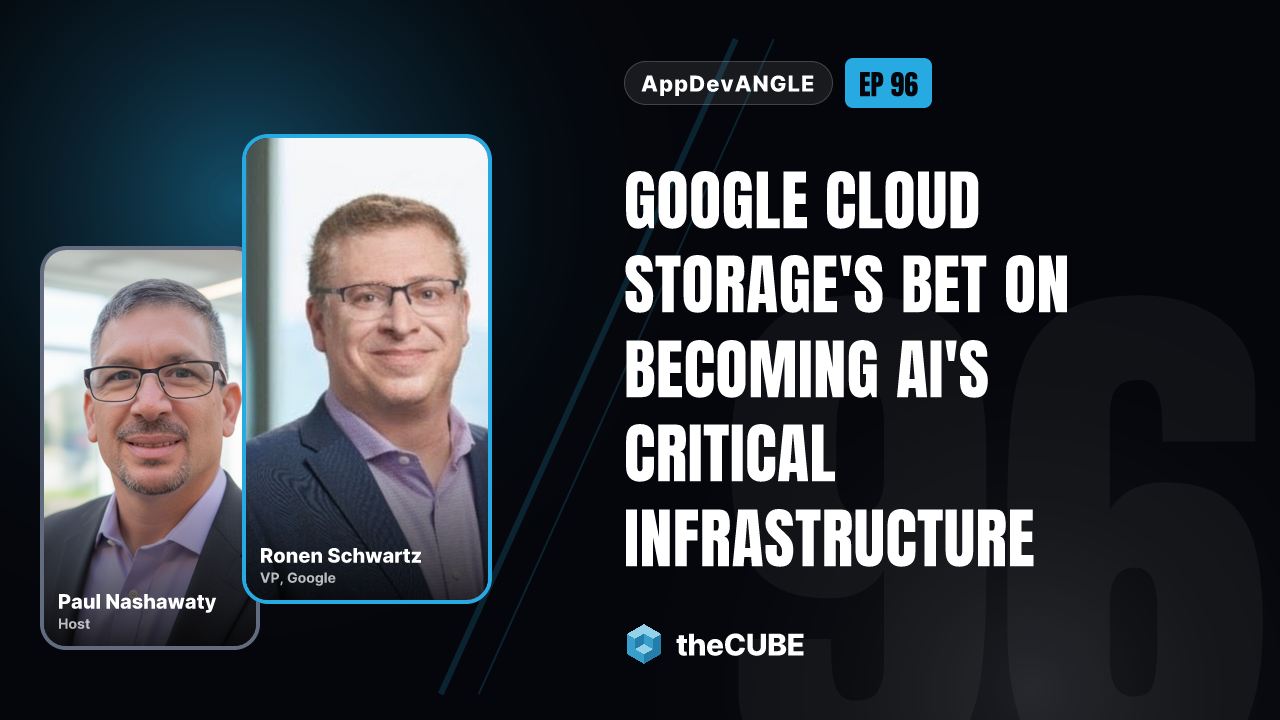
In recent years, the focus of enterprise AI investment has been primarily on compute resources like GPUs. However, it has become increasingly clear that storage is now becoming a limiting factor in AI infrastructure. This shift in priority is evident in a recent podcast discussion with Ronen Schwartz, vice president of products for Google Cloud Storage at Google LLC.
Schwartz emphasized that storage, once considered a backend enabler, is now moving to the front as a critical component of accelerator execution. The economics of this issue are straightforward - accelerators are the most expensive line item for enterprises, and any idle time waiting for data directly translates to lost revenue.
Despite this, many teams have neglected storage considerations when initially acquiring accelerators. The conversation highlighted that AI workloads, including training, inference, and agentic tasks, have distinct data movement patterns that necessitate tailored storage architectures. Training workloads require massive sequential reads and frequent checkpoint management, while inference demands real-time, low-latency responses.
Agentic workloads, in particular, require access to a wide range of unstructured data assets for semantic understanding. Google's Rapid object storage technology offers significant speed improvements in checkpoint management and real-time data delivery compared to standard storage solutions. This improved storage performance directly contributes to better GPU utilization, faster iteration cycles, and reduced effective costs per training run.
Google's expertise in running hyperscale AI workloads internally has enabled them to develop infrastructure capabilities that are now being offered externally to support enterprise AI needs. Their Rapid Bucket technology enables multi-terabyte throughput with sub-millisecond latency, a capability built on Google's own internal infrastructure and validated by leading AI companies.
By addressing storage as a critical component of AI infrastructure, organizations can unlock the full potential of their accelerators and avoid costly bottlenecks.
Written by urgent.news from SiliconANGLE's reporting — not their text. Machine-written — may contain errors; check the original before relying on it.