Ghana targets financial health with new inclusion strategy for 2027–2031
Ghana is taking steps to shift its financial inclusion agenda from expanding access to financial services to improving the financial health and well-being of citizens. The Ministry of Finance, in collaboration with the United Nations Secretary-General’s Special Advocate for Inclusive Finance for Development, Her Majesty Queen Máxima of the Netherlands, has inaugurated a National Technical […]
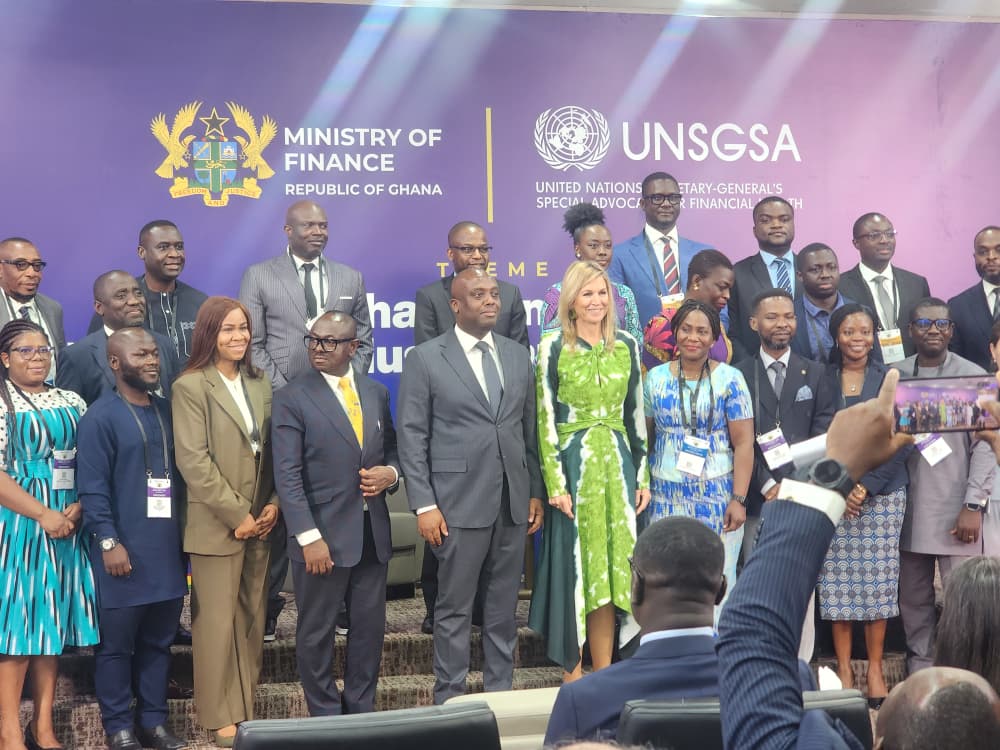
Ghana is pivoting its financial inclusion strategy to prioritize improving the financial health and well-being of its citizens, aiming for the period of 2027-2031. This shift in focus was marked by the inauguration of a National Technical Working Committee, established to craft the country's second National Financial Inclusion and Development Strategy.
The strategy, titled "Shaping Ghana’s Next Frontier in Financial Inclusion and Development," is set to provide a roadmap for enhancing financial services, boosting economic resilience, and fostering economic empowerment.
Deputy Minister of Finance, Hon. Thomas Ampem Nyarko, expressed the government's commitment to making sure that the gains in financial service accessibility translate into tangible improvements in the lives of Ghanaians. He highlighted that while significant progress has been made in expanding access to financial services, with over eight in ten Ghanaian adults now owning a financial account, the country still lags in financial health.
According to the 2021 Financial Inclusion and Demand-Side Survey, only 22 percent of adults were found to be financially healthy.
The Deputy Minister emphasized that financial inclusion must extend beyond mere account ownership to equipping citizens with the financial tools necessary to withstand economic shocks, accumulate assets, and plan for the future. The new strategy will focus on offering responsible financial services, promoting digital innovation, ensuring consumer protection, enhancing financial literacy, and building resilience, particularly among vulnerable groups like women, young people, farmers, informal sector workers, and small businesses.
A Financial Inclusion Council will be established to enhance coordination and accountability among the various stakeholders involved. Additionally, a financial health framework is being developed to measure the well-being of households. Mr. Nyarko stated that the government's aim is to launch the new strategy in the first half of 2027.
Her Majesty Queen Máxima of the Netherlands underscored the necessity of moving beyond financial inclusion as an end in itself to achieving measurable improvements in financial health. Financial inclusion, she argued, should be seen as a means to an end, asserting that owning a bank account does not automatically lead to better living conditions.
She identified four key components of financial health: managing daily finances, building resilience against financial shocks, pursuing financial goals, and maintaining confidence in one's financial future.
Queen Máxima outlined the essential tools needed to manage income and expenses, save for anticipated expenses, and protect against unexpected events such as illness, accidents, droughts, and fires. She stressed the importance of emergency savings, affordable insurance, and accessible pension schemes, especially for workers in the informal sector.
She noted that while Ghana had made substantial progress in financial inclusion, with access to financial services rising from about 30 percent in 2011 to around 80 percent currently, the country must ensure that this progress transforms into enhanced financial well-being.
The Queen called for the implementation of a broader financial health measurement framework that takes into account the experiences of diverse groups, including women, older persons, and both rural and urban dwellers. She urged financial institutions to evaluate the financial health of their customers and design innovative products that cater to their specific needs. She provided an example of savings products that automatically set aside a portion of customers' income to encourage regular savings.
Moreover, Queen Máxima advocated for closer collaboration among financial sector regulators to broaden access to affordable insurance and pension products, as well as for promoting digital payments and data sharing to enhance financial services. She assured that her partners and she would be present to guide Ghana along its journey towards achieving financial health.
The inauguration was attended by financial sector regulators, financial institutions, development partners, and other stakeholders, all working together to guide the development of Ghana's second National Financial Inclusion and Development Strategy.
Written by urgent.news from Joy Business's reporting — not their text. Machine-written — may contain errors; check the original before relying on it.
This story
This is one outlet's version. Read the fullest account.