Commentary: Who keeps crashing China’s stock market?
Over the past decade, the domestic market has endured at least three bear runs that prompted emergency government bailouts, says Shuli Ren for Bloomberg Opinion.
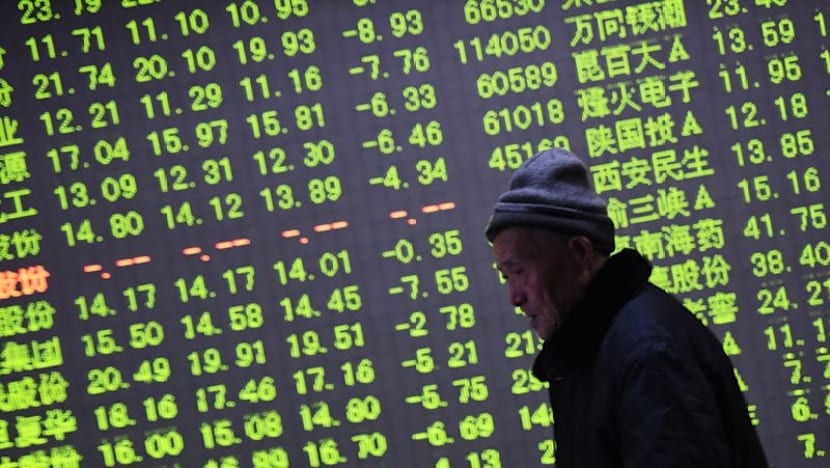
Over the past decade, China's domestic stock market has experienced at least three significant downturns, each necessitating emergency government intervention, according to Shuli Ren for Bloomberg Opinion. Recently, Beijing is once again implementing its market stabilization playbook from 2024, providing low-cost funding for corporate share buybacks and offering liquidity to institutional investors.
The People's Bank of China (PBOC) is also employing window guidance, which unofficially discourages institutional investors and brokerages from selling their stocks.
The most recent stock market rout began in October, marking the worst monthly decline in over a decade for China's stock market. The CSI 300 Index, a blue-chip index, has fallen into a bear market since its late-June peak. The SSE Science and Technology Innovation Board 50 Index, known as Star 50, due to its heavy concentration in the semiconductor sector, has plummeted by as much as 48 percent.
The finger-pointing in China's latest market turmoil has begun, with various parties being blamed for the selling activities. Hong Liang, founder of Shiva Capital Group, one of China's largest hedge funds, has accused insurance companies of overinvesting in technology stocks before their peak and subsequently exiting their positions in late September. Liang's criticism is not unfounded, as China has a history of blaming private sector investors, including quant funds and foreign asset managers, for market declines.
However, the current situation might be different. Margin financing has decreased, and northbound turnover through the Stock Connect with Hong Kong has also dropped, indicating that leveraged traders and foreign hot money are unlikely culprits. This leaves long-only institutional investors as the most plausible suspects.
China's state-owned insurers, which have been gradually increasing their stock holdings, could be the reason behind the recent market downturn. China Life Insurance, for instance, has expanded its investments in artificial intelligence-related sectors and raised its equity allocation to 19.2 percent of its portfolio by June 2025. These insurers have been influenced by policymakers, who aim to provide long-term capital to the stock market, a goal that the head of China's securities regulator emphasized in a recent speech.
In response to these policy directives, several major insurers have been instructed to report their equity holdings, refrain from cutting their losses, and align their investment decisions with broader economic objectives. However, the government seems to be grappling with an unintended consequence of its policies. While insurers may be more patient investors than hedge funds, they still face the challenge of managing risk and meeting their liabilities, such as claims and other obligations.
Consequently, insurers may be forced to reduce their exposure during severe market downturns, which can limit their countercyclical role.
The latest earnings call from China Pacific Insurance Group revealed that equity investing has become complicated, and portfolios need to be managed to avoid short-term damage from market volatility. In the third quarter, profits at China's five major listed insurers declined significantly, largely due to the decline in domestic stocks.
This situation raises the uncomfortable reality that insurers, despite being reliable dividend payers, may not be as effective as the "national team" in stabilizing the market during severe downturns.
As officials continue to point fingers at various market participants, one pressing question remains: Why does China continue to experience stock market routs? Over the past decade, the domestic market has endured at least three bear runs, leading to emergency government bailouts in 2018, 2024, and now. The next time the PBOC faces the need to intervene, it will likely have to face a lineup of potential blame, including foreigners, hedge funds, and even state-owned insurers.
Written by urgent.news from Channel News Asia's reporting — not their text. Machine-written — may contain errors; check the original before relying on it.
This story
This is one outlet's version. Read the fullest account.
- Commentary: Who keeps crashing China’s stock market? channelnewsasia.com