Chinese scientists chill atoms to record low on Tiangong space station
Chinese scientists have chilled atoms aboard the Tiangong space station to the lowest temperature ever measured, smashing US and German records and paving the way for ultra-precise space sensors that could find hidden minerals, track climate change and test Einstein’s theory of gravity. Researchers from Peking University and the Chinese Academy of Sciences brought thousands of rubidium atoms,…
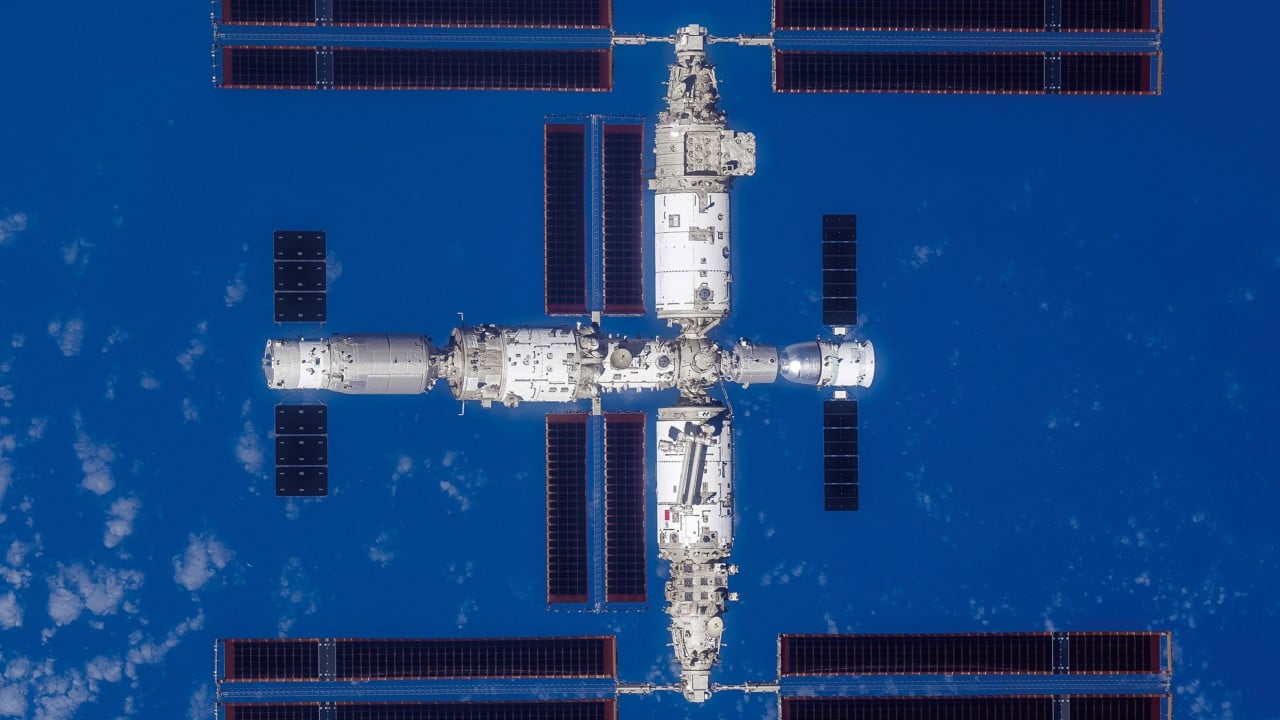
Chinese scientists have chilled rubidium atoms aboard the Tiangong space station to an unprecedented low temperature, setting a new record that surpasses both US and German experiments. The team from Peking University and the Chinese Academy of Sciences cooled thousands of atoms to less than 10 trillionths of a degree above absolute zero, a temperature about four times colder than the previous record set in Germany and even colder than NASA's Cold Atom Lab aboard the International Space Station.
The cloud of chilled atoms remained stable for seven seconds, a duration significantly longer than the previous two seconds achieved in a German drop tower and approximately one second aboard the ISS. This groundbreaking achievement, published in the journal Science, opens the door for ultra-precise space sensors capable of detecting hidden minerals, tracking climate change, and testing Einstein's theory of gravity.
The Chinese researchers utilized lasers to hold the atoms in place, rather than magnets as employed in previous experiments, allowing for a wider range of elements to be studied and potentially leading to the development of the most accurate clocks and new detectors for space-time ripples.
Written by urgent.news from South China Morning Post's reporting — not their text. Machine-written — may contain errors; check the original before relying on it.
This story
This is one outlet's version. Read the fullest account.