China proves a cut above with world-first precision laser experiment in space
China’s space scientists have become the first to carry out precision laser cutting in orbit, slicing a piece of “large-scale equipment” with a robotic arm fixed to the outside the Tiangong space station. The official Science and Technology Daily reported on Wednesday that millimetre-scale cuts were made by a laser maintenance device operated remotely from “hundreds of kilometres away”. Precision…
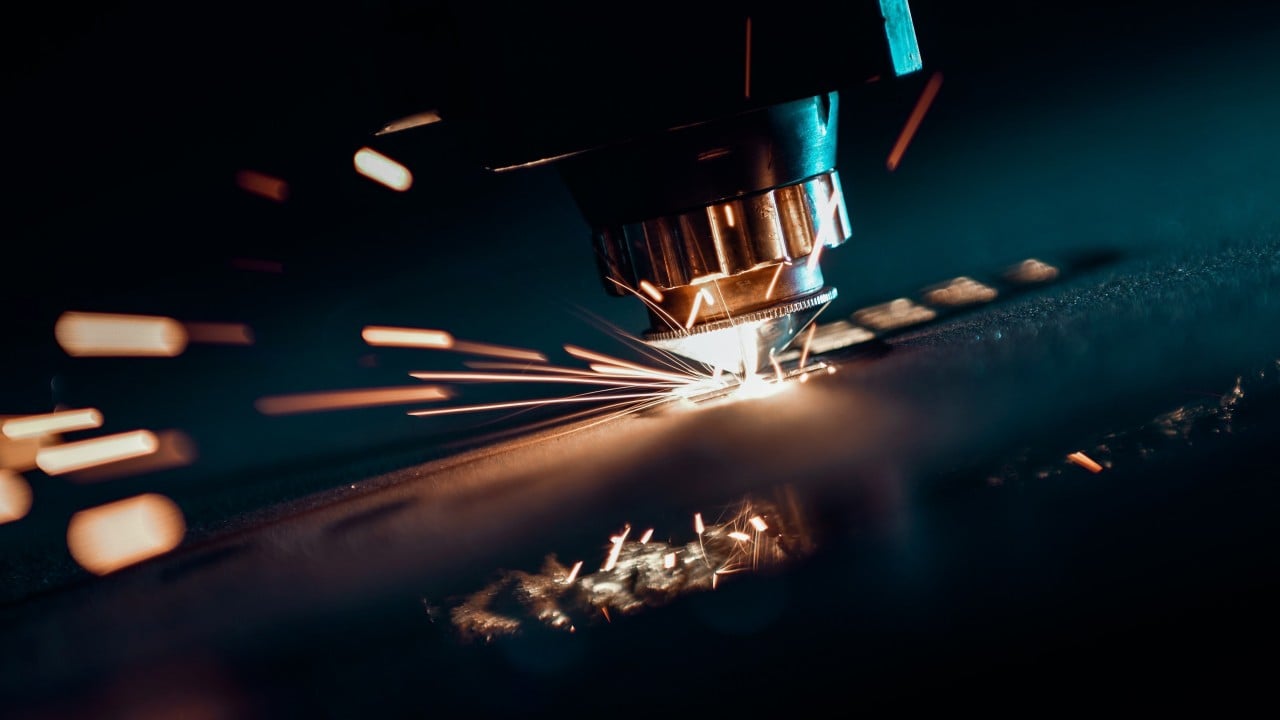
China achieved a groundbreaking milestone in space exploration with the successful execution of precision laser cutting in orbit. The Tiangong space station welcomed a robotic arm-mounted laser maintenance device, which made millimetre-scale cuts on a piece of large-scale equipment. This feat, reported by China's official Science and Technology Daily, was accomplished remotely from hundreds of kilometres away.
Precision laser cutting, a complex process requiring extreme accuracy, was made feasible due to the device's multi-axis positioning mechanisms and advanced vision system. The device's development was a joint effort between Huazhong University of Science and Technology and the Shanghai Institute of Space Power-Sources, with researchers completing the transition from initial design to a flight-ready model in just one year.
Professor Huang Yu of Huazhong University emphasized the importance of regular maintenance and high-precision repair for the longevity of space stations. This achievement not only extends the lifespan of the Tiangong space station but also lays the groundwork for an in-orbit maintenance system. However, the development of space-based laser technologies has also raised concerns over their potential dual-use applications.
Both China and the United States have been actively researching directed-energy and laser-weapon systems, sparking fears of an orbital arms race. As nations strive to establish long-term presences in space, the weaponisation of spacecraft is also a growing concern.
Written by urgent.news from Reuters Business via SCMP's reporting — not their text. Machine-written — may contain errors; check the original before relying on it.
This story
This is one outlet's version. Read the fullest account.