CERT-In Flags AI-Driven Attacks as Backdoored ARTEX Exposes 62 Consoles to Root Access
The Indian Computer Emergency Response Team (CERT-In) has disclosed that an artificial intelligence (AI)-assisted threat actor it tracks as Crafty Falcon is targeting organizations in the Banking, Financial Services, and Insurance (BFSI) sectors in the country. Describing the threat as active and ongoing, the activity involves the use of publicly-available AI-driven offensive security tools
The Indian Computer Emergency Response Team (CERT-In) has warned that an AI-assisted threat group, known as Crafty Falcon, is targeting financial organizations across India. This ongoing threat involves the use of artificial intelligence-driven offensive security tools, such as ARTEX, PentAGI, Cairn, and CyberStrikeAI, which autonomously execute complete attack chains and adapt their payloads based on target responses.
The supporting attack infrastructure frequently rotates IP addresses, making detection challenging. CERT-In has also reported that these attacks have targeted cryptocurrency exchanges and digital asset service providers, resulting in the theft of keys and funds. The agency noted that these attacks bypass traditional security measures, including application-level controls, to steal payment aggregator/gateway and partner-bank API credentials, and execute fraudulent transactions to move funds to attacker-controlled mule accounts.
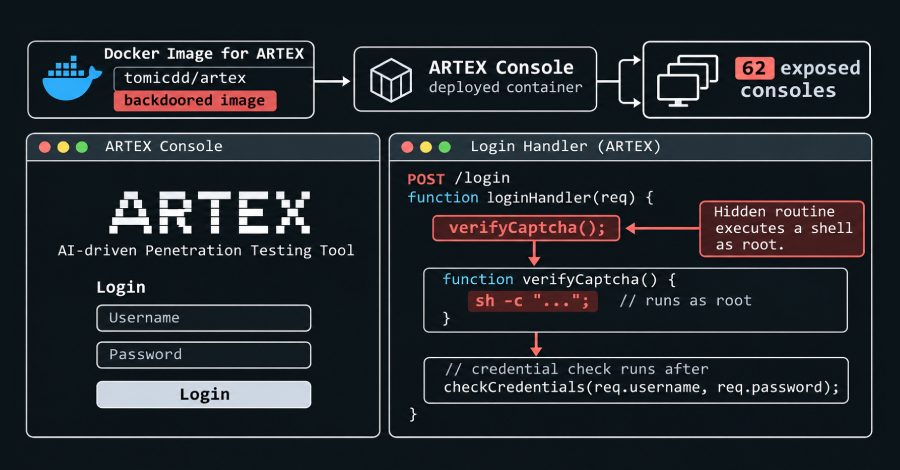
CERT-In has also urged organizations to implement the Artificial Intelligence Security Auditing Guidelines, which require thorough testing of AI agents, human approval for consequential actions, and high-security standards for high-risk AI systems. The abuse of open-source penetration testing tools, like ARTEX, has led to the creation of a backdoored version that grants a root shell during unauthenticated requests, a vulnerability that has been downloaded 9,000 times.
As of November 4, 2026, 62 ARTEX consoles on the internet were found to be serving the backdoored build, with the majority located in the U.S., Hong Kong, and China.
Written by urgent.news from The Hacker News's reporting — not their text. Machine-written — may contain errors; check the original before relying on it.