Capital market trust is fundamental economic infrastructure
Indonesia needs a trusted capital market not just to reassure foreign investors, but to finance businesses, safeguard long-term savings, and help households build wealth.
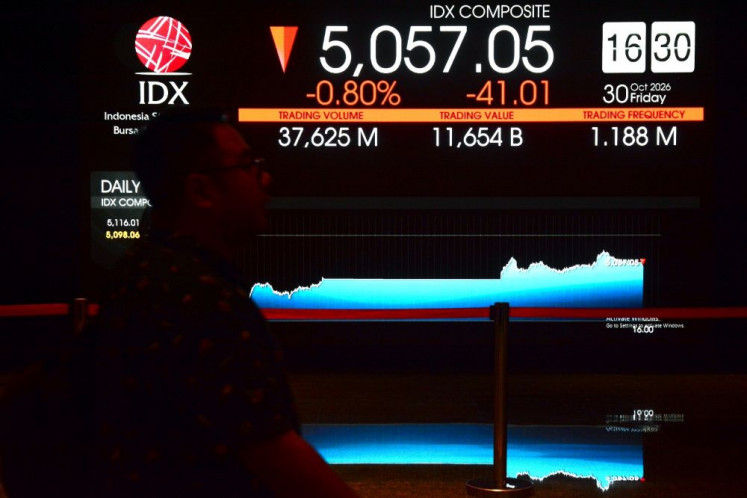
Indonesia requires a reliable capital market, not only to satisfy overseas investors but also to fund businesses, preserve long-term savings, and assist individuals in accumulating wealth. The nation's trust in its capital market bears significant real-world implications. Recently, MSCI, a global index provider, initiated a formal consultation concerning a proposal to reclassify Indonesia from an emerging market to a standalone market status.
Although no final decision has been made, MSCI anticipates concluding its review by late June 2027. The concerns that prompted this review, such as opaque shareholding structures, suspected coordinated trading, and inconsistent regulatory enforcement, necessitate urgent reform. This debate transcends Indonesia's position in an international benchmark.
A reliable capital market links companies searching for growth capital with investors seeking favorable returns. It empowers domestic financial institutions to manage long-term savings judiciously and provides ordinary citizens with opportunities to build intergenerational wealth. While foreign investor sentiment is crucial, it does not encompass the entirety of national interest.
The integrity of the capital market is essential infrastructure for the nation's economy. Foreign capital enhances liquidity, widens the investor base, and ensures market prices reflect available information. When confidence wavers, global asset managers typically reduce holdings, postpone allocations, or demand higher risk premiums.
The consequences extend far beyond immediate portfolio outflows. Lower equity prices diminish corporate valuations and increase the cost of capital. A business seeking an initial public offering or rights issue must either accept burdensome dilution or issue substantially more shares to raise equivalent funds. Consequently, enterprises rely more on bank loans or corporate bonds.
If credit markets also require higher spreads to compensate for governance concerns, productive investment becomes increasingly expensive. Critical capital expenditures, industrial upgrades, and expansion plans may be postponed or abandoned altogether. Although foreign equity outflows do not immediately prompt Bank Indonesia (BI) to raise policy rates, risk premiums could rise, limiting access to affordable funding.
Please share your experiences, suggestions, and any challenges you have faced on The Jakarta Post. We are eager to hear from you.
Written by urgent.news from The Jakarta Post Academia's reporting — not their text. Machine-written — may contain errors; check the original before relying on it.