Biologisches Phänomen: Zu eng? Ach was! Kraken zwängen sich durch schmalste Löcher
Oktopusse nutzen ihre acht Arme vielfältig. Unter anderem dafür, sich durch schmalste Ritzen zu quetschen. Forscher haben ihnen dabei ganz genau auf die Tentakel geschaut.
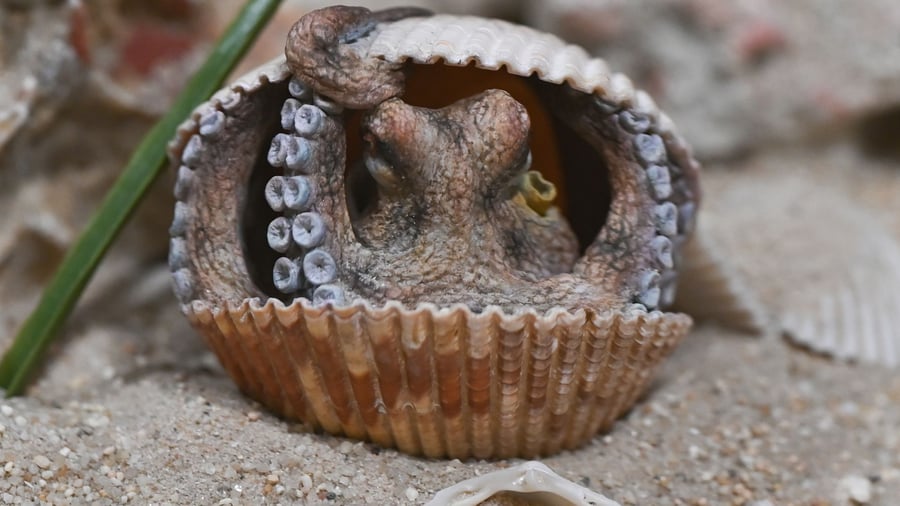
Kraken are able to squeeze through openings smaller than their own body size, according to a research team from the National University of Singapore. The study, published in the "Journal of Experimental Biology," explored the ability of common octopuses (Octopus vulgaris) and Mexican four-eyed octopuses (Octopus maya) to navigate through holes.
The scientists measured the distance between the octopuses' eyes, which indicated the size of the hard shell casing surrounding their central nervous system, ranging from 15 to 35 millimeters. They then introduced holes of either five millimeters smaller or larger than the eye distance to see how the octopuses would respond.
Two main strategies were observed. For the larger holes, common octopuses would insert one arm into the opening and then gradually push the rest of their arms through, finally pushing their head, mantle, and remaining arms through by pushing against the walls. However, for the smaller holes, the octopuses first inserted all their arms, before proceeding with their head and mantle through last.
Only three common octopuses were tested, making the results inconclusive. Four Mexican four-eyed octopuses were tested, and they did not attempt to go through the smaller hole at all.
The researchers noted that the unsuccessful attempts suggested that octopuses may not be able to accurately judge whether they can fit through an opening. The findings could potentially help in designing specialized soft robots for search and exploration missions.
Written by urgent.news from Handelsblatt's reporting — not their text. Machine-written — may contain errors; check the original before relying on it.