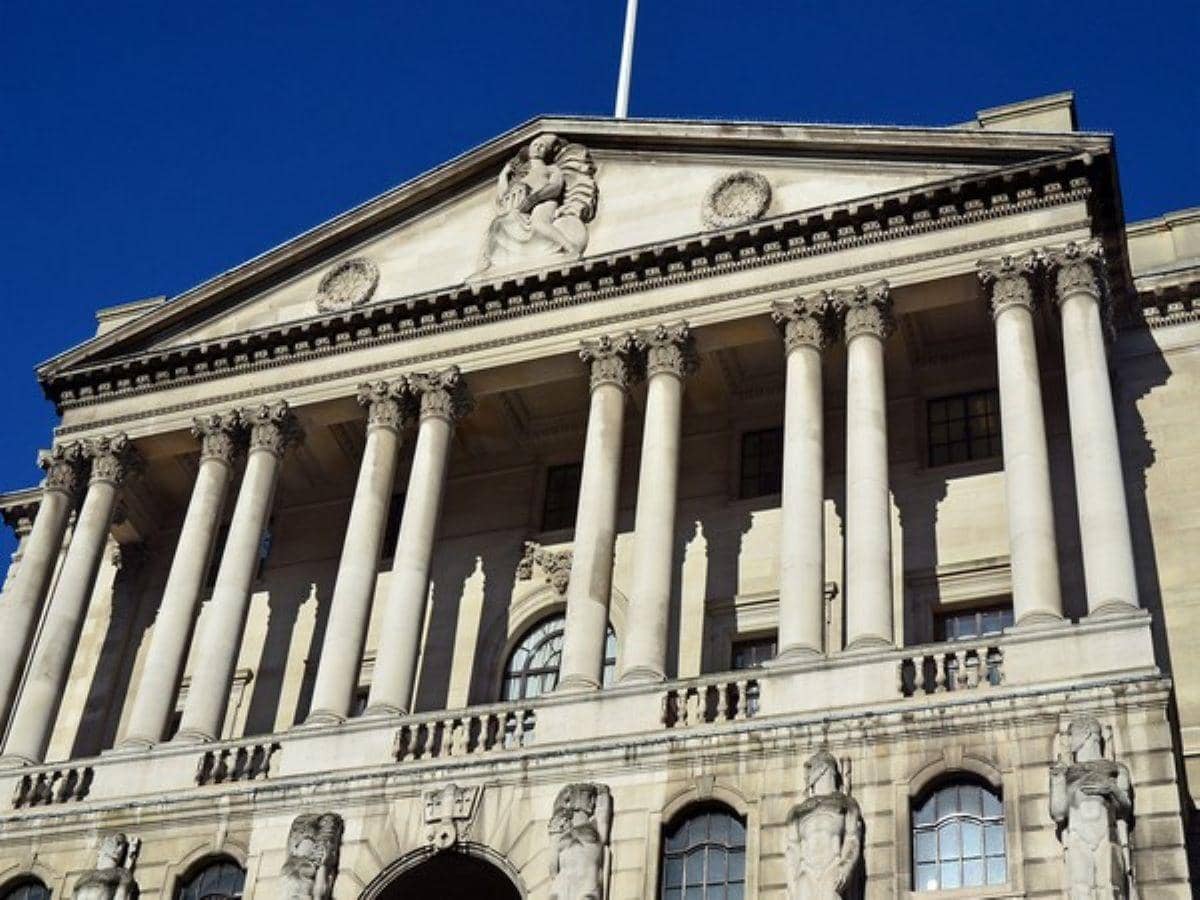
Bank of England hikes interest rate for the first time since Iran war, warns inflation will near 5%
One policymaker voted to raise the bank's key interest rate to 4.25%.
The Bank of England has raised its benchmark interest rate to four percent on Thursday, marking the first increase in over three years. This move comes as escalating energy costs drive up global inflation. The central bank warned that UK inflation could surge to 6.2 percent in the third quarter of next year, up from the current 3.5 percent, in a worst-case scenario where oil prices soar beyond $100 a barrel due to the Middle East conflict.
Despite the rate hike, the BoE upgraded its economic growth forecasts for this year and next. This optimism is attributed to "strength in business investment," partly driven by demand for artificial intelligence-related products and services.
The central bank increased borrowing costs by a quarter point, following suit with the U.S. Federal Reserve and the European Central Bank since the start of the Middle East conflict. The surge in energy prices, exacerbated by strikes on Russian refineries by Ukraine and the U.S.-Iran war disrupting Gulf energy supplies, has caused record-high diesel prices worldwide.
BoE Governor Andrew Bailey stated that "there is now enough inflationary pressure in the pipeline caused by the rise in energy prices, that an increase in Bank Rate is warranted." He added that the rate increase is not expected to be the first in a long sequence of hikes but also unlikely to be the last if the Middle East conflict persists.
The BoE projected UK gross domestic product (GDP) to reach 1.6 percent this year and 1.3 percent next year. This marks a slowdown from their July forecast of 1.1 percent for both years. The central bank's expectation of UK growth decelerating next year aligns with recent predictions from the government and the International Monetary Fund.
BoE's last interest rate hike occurred in August 2023, with the cost of borrowing remaining at 3.75 percent since December. Paul Dales, chief UK economist at Capital Economics research group, emphasized that the extent of future rate hikes and their duration will depend on energy prices and the domestic economy, ultimately determining the magnitude of second-round inflation effects.
The BoE warned that millions of Britons will face higher energy bills starting 2027, even after the Labour government announced support in its annual budget.
Written by urgent.news from The Peninsula Qatar Business's reporting — not their text. Machine-written — may contain errors; check the original before relying on it.
This story
This is one outlet's version. Read the fullest account.
- Why the Bank of England’s united interest rate hike signals more to come cityam.com
- Bank of England lifts rate for first time since 2023 to fight inflation thepeninsulaqatar.com
- Bank of England raises key interest rate for first time in over 3 years euronews.com
- Bank of England lifts rate for first time since 2023 to fight inflation dawn.com
- First Bank of England rate hike in 3 years news.rthk.hk
- Bank of England raises interest rates for first time in three years: What the hike to 4% means for your mortgage and savings thisismoney.co.uk
- The Bank of England raised its key interest rate Thursday for the first time since the war U.S.-Iran sent oil prices soaring wsj.com
- Bank of England hikes interest rate for the first time since Iran war, warns inflation will near 5% cnbc.com