Ancient coins suggest influential Iron Age king was female
Bournemouth University (BU) archaeological research has revealed that Iron Age British ruler "Verica," who was central to the Roman invasion of Britain in A.D. 43, was in fact a woman. This discovery rewrites the history of early Roman Britain.

A study conducted by Bournemouth University (BU) suggests that Iron Age British ruler Verica, who played a crucial role in the Roman invasion of Britain in A.D. 43, was indeed a woman. For centuries, historians assumed Verica was male due to the gender biases of 19th-century classical historians. However, BU's archaeological research has provided evidence that contradicts this assumption.
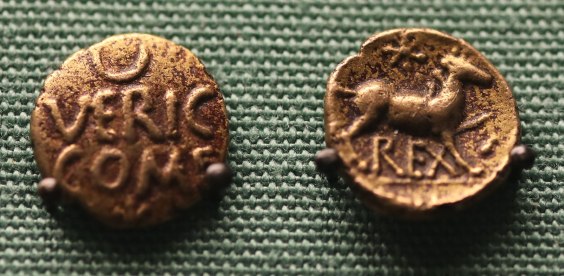
One key piece of evidence is the name "Verica," which ended with the letter "a," a common suffix for female names during that era. Additionally, the term "rex" on Verica's coins, which is nongender-specific, further supports the possibility that Verica was a woman. The depiction of Verica on her coins, showing her as a slender, feminine figure riding on horseback, also reinforces the theory that she was a powerful and influential ruler.
The research team, led by Dr. Miles Russell, argues that Verica's role was more significant than previously thought, providing tactical information and ground support during the invasion. If Verica had stayed in Britain, Rome may never have launched its conquest. This groundbreaking research adds to BU's previous findings on women's roles in Iron Age Britain and emphasizes the importance of reevaluating historical narratives based on archaeological evidence.
Written by urgent.news from Phys.org's reporting — not their text. Machine-written — may contain errors; check the original before relying on it.