Amazon mapping shows cacao expansion without deforestation in Brazil
While West Africa clears rainforest for chocolate, Brazilian farmers are reviving degraded pastures.
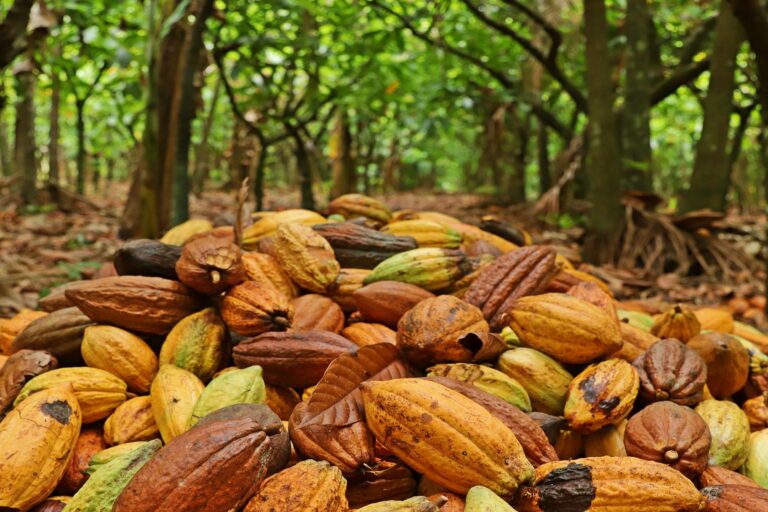
Record cocoa prices are prompting West African farmers to clear native forest, but a new study reveals that cacao is expanding in a different manner in the Brazilian Amazon. According to Embrapa, Brazil's state-run agricultural research agency, the area where cacao was cultivated in Pará, the country's leading producing state, increased by one-third from 2022 to 2024, reaching 116,436 hectares (287,700 acres).
Most of the cacao is found on land that was already cleared long ago. Ninety-six percent of the cacao mapped in Pará and 98% in Rondônia state are located in areas deforested prior to 2020, adhering to the European Union's sustainability rules and bolstering Brazil's potential as a cocoa exporter. Interestingly, the study also uncovers a shift in how cacao is cultivated.
While all cacao in Pará identified by Embrapa in 2022 grew in agroforestry systems, almost two-thirds of the new plantings are now full-sun monocultures. These monocultures yield more beans per tree, but they are more susceptible to pests and disease and make farmers reliant on a single crop. The cacao mapping in the Amazon traces back to the TerraClass program, a joint effort with Brazil's space agency INPE, which maps deforested land usage in the Brazilian Amazon.
Led by Adriano Venturieri, a remote sensing specialist at Embrapa Amazônia Oriental in Belém, Pará, this research sheds light on the evolving cacao expansion in the Amazon region.
Written by urgent.news from Mongabay's reporting — not their text. Machine-written — may contain errors; check the original before relying on it.