2 astronauts will finish upgrading ISS solar arrays during spacewalk today: Watch it live
NASA's Anil Menon and Canada Joshua Kutryk will install the International Space Station's final roll-out solar array during a spacewalk today (Nov. 5). Here's how to watch it live.
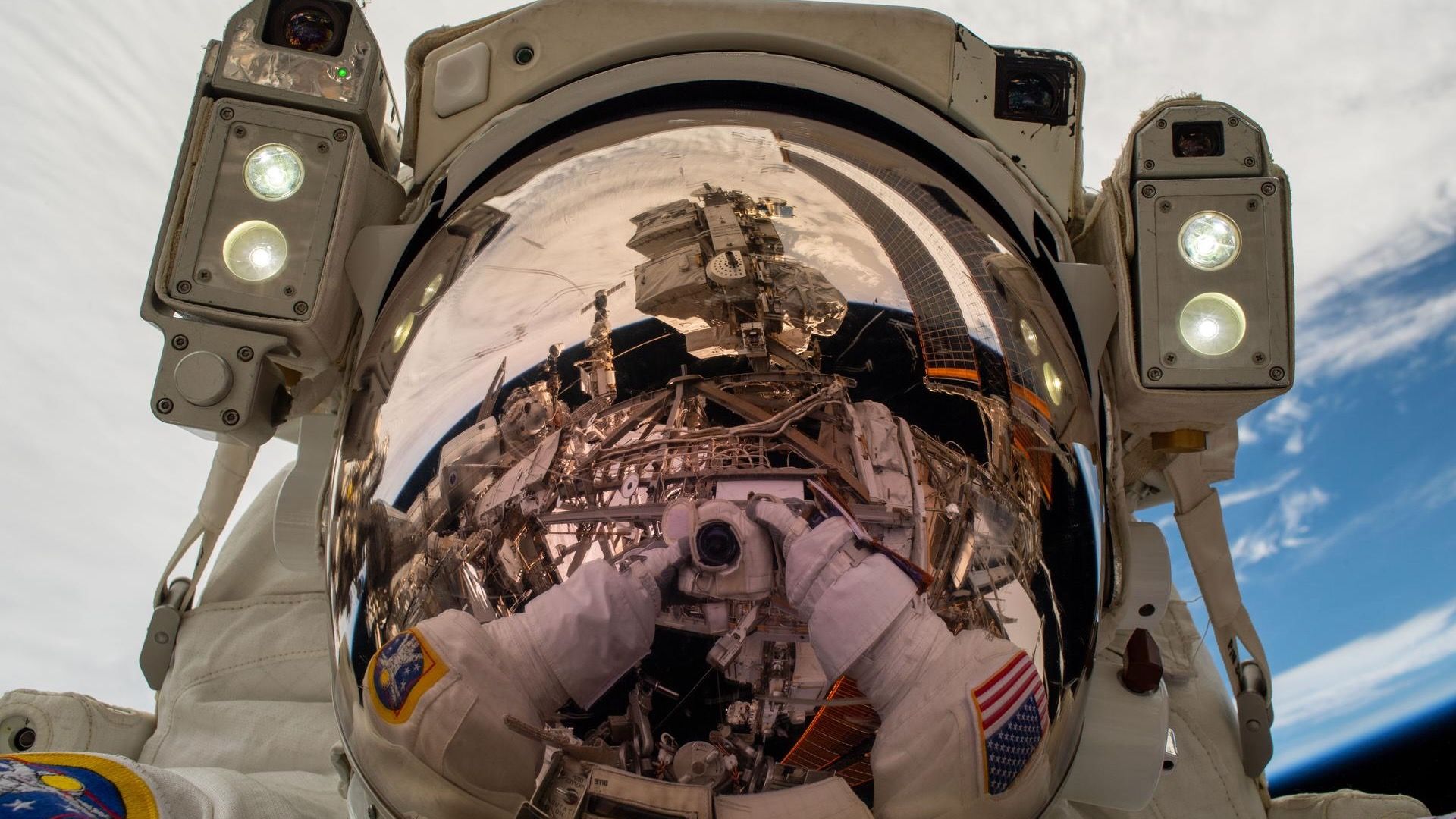
Today, two astronauts from NASA and the Canadian Space Agency will complete the installation of the final International Space Station Roll-Out Solar Array (iROSA) during a seven-hour spacewalk. The spacewalk is scheduled to start at 8:30 a.m. EST (1330 GMT) and will be available for live viewing at Space.com starting at 7 a.m. EDT (1200 GMT).
This will be the second spacewalk for NASA astronaut Anil Menon and Canadian Space Agency astronaut Joshua Kutryk within a week. During their previous excursion on October 29, 2026, they successfully installed the station's seventh iROSA, marking the 100th U.S. spacewalk from the ISS and the first EVA for a Canadian astronaut since 2019.
The installation of the final iROSA is part of an ongoing ISS power upgrade project that has been underway for over five years. The endeavor aims to increase the space station's power generating capacity from 160 kilowatts to approximately 215 kilowatts, representing a 30% boost. NASA officials detailed the EVA in a blog post on Tuesday, November 3, highlighting the significance of the upgrade.
Aboard the ISS currently are five astronauts: NASA's Luke Delaney and Jessica Watkins, along with cosmonauts Pyotr Dubrov, Anna Kikina, and Sergey Teteryatnikov. Among the new arrivals are Delaney, Kutryk, Teteryatnikov, and Watkins, who joined the station on October 1, 2026, as part of SpaceX's Crew-13 mission. On the other hand, Dubrov, Kikina, and Menon arrived in mid-July aboard a Russian Soyuz spacecraft.
Written by urgent.news from Space.com's reporting — not their text. Machine-written — may contain errors; check the original before relying on it.