WWF-Malaysia calls for greater awareness of orangutan-forest link
KOTA KINABALU: Healthy, connected forests are vital to the long-term survival of orangutans in Sabah, says WWF-Malaysia’s Donna Simon.
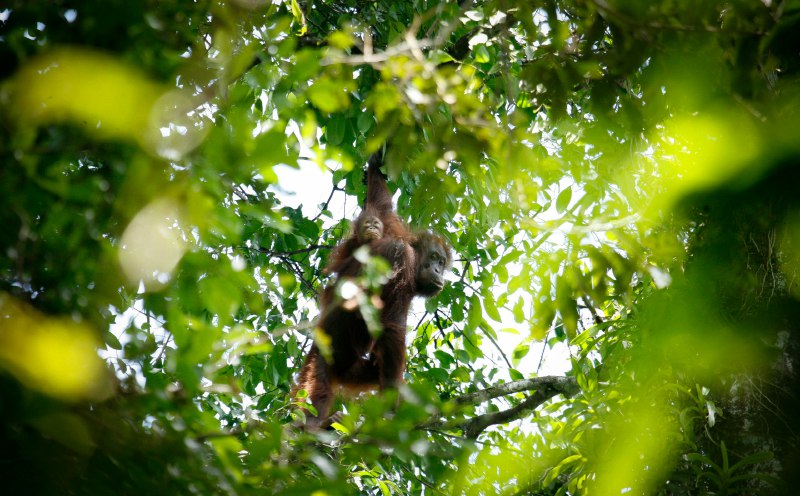
KOTA KINABALU: WWF-Malaysia has emphasized the crucial link between healthy, connected forests and the long-term survival of orangutans in Sabah. Many people recognize orangutans as an iconic species, but fewer realize how intimately their future is intertwined with the well-being of our forests. According to Donna Simon, who has been involved in orangutan conservation since 2011, building greater awareness helps people understand that orangutan conservation is about more than just protecting a single species.
It is also about preserving forests that support biodiversity, store carbon, regulate water systems, and provide benefits that communities depend on.
Orangutans in Sabah inhabit not only protected areas but also production forests and landscapes where human activities occur. However, habitat fragmentation can isolate wildlife populations by dividing forests into smaller, disconnected patches. If left unaddressed, this isolation could hinder the long-term survival of orangutans by restricting their ability to move safely between habitats, access food resources, and find mates.
To counteract this, wildlife corridors could play a vital role in reconnecting larger forest blocks, enabling wildlife to move between habitats and maintain genetic diversity.
WWF-Malaysia is prioritizing conservation efforts in landscapes like Tabin and Tawau-Kunak in Sabah. Their focus is on identifying opportunities to strengthen ecological connectivity. Donna Simon stresses that protected areas alone are not sufficient for orangutan conservation. Instead, we need connected forests, sustainable land management practices, and strong partnerships across the landscape.
Protecting and restoring forest patches, riparian reserves, and wildlife corridors require collective action involving various stakeholders, including governments, local communities, researchers, land managers, plantation companies, forestry operators, and conservation organizations. Sabah is estimated to be home to around 11,000 orangutans.
Written by urgent.news from New Straits Times's reporting — not their text. Machine-written — may contain errors; check the original before relying on it.