Trump promises to become 'Mr Veto' if Republicans lose Congress on Nov 3: A democratic blue wave bound to face resistance — Phar Kim Beng
Nov 4 — President Donald Trump has already signalled how he intends to govern should the Republicans lose control...
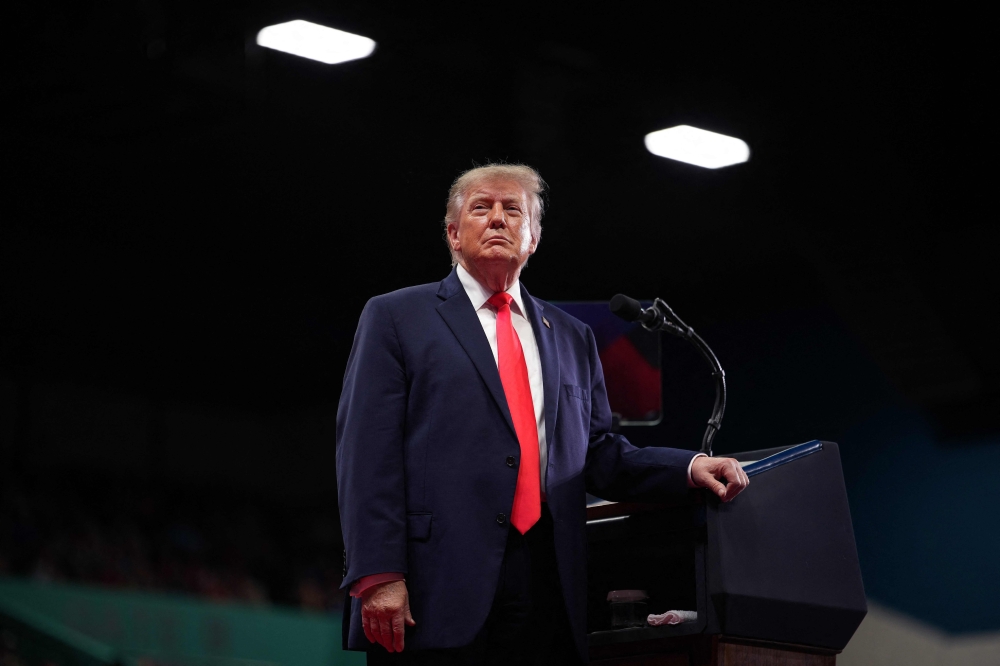
November 4 — In his pre-election address for the November 3, 2026 midterm races, President Donald Trump has laid out his plan for governing should the Republicans falter and lose both chambers of Congress. He vowed to wield the veto pen as their leader, stating that he would veto any legislation passed by a Democratic-controlled Congress unless negotiations ensued.
This previously campaign promise now hints at a potential strategy for a divided government. For the United States, this raises a critical constitutional question: how viable can the world's most powerful presidency function when its legislative branch becomes an institutional counterweight? The U.S. Constitution deliberately prevents the concentration of power in a single institution, with Congress legislating, the president executing laws, and the judiciary interpreting their constitutionality.
However, the practical functioning of this arrangement relies heavily on compromise. A presidential veto is constitutionally valid, but when vetoes become a systematic negotiating tool, the legislative process can become increasingly contentious. Trump seems to envision both types of vetoes—substantive disagreements and repeated vetoes to force political concessions.
A Democratic takeover of Congress wouldn't necessarily render Trump powerless, as White House officials are exploring policy implementation through executive authority, such as immigration restrictions, tariffs, housing policies, and federal expenditures. However, this could lead to prolonged confrontation and uncertainty for ASEAN economies, particularly in areas like semiconductor supply chains, artificial intelligence, energy security, and investment.
American foreign policy would also face competing pressures, with Congress having substantial control over appropriations, sanctions, and oversight, while the president maintains authority over diplomacy and military command. Ultimately, Trump's "Mr. Veto" proclamation reveals the central dilemma of his remaining presidency: can the presidency and Congress continue governing despite their differences?
The real test of American democracy will depend on whether the branches can collaborate to pass legislation or if they will be engaged in prolonged confrontation. For Malaysia and ASEAN, the response should be neither alarm nor complacency. Regional governments must broaden and deepen diplomatic and economic ties with Washington while maintaining constructive engagement.
The distinction between the presidency and Congress could prove consequential in a world grappling with geopolitical conflict, economic fragmentation, and technological disruption.
Written by urgent.news from Malay Mail's reporting — not their text. Machine-written — may contain errors; check the original before relying on it.