Train travel rules: Madras High Court backs 10 PM–6 AM sleeping berth timings in reserved coaches; here’s why
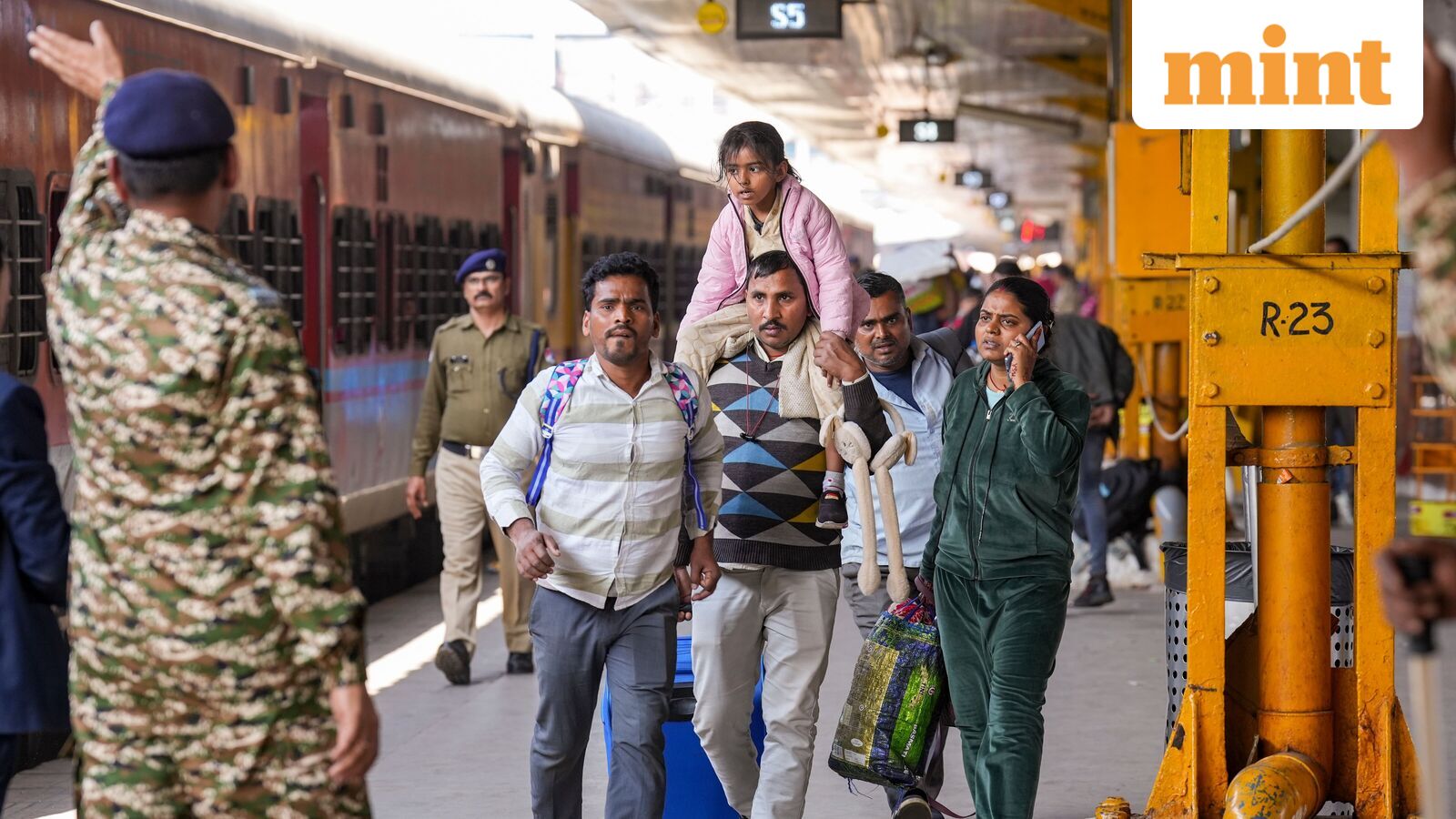
The Madras High Court has upheld the Indian Railways' rule restricting the use of sleeping berths in reserved coaches between 10 PM and 6 AM. Dismissing an appeal by a Chennai resident, the court said the rule ensures convenience for all passengers, including those allotted middle and upper berths.
On Wednesday, November 4, 2026, the Supreme Court questioned whether State High Courts possess parens patriae jurisdiction exclusively over public temples and not places of worship for other faiths, while staying the Madras High Court's order to establish a Board of Management for the ancient Chidambaram Sabanayagar Temple in Tamil Nadu.
A Bench comprising Justices Aravind Kumar and Vipul M. Pancholi issued a notice to the State of Tamil Nadu and halted the October 30 High Court order, which designated the Podhu Dikshidar as the guardians of the temple after the Supreme Court handed over its administration to them in 2014.
The High Court had appointed retired judges V. Bharathidasan and R. Suresh Kumar to chair the Board of Management (BoM) and designated a retired IAS officer, C. Rajendran, as its member. The secretary of the Podhu Dikshidar's association and the Hindu Religious and Charitable Endowments (HR&CE) department secretary were made ex-officio members. The BoM was tasked with removing unauthorized constructions from the temple premises and retrieving temple properties encroached upon by the district administration.
Appearing for Tamil Nadu, senior advocates Shekhar Naphade and Jaideep Gupta argued that there was significant damage to the temple and that the Podhu Dikshidars had not provided full accounts of the income generated from the temple over the past twelve years. Naphade contended that the High Court had parens patriae jurisdiction over public temples to safeguard the interest of the presiding deity, which is considered a juristic person by law.
"Is this parens patriae only for temples or other places of worship?" Justice Kumar asked. Naphade argued that the law only recognized parens patriae jurisdiction for public temples, not churches or other places of worship for different faiths.
Gupta asked the court to examine why the parens patriae doctrine applied only to temples. Senior advocate Sai Deepak Iyer, representing the opposite side, emphasized that the court should not make sweeping statements. Justice Kumar responded that Mr. Gupta should focus on whether the temple was in danger or not. Naphade stated that the situation exemplified the extent of maladministration that would occur if the temple were returned to the Podhu Dikshidars.
Written by urgent.news from The Hindu's reporting — not their text. Machine-written — may contain errors; check the original before relying on it.
This story
This is one outlet's version. Read the fullest account.