The night-sky image so incredible the NZ man behind it has been accused of using AI
Brendan Larsen spent hours taking hundreds of photographs of the sky over a mountain in New Zealand A photograph showing thousands of satellites cross-hatching the night sky over New Zealand appeared so extraordinary the astrophotographer who captured it is fighting accusations it was created by AI. To create his spectacular image – now viewed millions of times online – Brendan Larsen spent two…
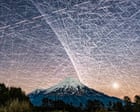
Brendan Larsen, a 51-year-old astrophotographer from New Zealand, has spent hours capturing images of the night sky over Mount Taranaki in the North Island. Larsen used his camera to take hundreds of eight-second shots, with two-second gaps between each photo, to create his latest masterpiece. He layered over 500 photos together, spending around 40 hours meticulously erasing stars and revealing the satellites.
The resulting image shows the sky filled with about 1,400 satellites and 14,000 trails, forming a dense criss-crossing pattern above the mountain. When Larsen uploaded the image to his social media in mid-October, it quickly gained viral popularity, amassing him 15,000 new followers and tens of millions of views.
However, some viewers dismissed the photo as AI-generated, accusing Larsen of using artificial intelligence to create the image. Larsen admits that AI software has become so advanced that it can be difficult to distinguish AI-created images from real ones. Despite the accusations, Larsen is frustrated by the fact that his image has been downloaded and recreated by AI, often with obvious flaws.
As a child, Larsen was amazed by the number of stars visible in rural New Zealand. However, he has noticed an increase in light pollution and the number of satellites over the last six years. While he finds the presence of satellites fascinating, Larsen also finds it disturbing. He has received about 10,000 comments on his Facebook page, with nine out of ten expressing concern about the state of the night sky.
Larsen is worried about the future of the night sky, as studies have warned that metal particles from space activities could affect atmospheric chemistry and the ozone layer. The UN has also expressed concerns about the risks to ground safety, darkness, and astronomy posed by increased space activity. Despite the AI accusations, Larsen hopes his image will spark debate and reflection on how satellites can be used responsibly to protect the night sky.
Written by urgent.news from Guardian Science's reporting — not their text. Machine-written — may contain errors; check the original before relying on it.