Tencent built an empire on WeChat and gaming. Can it keep up in China's AI race?
As AI reshapes China's tech industry, Tencent faces growing competition from rivals and AI startups. But the Chinese conglomerate’s vast WeChat ecosystem and gaming business could still give it an edge.
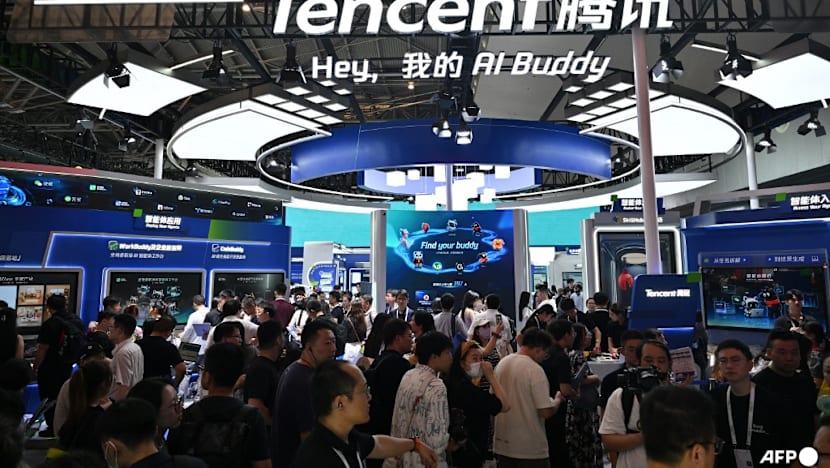
In the rapidly evolving Chinese tech industry, Tencent finds itself facing stiff competition from rivals and AI startups. One of the biggest threats to the conglomerate's dominance comes from the rise of artificial intelligence. WeChat, the Chinese conglomerate's vast ecosystem, and gaming business may provide Tencent with an edge in this changing landscape.
As people in China, like Gu Jiu in Shanghai, use WeChat for almost every aspect of their lives, the app has become an indispensable part of daily routines. From messaging and shopping to paying bills and accessing government services, WeChat is deeply integrated into both personal and professional aspects of life in China.
The growth of AI is challenging the dominance of established internet platforms like WeChat. Tencent, the Chinese internet giant behind WeChat, is questioning whether it can adapt quickly enough as AI reshapes how people use technology. In the past, Tencent, Alibaba, and Baidu dominated the market, but the narrative has shifted to a battle between traditional tech giants and AI startups.
Zhipu, an AI developer, has recently become a major player in the market, briefly surpassing HK$1 trillion (US$128 billion) in market value. This shift indicates that the competition may now be between traditional tech giants that fail to keep up with the AI trend and those that successfully adopt it, as well as a new generation of AI startups.
Tencent's response to AI is more measured compared to its rivals, such as Alibaba and ByteDance, which have been more aggressive in their approach. The company's leaders, including co-founder and CEO Pony Ma and President Martin Lau, have taken a more reserved and deliberate stance. Ma highlights that Tencent's services are deeply embedded in users' personal lives and business activities, making any introduction of new features risky.
Therefore, Tencent's cautious approach is driven by a desire to avoid serious consequences and the high costs associated with mistakes at such a massive scale.
Written by urgent.news from Channel News Asia's reporting — not their text. Machine-written — may contain errors; check the original before relying on it.