Techie Tonic: What is Shadow AI and why should IT worry?
An interesting discussion on Shadow AI, just imagine an employee sitting at their desk, working diligently. Emails are flowing, spreadsheets are multiplying, and somewhere in the corner of the browser, an AI tool is quietly doing its magic. The employee is happy. Productivity is soaring. The manager is impressed. Get updated faster and for FREE: Download the Gulf News app now - simply click here.…
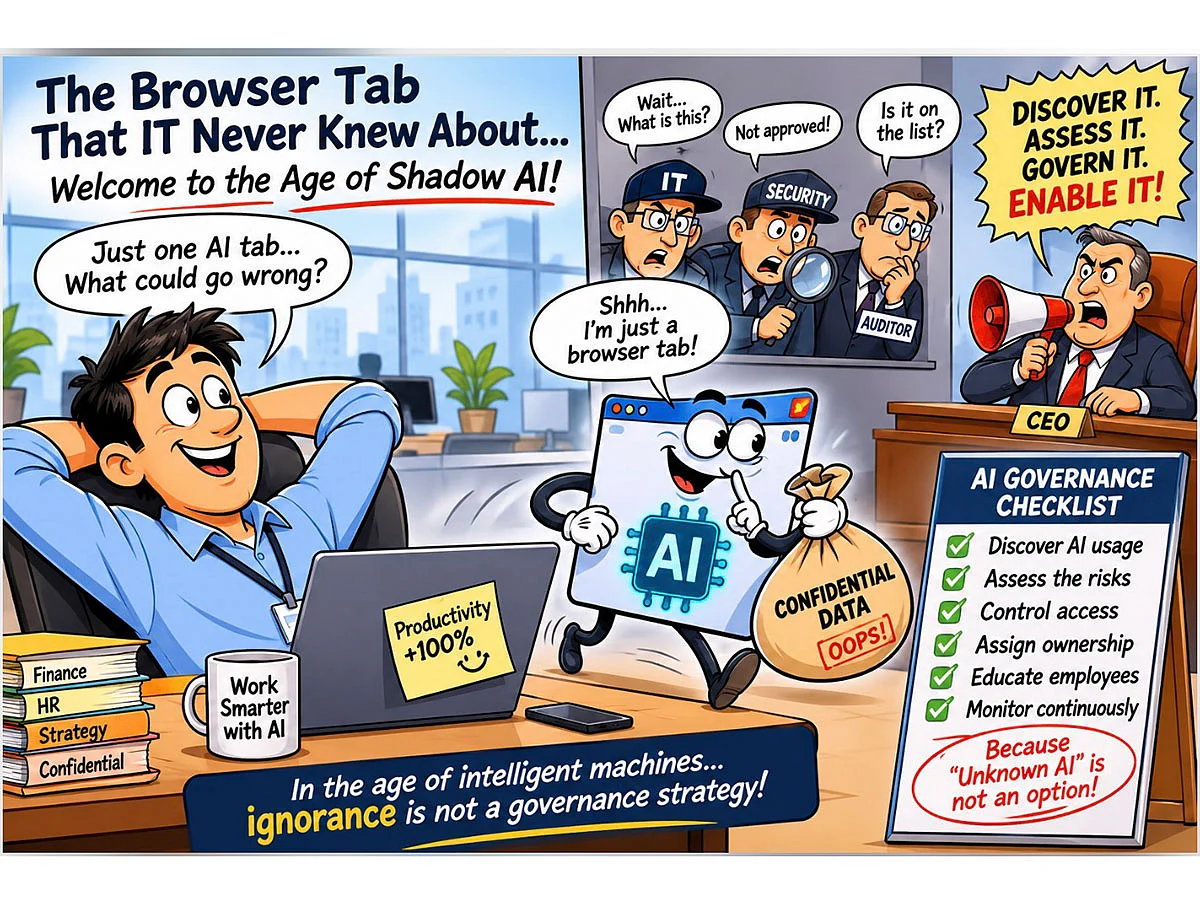
Shadow AI is an emerging concern for IT professionals, as employees are quietly using unauthorized AI tools without the knowledge or approval of cybersecurity, risk management, or auditors. This unregulated use of AI tools can lead to the exposure of sensitive information, such as confidential data, customer records, intellectual property, and business strategies.
The problem is not limited to a few employees; it can be widespread, with potentially hundreds of employees across multiple departments unknowingly using various AI platforms. For example, marketing may use one AI tool, finance another, developers a coding assistant, and HR an improved job description generator. Meanwhile, an executive might be using a premium AI service paid for with a personal credit card.
While some view this as a productivity boost, it creates significant risks for the organization, as the AI tools may be sharing data with external platforms, with no oversight or accountability. The challenge lies in identifying and understanding the AI tools in use, as well as comprehending what they access, where data goes, and how it is retained.
A simple list of approved AI applications is insufficient; it lacks true governance. A comprehensive, practical approach to shadow AI governance is necessary. This includes discovering AI usage across various platforms, assessing security and privacy risks, controlling approved tools and access, assigning accountability, educating employees about secure AI alternatives, and continuously monitoring AI inventories and exceptions.
Leadership at all levels – CEOs, CIOs, CISOs, CFOs, and the board – must recognize that shadow AI is not just an IT issue, but a leadership concern. They must demand measurable accountability and ensure that AI risks are understood, controlled, and owned. Ultimately, the next cybersecurity incident might not be from a sophisticated hacker, but from an unsuspecting employee using an unauthorized AI tool, unaware that they have already begun preparing an incident report.
Written by urgent.news from Gulf News's reporting — not their text. Machine-written — may contain errors; check the original before relying on it.