Sunken treasures reveal secrets of Goryeo Korean maritime route
Off the rugged, wave-swept coast of Taean, a treacherous marine graveyard known historically as the "Racecourse of the Sea" has yielded two newly discovered Goryeo Dynasty shipwrecks, offering an unprecedented window into 13th-century statecraft, commerce and seafaring. The National Research Institute of Maritime Cultural Heritage said Wednesday that underwater archaeologists have fully…
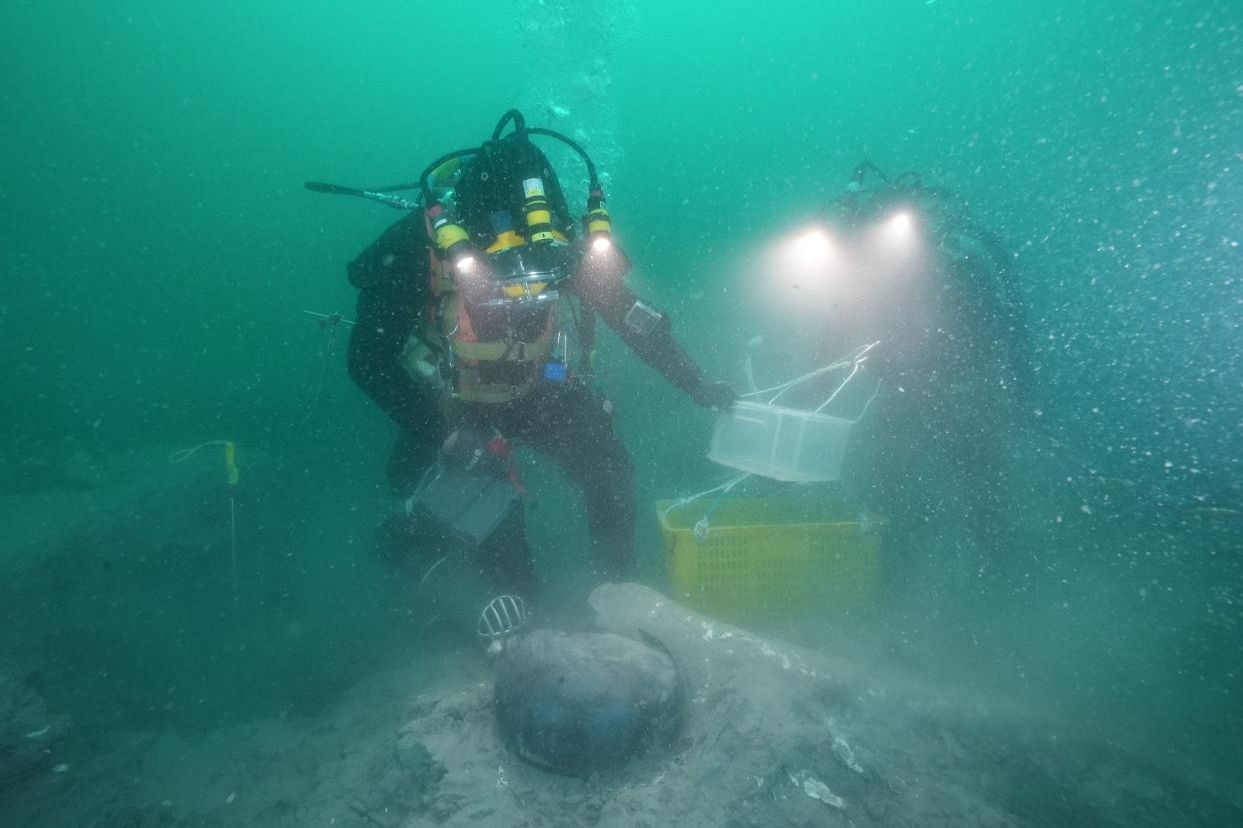
Off Taean's relentless coastal waters, where the Racecourse of the Sea has long been a treacherous testing ground, divers have unearthed two Goryeo Dynasty shipwrecks. These recent discoveries, identified by the National Research Institute of Maritime Cultural Heritage, offer a rare glimpse into 13th-century Korean statecraft, commerce, and maritime prowess.
The underwater archaeologists have confirmed the wreck of the Mado No. 5 and spotted the remains of a yet-to-be named vessel, Mado No. 6, just nearby. Together, these finds shed light on the complex grain and tax shipping routes that sustained the Goryeo capital of Gaegyeong. From the Mado No. 5 wreck, researchers recovered 54 artifacts, including bronze vessels, rope, anchors, and bundles of preserved rice straw, with the most significant discovery being 26 inscribed wooden tags, or mokgan.
These tags, meticulously documented, trace the cargo's journey, revealing it was collected in December 1207, during the depths of winter when sailors were traditionally kept ashore by harsh winds. Through decoding the texts, experts discern that Mado No. 5 was en route to Gaegyeong when it met its watery end.
Written by urgent.news from The Korea Times's reporting — not their text. Machine-written — may contain errors; check the original before relying on it.
This story
This is one outlet's version. Read the fullest account.
- Sunken treasures reveal secrets of Goryeo Korean maritime route koreatimes.co.kr