Solar Flare Alert System Helps NASA Rocket Team Decide When to Launch
For the first time, scientists have used NASA sounding rockets to study a solar flare in progress, thanks to a new flare alert system that told the team when to launch. Solar flares accelerate particles and release energy into the solar system, which can affect Earth and its technologies. Sounding rockets are a relatively fast, […] The post Solar Flare Alert System Helps NASA Rocket Team Decide…
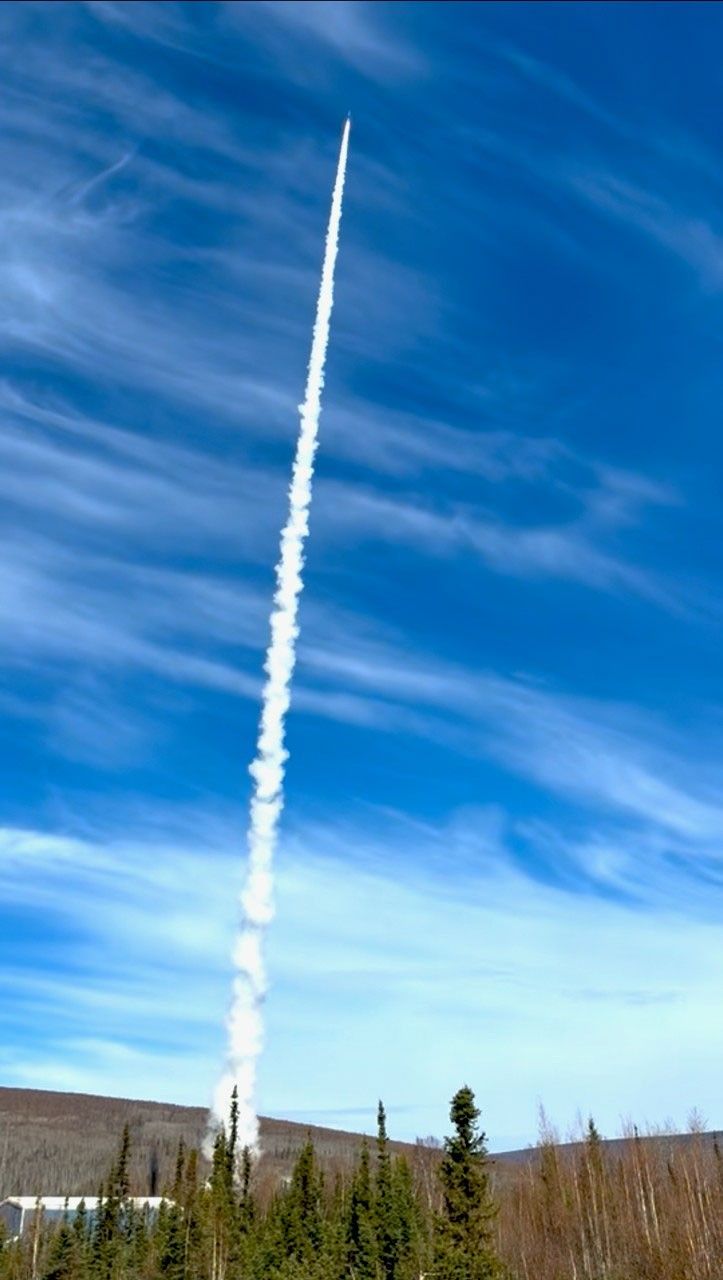
Scientists have achieved a first by employing NASA sounding rockets to observe a solar flare in real-time, thanks to an innovative solar flare alert system that guided the team on when to launch the rockets. A NASA Black Brant IX sounding rocket, carrying the fifth generation of the Focusing Optics X-ray Solar Imager (FOXSI-5), soared from Poker Flat Research Range near Fairbanks, Alaska, at 11:23 a.m. local time on May 14, 2026.
The FOXSI-5 instrument captured images of three tiny solar flares during its journey. Solar flares emit particles and energy into the solar system, potentially impacting Earth and its technologies. Sounding rockets, while quick and cost-effective, are limited to around five minutes of observation before re-entering the Earth's atmosphere, and solar flares can fade just as abruptly.
Launching a rocket to study a flare is a risky maneuver, as traditional flare alert systems cannot confirm if the flare will still be active when the rocket reaches space. To overcome this challenge, a team devised a flare alert system that precisely locates the flare and forecasts its duration within minutes of its detection by spacecraft.
This breakthrough enabled their team, along with another, to coordinate a rocket launch from Alaska in April 2024, successfully observing a solar flare before it vanished. In May 2026, an upgraded version of the alert system was used to launch another rocket that captured images of three solar flares. The findings, detailed in a paper released on November 4 in The Astrophysical Journal, reveal that the flare alert system works by analyzing X-ray and ultraviolet emissions from active regions on the Sun—complex magnetic areas that give rise to solar flares—as observed by NASA's Solar Dynamics Observatory, NOAA’s Geostationary Operational Environmental Satellites (GOES), and ground-based observatories.
The research team is continuously refining the system, with support from a NASA Early Career Investigator Program grant, and the enhanced early warning mechanism could aid future rocket launches, solar observatories, and space weather forecasting efforts.
Written by urgent.news from NASA Science's reporting — not their text. Machine-written — may contain errors; check the original before relying on it.