Securing the agentic enterprise with data lineage
A sales representative asks an AI agent for customer pricing, and the agent pulls data from multiple sources: restricted pricing systems, internal communications, and archived quotes. The output looks accurate to the agent, so a second agent uses the data to draft the proposal for the sales rep. No human checks either handoff. When it’s…
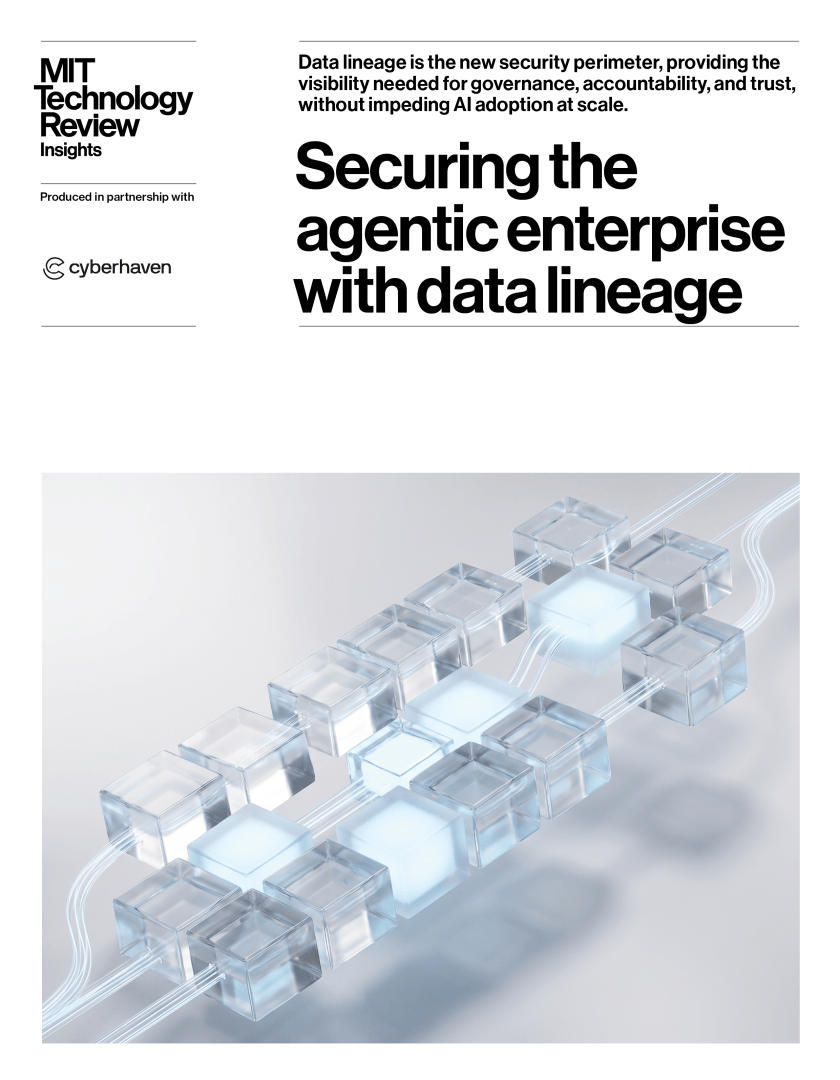
A sales representative inquires about customer pricing from an AI agent, which retrieves data from various sources like restricted pricing systems, internal communications, and archived quotes. The agent presents a seemingly accurate result to a second agent, who then uses this data to create a proposal for the sales rep without any human oversight.
Unfortunately, it is later discovered that the proposal contains unapproved, confidential, and sensitive information. The origin and distribution of this problematic data within the workflow and across systems are impossible to trace.
This incident highlights the urgent need for AI governance to adapt rapidly and dynamically. As enterprises increasingly rely on agentic AI in their daily operations, they are realizing that they must manage not just static files, but also the constant flow of moving and fragmented data that is ingested, copied, summarized, transformed, reused, and redistributed in new forms. In essence, AI security is not a tool issue; it is a data visibility problem.
Traditional security measures focused solely on applications, systems, networks, or endpoints are no longer adequate. To effectively manage governance, accountability, and trust in complex human, agentic, and hybrid workflows, teams must establish data lineage. By understanding how data moves within these systems, organizations can ensure the secure and responsible use of agentic AI.
Written by urgent.news from MIT Technology Review's reporting — not their text. Machine-written — may contain errors; check the original before relying on it.