La Airef insta a reducir el gasto estructural ante el incumplimiento del plan fiscal comprometido con Bruselas
La Autoridad Independiente de Responsabilidad Fiscal (Airef) estima un crecimiento del gasto primario del 5,7% hasta 2028, frente al 3,2% comprometido con Bruselas. Eleva su previsión de crecimiento para la economía al 2,6% para este año y al 2,2% para el próximo. Leer
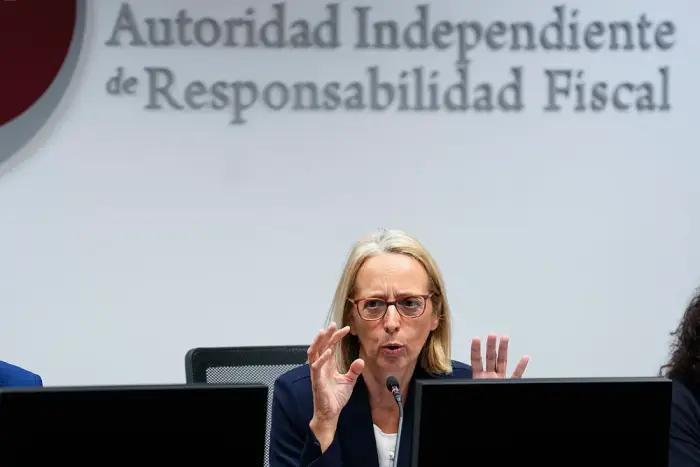
La Autoridad Independiente de Responsabilidad Fiscal (Airef) has warned of a rise in primary spending growth to 5.7% by 2028, surpassing the 3.2% agreed with Brussels. It forecasts a 2.6% growth for the economy this year and 2.2% next year. Airef's report on public administration budgets for 2027 shows an accumulation of deviations beyond the flexibility margin.
The authority urges measures to meet European commitments, but admits uncertainty due to potential government flexibility requests and the unknowns surrounding a new post-election fiscal plan. Airef suggests the Ministry of Finance, led by Arcadi España, define a comprehensive fiscal strategy compatible with European commitments, and regions at risk should avoid additional measures that would increase net primary spending growth.
The organization projects an average 5.7% annual increase in net primary spending through 2028, compared to the 3.2% pledged with the European Commission. In domestic terms, Airef expects widespread non-compliance with the national expenditure rule by both the central government and most autonomous communities. This upward trend could continue by 2027, based on projected autonomous budget increases.
Overall, the 29.8% increase since 2023 contrasts with the 20.1% commitment in recent years. This discrepancy is mainly due to the absence of General State Budgets, forcing the government to modify numerous budget items and complicating control and prediction for other public administrations. Despite this, Airef raises its 2026 deficit forecast to 2.8% and predicts a reduction to 2.6% due to the withdrawal of most temporary measures.
However, additional pressures from pension, defense, and debt interest growth could push the deficit to 3% in 2030. The fiscal authority factors the impact of cyclical measures approved this year, including those related to the Eastern Mediterranean conflict, at 0.4% of GDP. Regarding growth projections, Airef's president, Inés Olóndriz, increases their previous estimate by one tenth, raising the 2023 and 2027 growth forecasts to 2.6% and 2.2%, respectively.
The economic slowdown is uneven due to technological investment-driven growth. Regarding public debt on GDP, Airef predicts a slower reduction in reduction starting 2028, partly due to rising financing costs, potentially marking an inflection point, Olóndriz says.
Written by urgent.news from Expansion ES's reporting — not their text. Machine-written — may contain errors; check the original before relying on it.