Katara, Middle East Council on Global Affairs Sign MoU
The Cultural Village Foundation — Katara and the Middle East Council on Global Affairs signed a memorandum of understanding to strengthen co-operation in intellectual, cultural and research fields and...
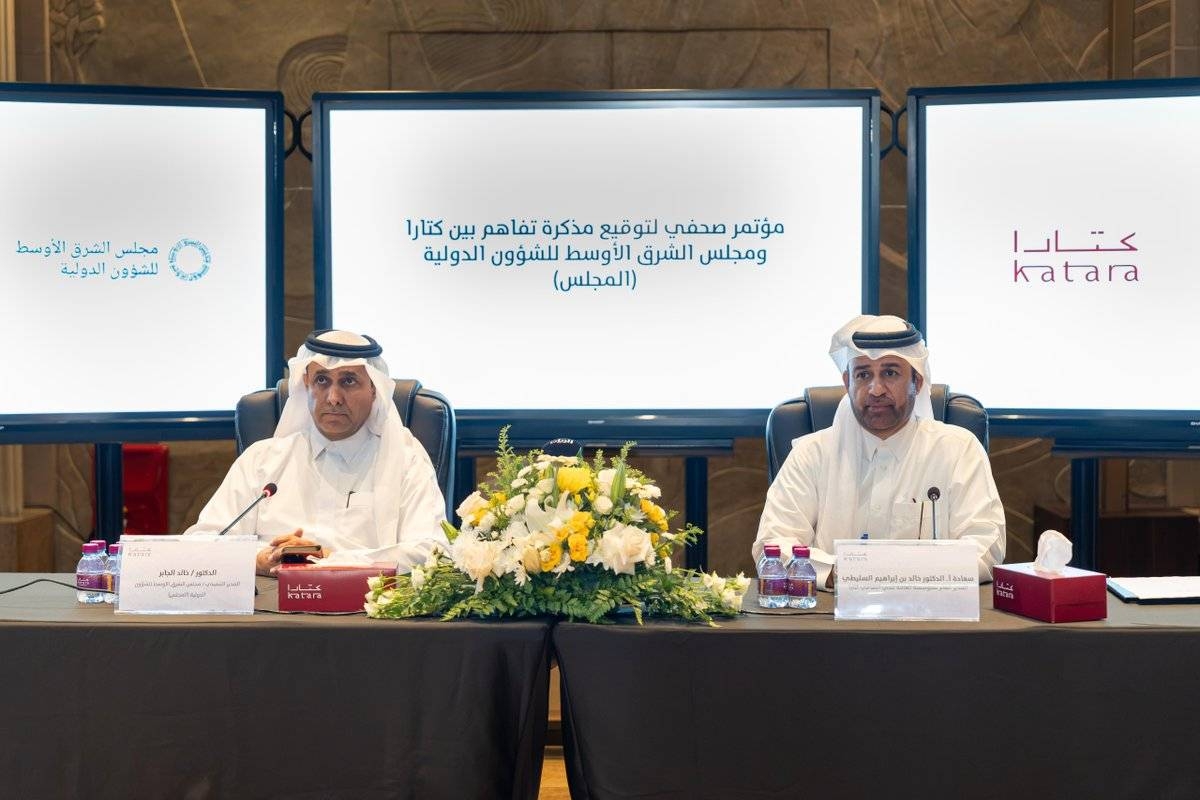
The Cultural Village Foundation — Katara and the Middle East Council on Global Affairs have signed a memorandum of understanding to enhance cooperation in intellectual, cultural, and research domains. The agreement seeks to launch joint initiatives and programs that bolster intellectual discourse, encourage dialogue, and foster cross-cultural engagement, thereby solidifying Doha's status as a thought, culture, and intercultural hub.
Welcoming the partnership, Dr Khalid bin Ibrahim al-Sulaiti, General Manager of Katara, highlighted that the memorandum signifies a significant stride in bridging the gap between culture and thought while leveraging shared expertise and resources to forge new pathways for collaboration in knowledge, research, and culture. He emphasized that the true worth of such institutional partnerships lies not solely in the scope of cooperation but in the innovative horizons they create, impacting wider knowledge domains and human interactions.
Al-Sulaiti stressed that culture is now a pivotal player in interpreting global transformations and their human and social dimensions. Its role has transcended mere cultural heritage preservation and artistic expression; it now involves generating novel perspectives, fostering dialogue, and deepening mutual understanding among societies.
This strategic alliance underscores Katara's ongoing mission to bridge cultural divides and expand partnerships with intellectual and research bodies that align with its objectives, aligning with Qatar's role in promoting openness, understanding, and cross-cultural dialogue. Dr Khalid al-Jaber, Executive Director of the Middle East Council on Global Affairs, echoed the sentiment, expressing delight at the collaboration.
He stressed that the memorandum symbolizes an important step in establishing a partnership that merges the depth of scientific research with the dynamic cultural and creative landscape. Al-Jaber praised Katara's leadership in enhancing cultural life in Qatar and the region, pointing out that the partnership's significance stems from a shared belief that thought and culture are intertwined forces in shaping public awareness and promoting openness and communication among peoples.
He anticipated that this collaboration will culminate in concrete programs and initiatives, including seminars, lectures, intellectual forums, and joint workshops involving researchers, academics, thinkers, and intellectuals from the Gulf, the Arab world, and beyond. These activities will serve as a platform for exchanging viewpoints and expertise, discussing intellectual, social, cultural, and humanitarian concerns, and anticipating regional and global changes.
Al-Jaber added that the partnership transcends conventional institutional cooperation frameworks, aiming to create a model that integrates knowledge production and dissemination, academic research, community engagement, cultural specificity, and global openness, thereby strengthening Doha's role as a regional and international center for thought, creativity, and cross-cultural dialogue.
He concluded by stressing that the partnership's success will be gauged by its capacity to transform ideas into enduring intellectual and cultural impact and to disseminate knowledge to a broader audience. Al-Jaber emphasized that when research and cultural institutions engage with society, knowledge becomes a potent agent of enlightenment and change.
Written by urgent.news from Gulf Times's reporting — not their text. Machine-written — may contain errors; check the original before relying on it.