How Democratic sweep could slow AI growth in US – and help China’s ambitions
The Democratic Party’s sweeping midterm election victory and takeover of both houses of Congress could slow down the pace of artificial intelligence development in the US, with implications for both the global AI trade and the technology rivalry between Washington and Beijing, analysts said. The assessment comes as concerns about AI and the data centres that power it proved to be a contributing…
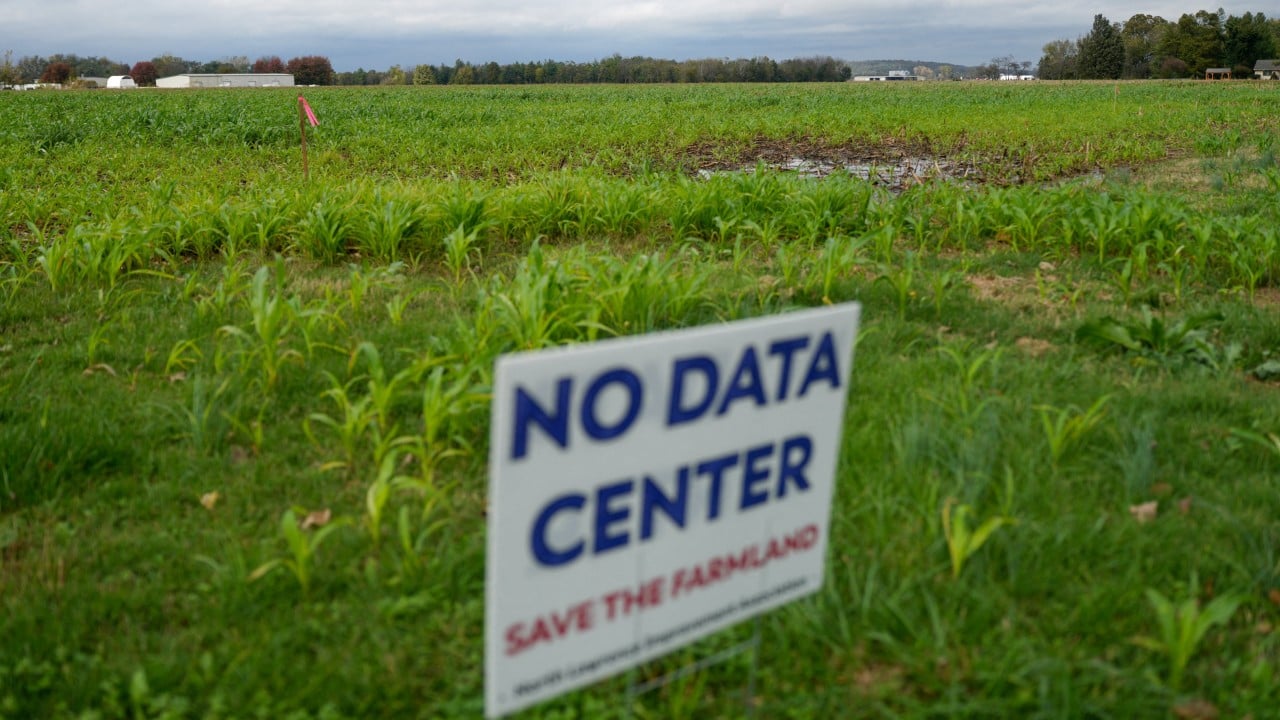
The Democratic Party’s historic midterm election victory, which has taken control of both houses of Congress, could potentially hinder the rapid growth of artificial intelligence (AI) development in the United States, according to analysts. This development could have significant implications for both the global AI trade and the ongoing technology rivalry between the United States and China.
The assessment comes as AI and data centers, the latter of which power AI systems, emerged as crucial concerns for voters during the election. Exit polls from NBC News indicated that 56% of voters considered AI and data centers to be crucial or major factors in their congressional vote, with 64% of those voters being Democrats. While AI and data centers ranked behind issues such as the cost of living and government corruption in terms of salience, the technology had become politically significant in a relatively short period of time.
In September, former researchers from leading AI companies like Anthropic raised serious concerns about the potential existential risks associated with advanced AI systems, prompting calls from some experts and industry leaders for a global slowdown in AI development. Although a complete halt in US data center construction is unlikely, analysts predict that the pace of development will indeed be slowed.
Gary Ng, a senior economist at Natixis Corporate and Investment Bank, stated that "a slowdown in the US could be a win for China," as the election results will not completely halt data center construction but will certainly reduce its pace.
The Democrats, known for their more cautious approach to data center regulation, are expected to introduce new constraints on US computing capacity. Michigan governor-elect Abdul El-Sayed, for instance, has advocated for a pause in AI development, proposing a ban on recursive self-improvement, a technique being pursued by major AI companies to rapidly improve AI systems.
Additionally, newly elected Democratic governors, such as Gina Hinojosa in Texas and Keisha Lance Bottoms in Georgia, campaigned on strong anti-data center positions, pledging tighter oversight in response to public concerns about environmental impacts, higher electricity bills, and quality-of-life issues.
Texas, a state crucial to the US AI data center buildout, is expected to account for nearly 30% of new computing capacity by 2028. A slowdown in data center construction in this state could significantly impact the national number, according to a report by research firm SemiAnalysis. Despite the expected slowdown, the immediate impact on US data center capacity in 2027 is anticipated to be limited, as many projects already under construction will come online during that year.
For US-China AI competition, the election results could lead US hyperscalers like Amazon Web Services and Google to build new data centers outside the country, intensifying competition between the two countries in third-country markets, particularly in Asia. As of early Wednesday morning, US time, voters had approved nearly all local-level data center-related ballot measures across 13 states, including proposals to restrict development and recall pro-data center politicians.
The potential impact of these new restrictions on US AI development and the associated costs remains a key question for investors.
Written by urgent.news from South China Morning Post's reporting — not their text. Machine-written — may contain errors; check the original before relying on it.
This story
This is one outlet's version. Read the fullest account.