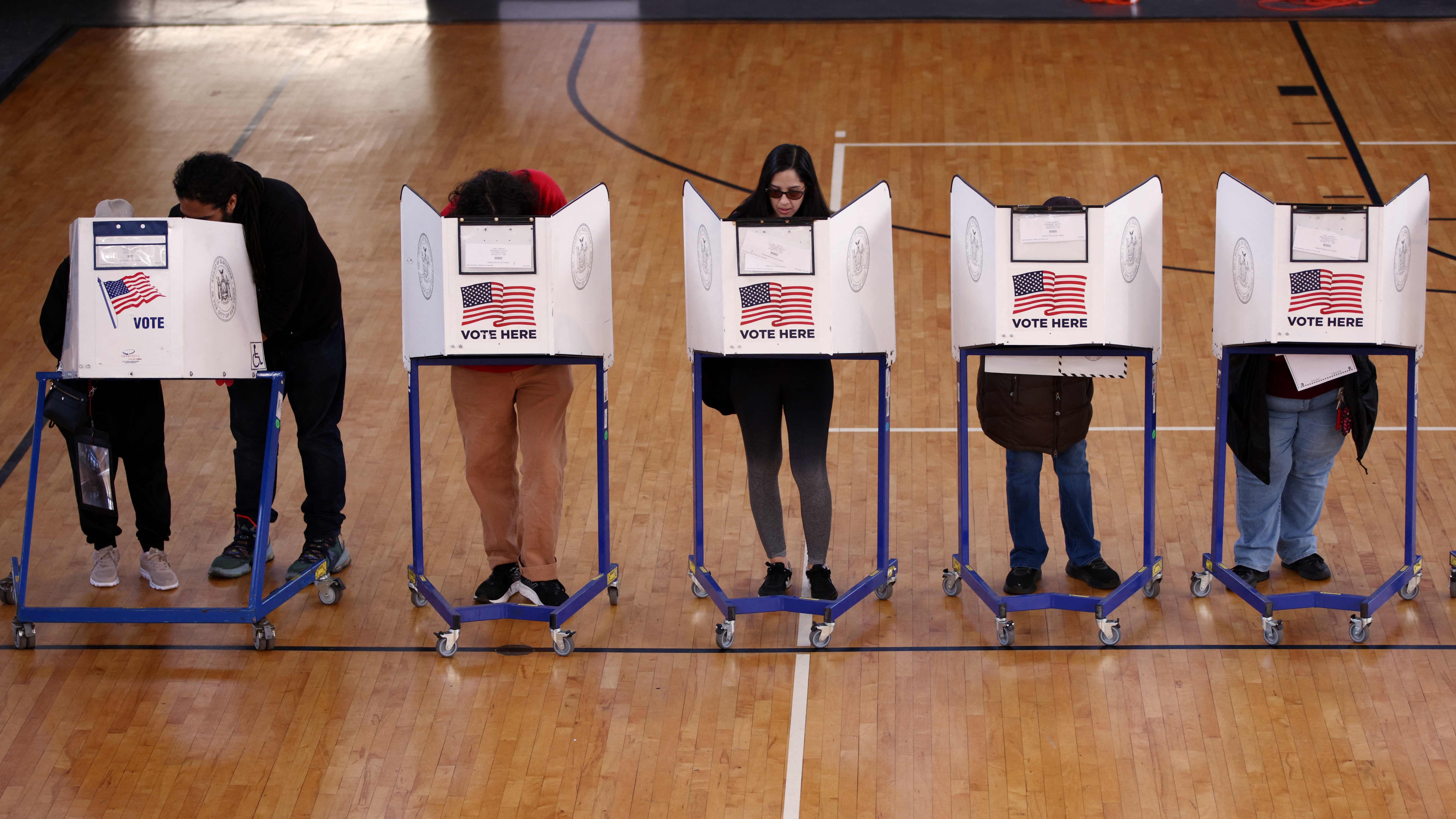
How Americans voted in the midterm elections
As Americans went to the polls for the midterm elections, they expressed a variety of motivations to Reuters reporters. In Michigan's US Senate race, Detroit data analyst Brittani Hamlin, 34, cited rising healthcare and medication costs as a key factor in her decision to vote for Democrat Abdul El-Sayed. Hamlin, a caregiver, believed El-Sayed would help preserve Social Security and reduce medical expenses.
El-Sayed's former rival, Haley Stevens, endorsed Republican candidate Mike Rogers in an apparent last-minute political move.
In Detroit, Black resident Natalia Towns, 34, also voted for El-Sayed, dismissing Rogers' appearance at a Black church as mere theater. Paul Stockyj, 63, opted for Rogers in Warren, Michigan. Stevens' endorsement of Rogers was rare and may indicate some level of support for the Republican candidate.
In Chicago, public school teacher Ryan Brown, 29, focused on the Trump administration's immigration enforcement policies. Brown's students had been affected by deportations, causing fear and anxiety. He emphasized the importance of immigration reform.
In Alaska, supporters of incumbent Republican Senator Dan Sullivan were confident in their choice, citing the state's current stability. In Kasilof, Judy Fischer, 45, voted for Sullivan without confusion, but expressed concern over the presence of another Dan Sullivan on the ballot. In Fort Worth, Texas, immigration was a significant concern for voters, with many expressing dissatisfaction with ICE's actions and the rising cost of living.
Trump's strict immigration agenda played a role in voter decisions, such as Victor Garcia's vote for the Republican candidate.
Written by urgent.news from The Economic Times's reporting — not their text. Machine-written — may contain errors; check the original before relying on it.