Garmin's COO on when it might kill the beloved MIP watch display for good
'That gap [between OLED and MIP] has not completely converged, and I think until it does, we definitely don't think that MIP will completely go away.'
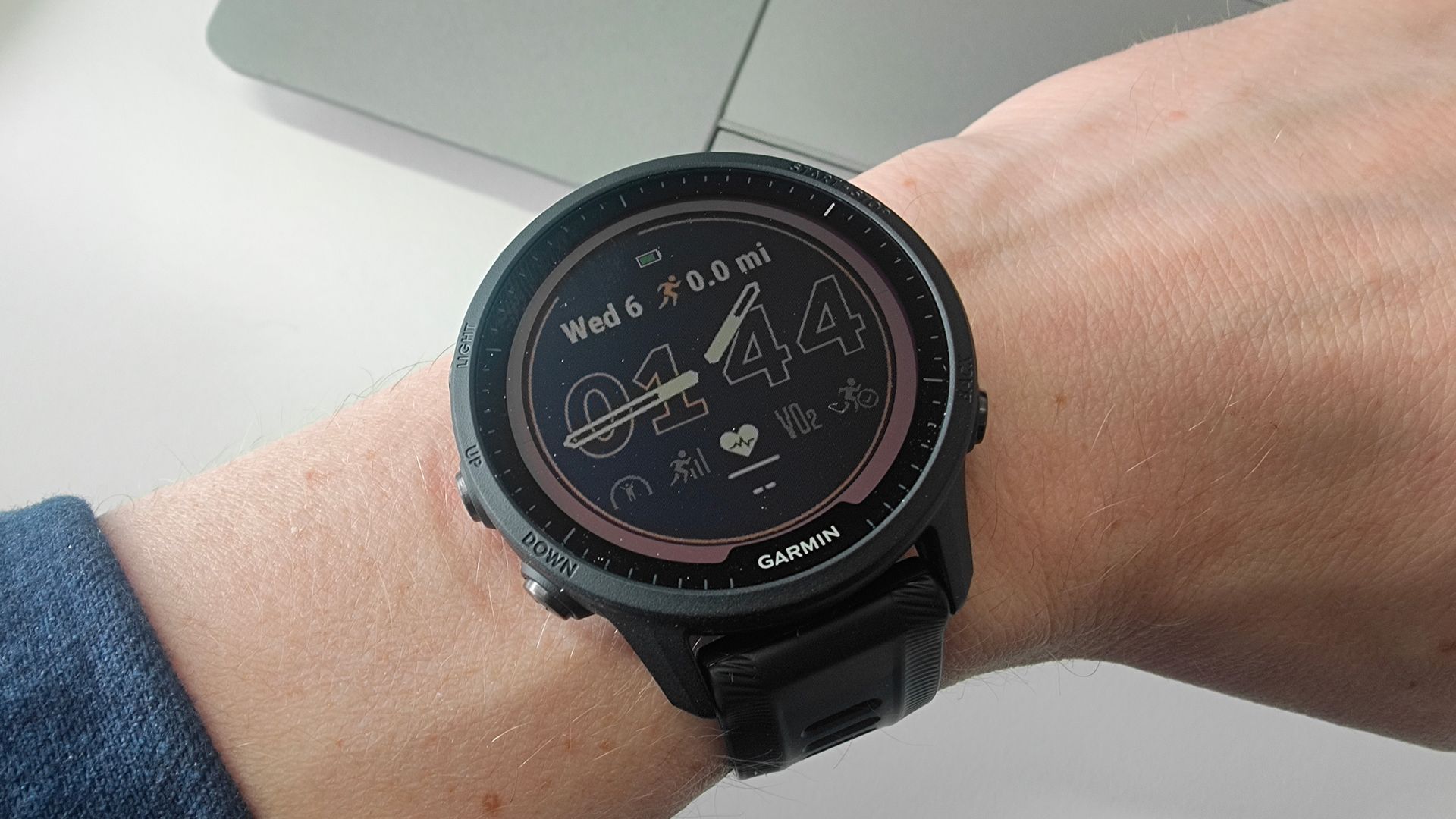
In recent years, Garmin has made significant advancements in watch technology, including satellite communication, dive-ready water resistance, and titanium nano-molding cases. However, the most notable trend has been the adoption of OLED technology. The first Garmin OLED watch was the Garmin Venu in 2019, followed by the Garmin Forerunner 965 and Garmin Epix Gen 2 in 2022. Since then, OLED has become ubiquitous in Garmin watches.
Garmin COO Brad Trenkle explains that MIP (memory-in-pixel) displays offer certain benefits for specific Garmin users, such as longer battery life during Enduro-type activities like multi-day hikes. MIP displays emit less power and remain clearer when outside, as they don't require the same brightness adjustments as OLED screens. However, Trenkle acknowledges that the gap between MIP and OLED battery life is closing, with OLED efficiency continuing to improve.
Currently, MIP displays are primarily found in solar-charging models like the Fenix 9 Pro Solar and Garmin Instinct 3 Solar. While amorphous silicon solar technology can degrade the display image quality, crystalline silicon does not. Trenkle suggests that crystalline silicon solar charging may be a viable solution for pairing with OLED displays in the future, although it is still a matter of time before an OLED watch with solar charging is released.
Written by urgent.news from TechRadar's reporting — not their text. Machine-written — may contain errors; check the original before relying on it.