From desert gardens to Kashmiri weaving: What to see at Dubai Design Week 2026
Standing in the centre of Dubai Design District, Three Gardens and a Room is hardly a secret. But walk into any of its spaces, past the curved walls painted pink, ochre and yellow, and you’ll find yourself amid desert trees, wondrously removed from the surrounding glass and steel. The spaces resemble secret gardens, sequestered from the rush of the corporate and commercial district. Three Gardens…
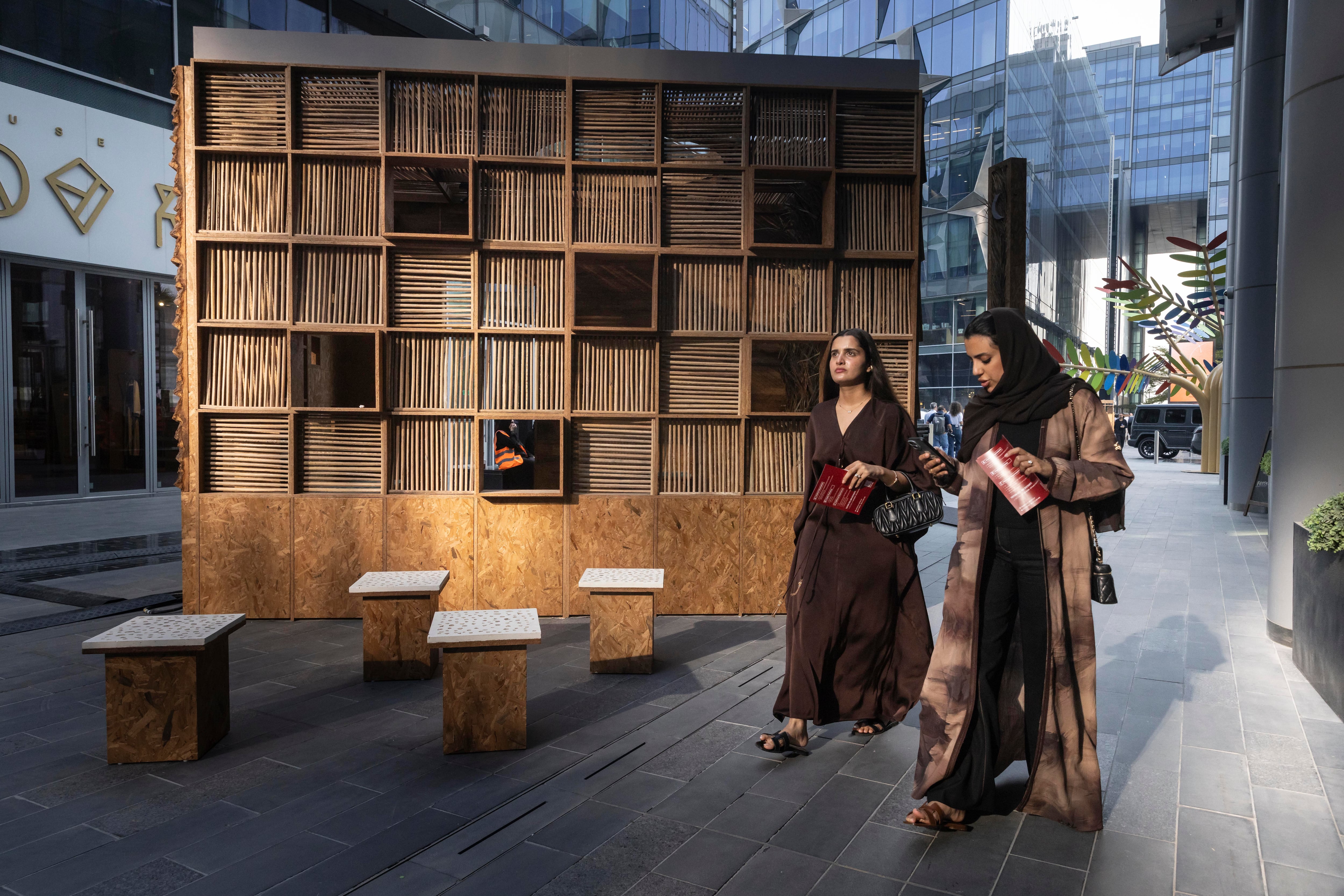
Dubai Design Week 2026 showcased a diverse range of installations, from Three Gardens and a Room, an urban commission by NAO Architects, to the In Other Words exhibition featuring five commissioned works from Asia and Africa.
Three Gardens and a Room, located in the heart of Dubai Design District, transformed the surrounding glass and steel into lush desert gardens. The architects, Reem Nassour and her team, responded to this year's theme of Atmospheres, emphasizing how spatial conditions can affect emotional and physical states. Each space featured the four dominant architectural components: the roof, the hearth, the mound, and the enclosure.
The mound, in particular, stood out as a grassy hill enclosed within a yellow circular structure, with desert acacias and a seating area providing shade. The roof displayed pink and ochre hues, while the enclosure included a seating area and gravel that evoked nostalgia and introduced a sense of sound.
In contrast, In Other Words explored the nature of language and communication. This exhibition, organized by Dubai Design Week, brought together five commissioned works by practitioners from across Asia and Africa. The theme emphasized how acts of communication involve design decisions about visibility and interpretation. One notable piece was "Herding the Unheard: Traces of an Unwritten Language," a collaboration between Avid Learning ME and Dakhnii Diaries.
This installation presented a five-year research project by designer Varsha Rani Solanki, who worked with a group of Kuruba shepherds in North Karnataka. The space featured felted wool panels, listening areas that replayed the sounds of sheep and shepherds, and cloaks woven from wool. Solanki aimed to preserve the traditional skills of the Deccani sheep and their community, as these were threatened by the rise of imported wool and domesticated breeds.
The wool on display was darker and coarser than the Merino variety, with each object visitors could touch reflecting the unique qualities of Deccani sheep wool.
Written by urgent.news from The National Business's reporting — not their text. Machine-written — may contain errors; check the original before relying on it.