French bank Crédit Mutuel Arkéa reports cyberattack, says customers face no losses
The bank has not confirmed reports that $133mn (€118mn) was stolen, but says the attack is under control and customers will suffer no financial loss.
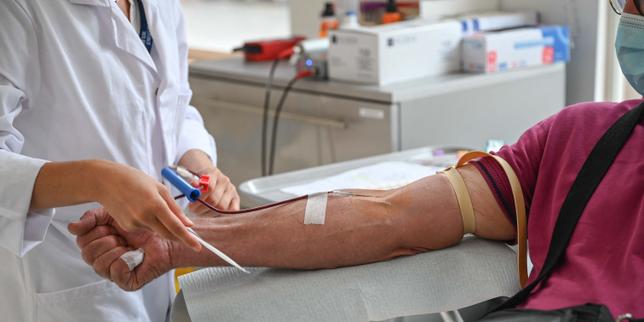
France's national blood service, the Établissement Français du Sang (EFS), confirmed hackers gained access to control systems at three cold storage facilities housing essential blood products. The assailants heightened temperature and defrosting parameters to "very high levels," but the EFS's alarm system enabled technicians to prevent the compromised materials from being exposed.
The EFS, a public blood transfusion operator, provides blood, plasma, and platelets to over 1,900 hospitals across the nation, serving more than a million patients each year. The assault transpired overnight on Monday, coinciding with refrigerators and freezers in supermarkets in nearly a dozen European nations experiencing temperatures soaring up to 50°C (122°F), causing millions of euros' worth of food damage.
Retailers in Italy, Germany, Romania, and the UK were targeted on Tuesday, following reports of refrigeration system malfunctions in Belgium, Estonia, Ireland, Finland, Luxembourg, the Netherlands, and Sweden the day prior. In a series of attacks last month, hackers assumed control of cooling units in approximately 700 supermarkets in France.
A regional branch of France's Crédit Mutuel bank disclosed on Wednesday that it too fell victim to a cyber-attack, potentially raising suspicions of a similar incident in the United States in early August, where mysterious fridge malfunctions affected commissaries at six military bases. The Pentagon is currently investigating a possible cyber intrusion.
Thomas Regnier, a spokesperson for the European Union, stated that EU agencies were in urgent consultations with national authorities to devise a coordinated response, emphasizing that these incidents are not isolated and collective resilience is crucial. The European Union remains uncertain about the motive behind these attacks and their perpetrators, as no one has claimed responsibility.
Concerns over government-sponsored hybrid attacks in the aftermath of Russia's 2022 invasion of Ukraine have surged among authorities and cybersecurity experts, who warn that Western intelligence officials attribute the attacks to a campaign of sabotage by Russia. Cybersecurity professionals, such as Rafe Pilling, the senior director for threat intelligence at the cybersecurity firm Sophos, suggest that the most likely attribution scenarios are either state-based signaling or the actions of a lone-wolf hacker.
According to EFS, the attack did not directly target their facilities, as the breaches occurred at cold storage facilities managed by their contractors. The affected products, including plasma bags for transfusions and medicine manufacturing, were relocated to alternative sites. France's national cybersecurity agency (ANSSI) and the health ministry have been informed, and all equipment monitoring has been enhanced.
Written by urgent.news from Guardian Technology's reporting — not their text. Machine-written — may contain errors; check the original before relying on it.
This story
This is one outlet's version. Read the fullest account.
- Cyberattack hits French blood bank site but no blood products were compromised winnipegfreepress.com
- French blood banks hacked in latest cyber-attack on Europe theguardian.com
- Cyberattack hits French blood banks but no samples compromised, officials say euronews.com
- French blood service hit by Europe-wide cyberattacks on refrigeration therecord.media
- French bank hit by cyberattack that caused €118m 'fraudulent transactions' thelocal.fr
- French bank Crédit Mutuel Arkéa said hackers stole money in cyberattack qz.com
- Cyber attack threatens French blood banks news.sky.com
- French bank Credit Mutuel Arkea hit by cyberattack channelnewsasia.com