Food delivery market faces shakeout as Uber Eats dominates
Japan's food delivery industry saw a surge in new entrants during COVID-19, but the sector has now largely consolidated around three players.
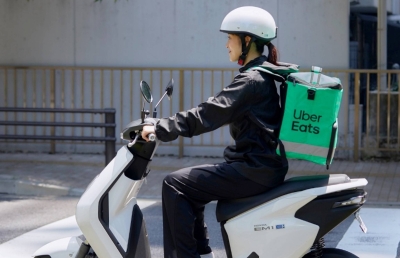
Japan's food delivery market, which experienced rapid expansion during the COVID-19 pandemic, is now facing a significant shakeout due to increased competition and consolidation among the few remaining players. The sector has narrowed down to just three key companies: Uber Eats Japan, Rocket Now run by Coupang, and Demae-can. Uber Eats maintains a dominant position, prompting concerns about a growing concentration of market power.
Yulia Brovkina, head of Uber Eats Japan, acknowledged the importance of customers, restaurant partners, and delivery partners in driving the company's success during a news conference in mid-October.
Uber Eats entered Japan in 2016, capitalizing on its global business network and well-known brand to gradually increase its market share. By October, the company had processed over 1 billion orders in Japan. According to Sensor Tower, a U.S. research firm, Uber Eats Japan boasted 6.2 million monthly active users, representing more than half of the domestic market.
The food delivery sector thrived during the pandemic, as people opted to avoid eating out. At one stage, more than seven companies vied for customers, but the high costs of promotional strategies, such as discount coupons, resulted in numerous withdrawals shortly after launching. Finnish food delivery firm Wolt abandoned its operations in Japan in March, followed by Rocket Now's parent company KDDI subsidiary in late September.
Demae-can, a Japanese operator, has also struggled, reporting its eighth consecutive annual net loss in the fiscal year ending in August.
Rocket Now has managed to grow rapidly since its entry into the Japanese market in January of the previous year. By offering delivery from over 10,000 restaurants at the same in-store prices with no additional fees, the company has attracted over 8 million app downloads by September, placing it second in terms of monthly active users. However, Rocket Now's rapid growth has forced Uber Eats and Demae-can to adopt a "same price as in-store" approach, intensifying competition that resembles a war of attrition.
An industry expert cautioned that price-based competition could lead to market monopolization by financially strong companies, potentially harming consumers and restaurants in the long run. As the market continues to evolve, it remains to be seen how these dominant players will shape the future of Japan's food delivery industry.
Written by urgent.news from Japan Times's reporting — not their text. Machine-written — may contain errors; check the original before relying on it.