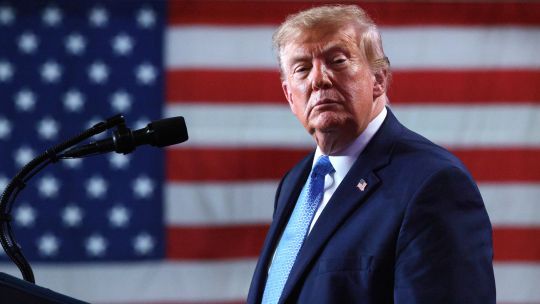
El dólar retrocede y la deuda se relaja por el revés a Trump
Los expertos anticipan un mayor control regulatorio sobre la IA que podría debilitar a la moneda de EEUU. El coto a la política expansiva de Trump podría reducir la presión sobre la deuda de EEUU Leer
Experts predict stricter regulatory oversight over artificial intelligence could weaken the US dollar. The restraint on Trump's expansionist policies may alleviate pressure on the US debt. The MAGA narrative (Make America Great Again) appears shaky after mid-term elections, hinting at a downtrend for the dollar in the long run. The American currency has reacted to the Democratic victory with declines against the G10 basket of currencies.
The Bloomberg Dollar Spot Index, which measures the dollar against a basket of currencies, has fallen 0.40% at the close of European markets. It has suffered a similar drop against the euro, which has regained the change from 1.123 dollars. In the long term, experts point to a scenario of certain weakness for the dollar, which in 2026 loses ground to the euro: by October, the dollar stood 5.25% higher than the European currency.
On October 27th, the greenback reached its highest level since May 2025. "Markets anticipate greater regulatory control over the artificial intelligence sector, which could weigh on capital investments (capex) in AI and associated capital inflows, a key support for the dollar this year," explains David A. Meier, an economist at Julius Baer.
In the short term, the firm notes that monetary policy and the investment cycle in AI remain the dominant drivers for the dollar and should continue to provide support. In the long term, however, Julius Baer anticipates a certain weakness for the dollar, "reflecting the persistent US current account deficit and a continuously strained fiscal situation."
Ebury, a currency fintech, estimates that the restriction on Trump's expansionist fiscal policy could reduce pressure on US debt and Treasury bond yields, making the currency less attractive. Indeed, the reading of the new composition of the Senate and the House of Representatives has been positive for fixed income. Purchases have also been strong in sovereign bonds.
The 10-year US bond lowers its yield to 4.90% halfway through the session (yields move inversely to prices), and the 30-year bond falls to 5.29% yield. For Julius Baer, the new chamber configuration is slightly positive for fixed income. "A divided government drastically limits the margin for approving new fiscal packages without financing.
This outcome does not resolve the fiscal challenges of the US, but it reduces the risk of another discretionary deterioration of the deficit in the next two years." However, one of the first points of conflict for the new Congress will be the debt ceiling, which current forecasts predict will be reached in mid or late 2027, according to Schroders.
In previous episodes, a more contentious debate over the limit can generate volatility around specific maturities, but tends to have a more limited and temporary effect on the overall US Treasury market, adds Julius Baer. In Europe, the yields of French and Italian debt, the most pressured in recent months, have fallen 18 and 15 basis points, respectively. The German bond has relaxed its yield to 3.26%, while the Spanish bond has relaxed to 3.82%.
Written by urgent.news from Expansion ES's reporting — not their text. Machine-written — may contain errors; check the original before relying on it.