Digital fraud rises 88% across African banks, fintechs as security concerns rise
Digital fraud is spreading across Africa’s financial services industry, with nearly nine in 10 banks and fintech companies reporting an read more Digital fraud rises 88% across African banks, fintechs as security concerns rise

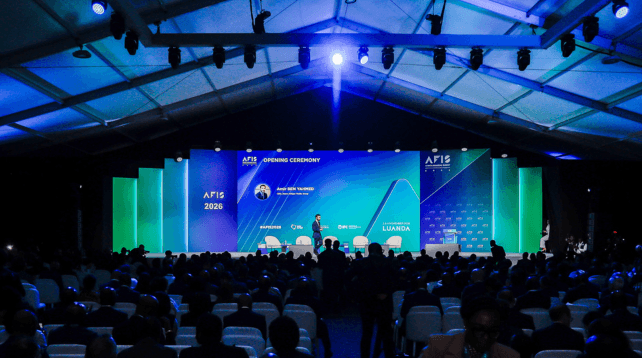
At the African Financial Industry Summit 2026 in Luanda, Fintan Byrne, the CEO of CR2, a digital banking platform, warned that African banks need to rethink their digital transformation strategies. Byrne contends that consumer expectations are shifting towards instant, cross-border services, and that front-end digital strategies are insufficient to determine the next decade of African finance.
For years, African commercial banks have viewed the launch of a smartphone application as proof of digital transformation. However, as agile fintechs erode market share, this front-end approach is proving inadequate. During the summit, industry veterans emphasized that merely rolling out standalone digital applications without overhauling the underlying infrastructure is merely superficial.
Fintan Byrne, an Irish banking software executive with over three decades of experience, now leads CR2 under the Morocco-based multinational HPS Group. With a combined business spanning six decades of payments engineering, the companies serve approximately 60 commercial lenders globally. In Africa, this includes prominent institutions like Absa, Standard Chartered Bank, Standard Bank, and Access Bank, as well as five commercial banks in Egypt, including Commercial International Bank (CIB), and several institutions across East Africa and Ethiopia.
To separate genuine transformation from digital vanity projects, Byrne employs the "friction test." This test asks whether the solution will make something cheaper, save money, be easier to use, or save time. Many African lenders, according to Byrne, make the mistake of purchasing isolated, point-to-point software solutions for individual banking functions.
This results in an expensive, fragmented IT estate that hinders innovation and frustrates customers. CR2's counter-strategy involves platformization: deploying a unified underlying architecture where capabilities can be incrementally unlocked, without undergoing extensive core-banking overhauls. Banks that have successfully implemented this shift include CIB in Egypt, which reduced its operational cost-to-income ratio and accelerated customer acquisition by routing routine transactions away from expensive branch networks to self-service digital and assisted channels.
As AI becomes a dominant topic at AFIS 2026, Byrne emphasizes that its practical application in informal markets is often met with skepticism. He proposes splitting AI's lifecycle into two phases: the "build phase," where banks must engineer their technical architecture to be machine-readable from the start using modern APIs and data pipelines, and the "run phase," where AI unlocks immediate commercial value, particularly in credit underwriting and fraud prevention.
An example provided is using AI to understand the cash flow and operations of market women selling fish, providing them with instant credit to support their enterprises, and considering seasonal variations in their trades.
Written by urgent.news from TechCabal's reporting — not their text. Machine-written — may contain errors; check the original before relying on it.
This story
This is one outlet's version. Read the fullest account.