Chinese scientists discover thickening ground ice in parts of warming Tibet
The Tibetan Plateau, home to the world’s largest expanse of alpine permafrost, is warming at about twice the global average but, counter-intuitively,researchers have found that ice in parts of the Tibet autonomous region is actually thickening. A team from Peking University found that shallow ground ice has unexpectedly increased over the past 20 years, affecting more than a third of the…
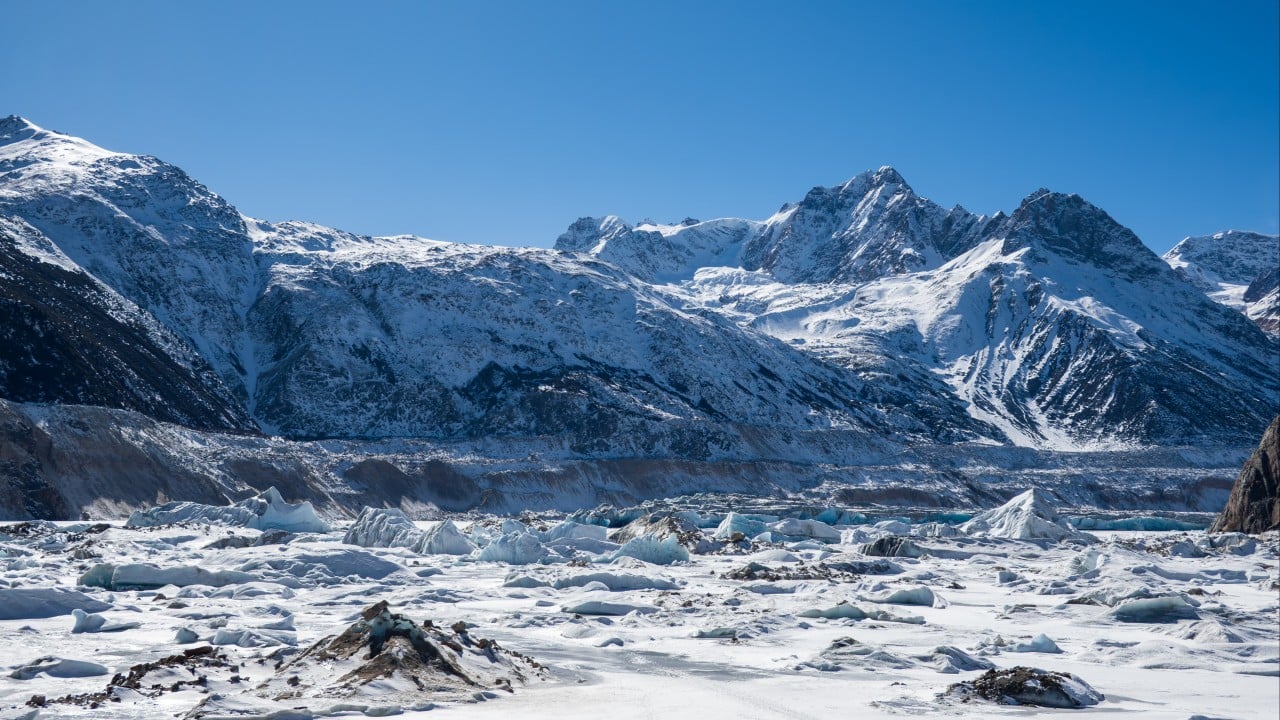
The Tibetan Plateau, host to the world's largest continuous alpine permafrost, is warming at roughly twice the global average rate, but surprisingly, researchers from Peking University have discovered that ground ice in certain areas is thickening. Over the last two decades, shallow ground ice has surged, impacting over one-third of the plateau's permafrost, driven primarily by natural climate factors.
This puzzling ice gain presents uncertainties regarding its effects on the stability of the permafrost and the environment as a whole.
In late August, a massive landslide triggered by a glacier collapse on the China-Nepal border resulted in thousands of casualties and missing persons. The disaster, which traveled 13.7 miles in just seven minutes, underscored the increasing instability of glaciers on the Tibetan Plateau, as warned by a senior official from China's National Climate Centre.
Meanwhile, scientists from Gansu province have been experimenting with human intervention to boost ice thickness. In one trial, they successfully increased ice thickness by 4 inches on a glacier's eastern edge by covering it with a thermal-insulating, reflective fabric. This building of artificial ice could potentially extend glaciers' lifespans by at least three to four times, although logistical challenges remain.
The Peking University team utilized satellite data and borehole observations to analyze 40 years of near-surface ground ice variations, revealing an unexpected accumulation at the base of the active layer. Their study, published in Science Advances, concluded that the increase, despite the overall warming of the region since 2000, was mainly due to rising precipitation.
The Tibetan Plateau, highly sensitive to climate change, has warmed at twice the global average rate over recent decades, leading to significant permafrost degradation and threatening local landscape stability, ecosystem functioning, and infrastructure safety, potentially impacting over two billion people downstream.
Peking University researchers noted that harsh, high-altitude conditions had previously limited field observations, leaving scientists with a partial understanding of ground ice distribution and trends. To address this, they compiled records from 369 boreholes across the plateau's permafrost regions, finding that newer observations contained more ice.
By employing machine learning and permafrost modeling, they traced dynamic changes in water content at depths of up to 10.5 feet between 1979 and 2018. The anomalous ice increase was concentrated in the region's northwestern interior, covering about 35% of the plateau's permafrost area, with water identified as the primary cause.
Meteorological data showed a 60% rise in annual rainfall and snowfall in the westerlies-affected interior since 2000, likely infiltrating the permafrost's bottom layer and refreezing in the persistently sub-zero environment, gradually contributing to the existing ground ice.
Written by urgent.news from Reuters Business via SCMP's reporting — not their text. Machine-written — may contain errors; check the original before relying on it.